

Your Guide to Navigating B2B SaaS Digital Transformation
Digital transformation, a critical journey for modern businesses, is riddled with complexities and unexpected challenges. While it can improve efficiency, innovation, and customer satisfaction, it also requires a departure from traditional strategic planning. The key to successful transformation is to create a relationship between technology and a culture of adaptability. Success involves balancing innovation and cybersecurity and having clean data to derive actionable insights. Read our comprehensive guide to understanding and implementing digital transformation.
Key Takeaways
- Success in digital transformation requires aligning technology investments with business goals and adapting to rapidly changing digital landscapes.
- A well-structured digital transformation framework should include your vision and strategy to improve customer experience, operations, technology, culture, and innovation.
- The human element, particularly emotional intelligence, is pivotal in supporting the transition to a more digitally adept workforce. Digital transformation must be an integrated effort across all organizational levels, emphasizing the crucial role of executive leadership in fostering innovation, operational resilience, and stakeholder engagement.
- Align strategic initiatives with measurable outcomes like CLTV, MRR, and NPS for a comprehensive approach to value realization.
 What is Digital Transformation?
Digital transformation is the strategic implementation of digital technologies to enhance business operations, improve customer experiences, and create value. Various processes or functions within a company, such as marketing, sales, operations, finance, and customer service centers, can be transformed. The goal is to achieve maximum value through increased efficiency, improved customer experience, and enhanced quality. However, larger organizations face complex challenges transitioning from traditional operations to agile methodologies.
Bridging the Gap Between Technology Investments and Tangible Value
While technological advances offer new opportunities for innovation, the challenge often lies in practical implementation. Gartner’s research underscores this dilemma: 80% of CEOs have increased their digital investments. However, over half of these digital projects have failed to meet expectations. Specifically, 59% take longer than anticipated to complete, and 52% experience delays in realizing their intended value. While CEOs recognize the importance of digital technology, there has been a discernible gap between investment and tangible value realization.
Executives must wholeheartedly commit to digital transformation, supported by a strategic roadmap and cohesive culture alignment. B2B SaaS companies cannot afford to be reactive but must proactively adapt their systems and processes to thrive in a digital-centric future. The complex and uncertain nature of digital transformation demands a heightened need for emotional intelligence and well-being in the workplace. Investing in emotional intelligence fosters employee trust, strengthens team dynamics, supports corporate objectives, and enhances brand reputation.
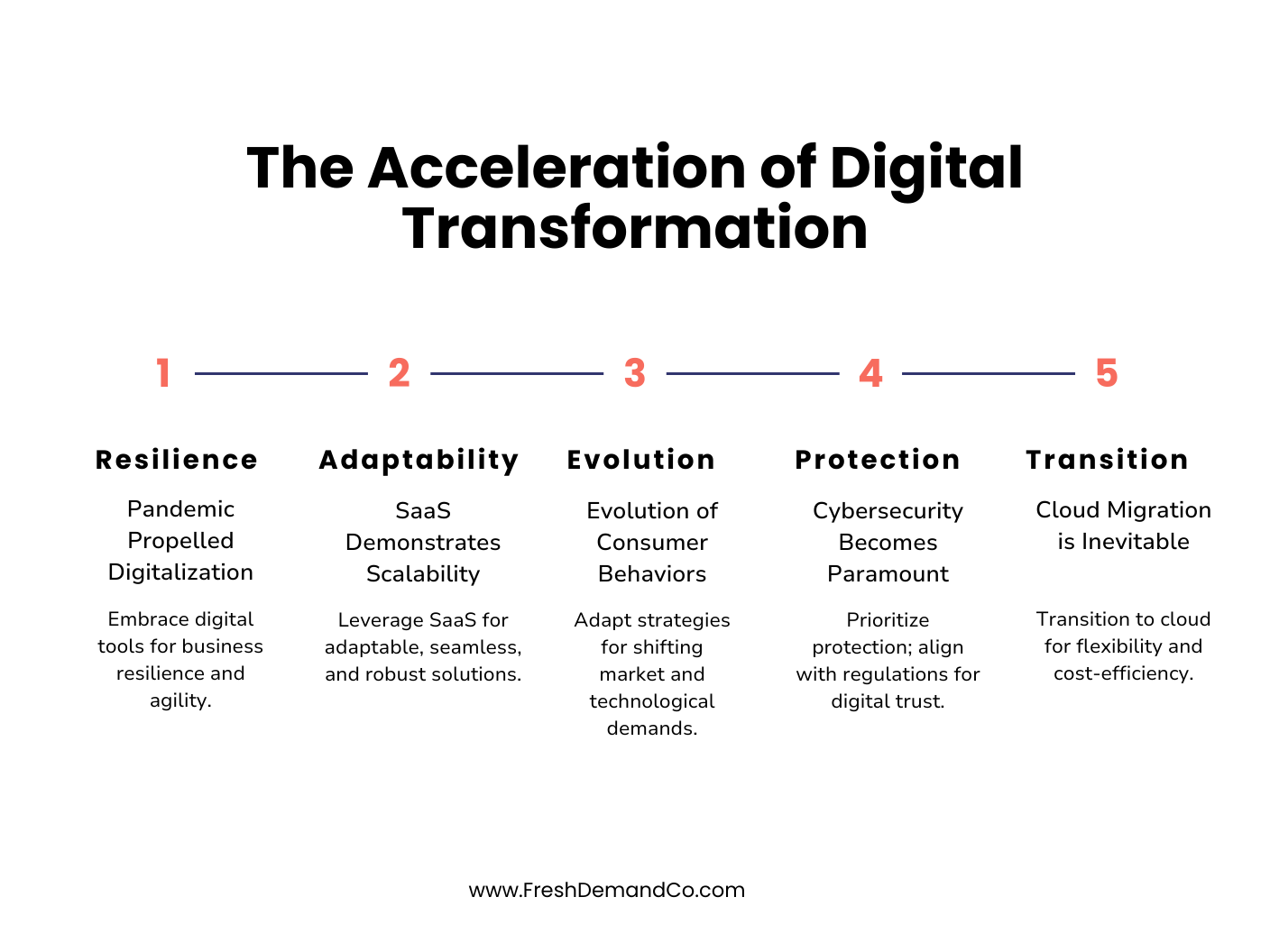 The Acceleration of Digital Transformation
Since the 2020 global health crisis, digital transformation has become the cornerstone of business resilience and innovation. Companies swiftly reoriented their strategies, emphasizing enriched digital customer experiences. The continued evolution of technology holds the potential to unlock newfound competitive advantages.
The sudden shift to remote work highlighted the importance of digitalization, increasing the need for reliable and scalable company networks. As a result, Software as a Service (SaaS) became a crucial tool for IT departments, offering seamless solutions in the face of unpredictable challenges. Industries like hospitality and retail underwent rapid transformations due to the pandemic, and their reliance on cloud computing and SaaS solutions increased significantly, providing critical digital support to meet changing market demands.
Furthermore, changes in consumer behavior, supply chain disruptions, and the rapid advancement of technologies like AI and IoT have further fueled this digital drive. The emphasis on cybersecurity, coupled with government incentives and regulatory standards, has also played a role in accelerating the digital shift.
Gartner Research predicts that by 2025, 95% of digital workloads will utilize cloud-based technologies, a marked increase from the 30% in 2021. This study reinforces the escalating significance of virtual networks in an era marked by uncertainty. As industries lean towards cost-effective strategies, the migration to cloud solutions epitomizes a broader movement towards flexible and cost-efficient business frameworks.
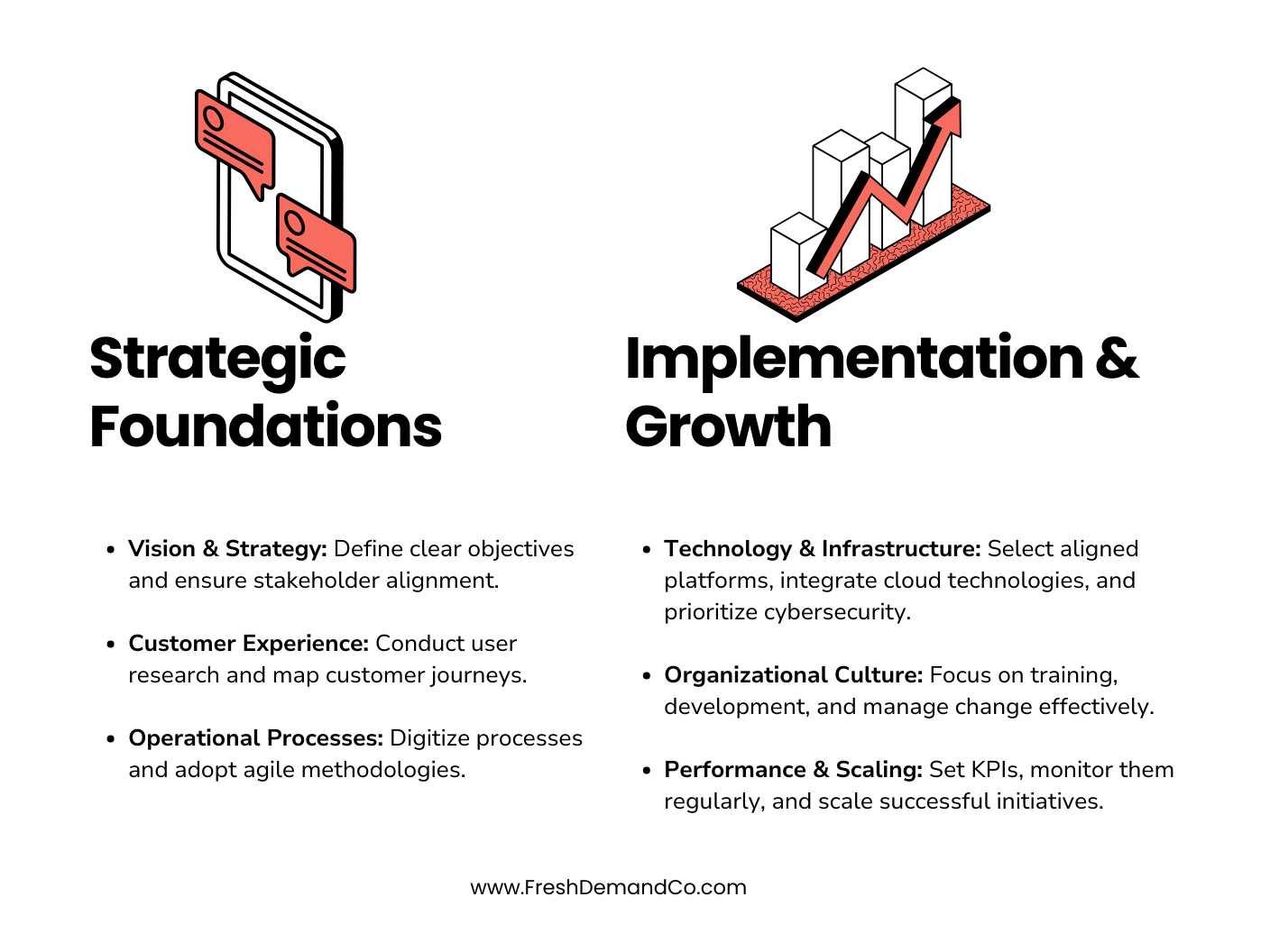 Digital Transformation Framework
Digital transformation means reshaping businesses to be innovative, customer-focused, and agile in an increasingly digital world. A structured framework can help companies derive maximum value from their efforts.
Here’s a breakdown of a typical digital transformation framework:
Vision & Strategy:
-
-
- Objective Setting: Define clear digital transformation objectives aligned with business goals.
- Stakeholder Alignment: Ensure all stakeholders, from top leadership to frontline employees, understand and are aligned with the transformation vision.
-
Customer Experience:
-
-
- User Research: Understand customer needs, pain points, and behaviors.
- Journey Mapping: Visualize customer interactions with the business across all touchpoints.
-
Operational Processes:
-
-
- Process Digitization: Convert manual processes to digital, automating where possible.
- Agile Methodology: Adopt agile practices to enhance flexibility and responsiveness.
-
Technology & Infrastructure:
-
-
- Platform Selection: Choose the right digital platforms and tools that align with business needs.
- Cloud Integration: Leverage cloud technologies for scalability and flexibility.
- Cybersecurity: Ensure robust security measures are in place to protect digital assets.
-
Organizational Culture:
-
-
- Training & Development: Equip employees with the necessary skills for the digital age.
- Change Management: Manage resistance to change and foster a culture of continuous learning and adaptation.
-
Performance Metrics:
-
-
- KPI Setting: Define key performance indicators to measure the success of digital initiatives.
- Continuous Monitoring: Regularly review performance metrics to ensure alignment with objectives and make necessary adjustments.
-
Innovation & Scaling:
-
-
- Pilot Programs: Test new digital initiatives on a smaller scale before full implementation.
- Scaling: Once successful, expand digital initiatives across the organization.
-
Building your digital transformation framework should provide a structured approach to transitioning from traditional business models to digitally-driven ones. While the foundation of a digital transformation relies heavily on a systematic framework, its ultimate success hinges on an organization’s intrinsic values and beliefs.
 The Role of Culture in Digital Transformation
For digital transformation initiatives to succeed, a shared vision must permeate every level of the organization. This vision, shaped by the values, beliefs, and norms guiding the company, is critical in driving digital transformation. A culture of innovation, robust team collaboration, and a nurturing of creativity are necessary for success. From leadership to recruits, emotional intelligence must be prioritized during digital transformation.
Emotional Intelligence & Agility: Leading the Change
To prioritize the human aspect of change, companies should align with the needs and desires of end-users. Agility is critical for B2B SaaS leaders driving this transformation while ensuring core operations remain uninterrupted. Team cohesion is vital to creating an environment of psychological safety, and emotional intelligence is essential in helping employees navigate the turbulence of change. By drawing on expertise from various domains, companies can create well-rounded solutions that address transformation’s technical and human aspects. Fostering healthy, collaborative relationships and anchoring them in a shared vision preempts potential pitfalls and promotes agility, fiscal prudence, and trust-building, which are essential for realizing digital transformation aspirations.
 Driving Factors for Digital Transformation
Successful digital transformation is primarily driven by the leadership that guides the initiative. Product, sales, marketing, and delivery leaders play a significant role among these leaders. Their expertise and vision can make or break the transformation journey.
Domain Expertise
Each leader brings a deep reservoir of domain-specific knowledge, enabling them to understand the industry’s intricacies, recognize the organization’s challenges, and identify opportunities for technological advancement. Based on these insights, they can develop digital strategies tailored to the organization’s requirements and aligned with industry trends.
Optimizing Processes
Digital transformation involves implementing new technologies and optimizing existing processes. Cross-functional leaders can identify inefficiencies in current processes and recommend digital solutions to streamline marketing, sales, and operations, reducing redundancies and enhancing productivity.
Bridging Gaps
Every organization has areas for improvement or gaps that need addressing. Leaders can identify and address these gaps digitally, whether in product features, delivery mechanisms, customer service, or internal communication. By addressing these gaps, they ensure a comprehensive transformation that covers all aspects of the organization.
Ensuring Technological Alignment
With the rapid advancement of technology, it’s essential to keep up and leverage the best and most relevant technologies. Every function must evaluate various technological solutions to ensure that the chosen ones align with the organization’s goals, budget, and future scalability needs.
Collaboration and Team Synergy
Leaders ensure that all teams, from product development and marketing to sales and customer support, are on the same page. They foster a culture of collaboration, ensuring that the digital transformation initiative is a collective effort with shared goals and synchronized actions.
Continuous Feedback and Iteration
High-performing leaders understand the importance of feedback from internal teams and external customers. They establish a mechanism for regular feedback, which then gets incorporated into the transformation strategy, leading to iterative improvements. While technology and strategy form the backbone of digital transformation, leadership, especially product and delivery leaders, provides direction, purpose, and momentum. Their role is multifaceted, and their contribution is invaluable in successfully navigating the complex waters of digital transformation.
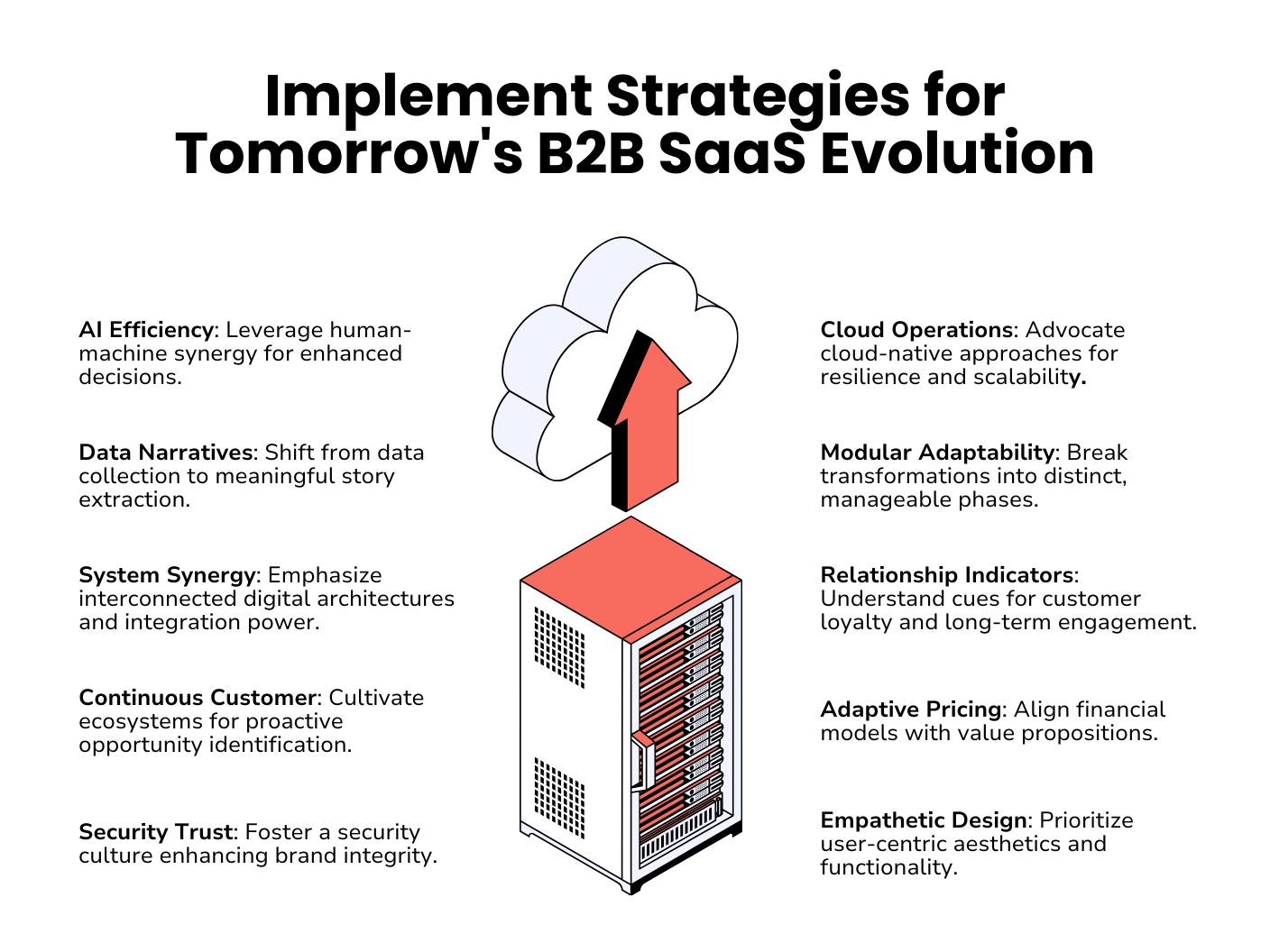 Prevailing and Emerging Digital Transformation Trends
Each technological advancement is a journey toward greater sophistication, customization, and innovation. The goal is to keep pace while also anticipating and shaping the future. Let’s delve into how these companies can evolve further by integrating and advancing upon the mentioned ideas:
AI and Machine Learning Beyond Predictive Analytics
- Explainable AI (XAI): As AI and ML become more integral to decision-making, there’s a growing demand for transparency and understandability in AI-driven insights. B2B SaaS companies can lead by incorporating XAI, enabling clients to understand, trust, and effectively act on AI recommendations.
- AI for Sustainability: Leveraging AI to help clients achieve sustainability goals by optimizing resource use, reducing waste, and enhancing energy efficiency. This not only aids in operational efficiency but aligns with global efforts towards environmental responsibility.
Data Analytics for Predictive and Prescriptive Insights
- Real-time Analytics: Moving beyond historical data analysis to provide real-time insights and foresight, allowing clients to make more immediate and impactful decisions.
- Integrated Cross-Platform Analytics: Offering analytics solutions that can seamlessly aggregate and analyze data across various platforms and services, providing a holistic view of business operations and customer interactions.
Advanced Integrations and APIs
- Low-code/No-code Platforms: By offering more intuitive, drag-and-drop integration and API management tools, B2B SaaS companies can empower non-technical users to create and customize their workflows, making technology more accessible and fostering innovation at all levels of the organization.
- API Marketplace: Creating or participating in API marketplaces for clients to discover and integrate additional services easily, fostering a more interconnected ecosystem of applications and services.
Customer Success Platforms
- Predictive Customer Health Scores: Use advanced analytics and AI to predict customer satisfaction and success metrics, allowing businesses to address potential issues before they escalate proactively.
- Customer Success AI: Implementing AI-driven tools within customer success platforms to automate routine interactions and personalize engagement strategies at scale, enhancing customer experiences and operational efficiency.
Next-generation Security Enhancements
- Zero Trust Architecture: Adopting a zero-trust framework for security assumes that threats can come from anywhere and verifies every access request regardless of the source, significantly enhancing data protection and system integrity.
- Security Automation: Utilizing AI and machine learning for automated threat detection and response, reducing the time to identify and mitigate security incidents.
Cloud-Native and Edge Computing
- Hybrid Deployment Models: Combining cloud-native architectures with edge computing to offer flexible, resilient solutions that optimize performance and cost, especially for applications requiring real-time processing at the edge.
- Serverless Computing at the Edge: Expanding serverless computing models to edge devices, enabling more scalable and efficient application deployments without the complexity of managing infrastructure.
Microservices, Containerization, and Beyond
- Service Mesh: Implementing service mesh architectures to manage microservices communication, providing enhanced security, observability, and reliability without adding complexity to the application code.
- Function-as-a-Service (FaaS) for Microservices: Leveraging FaaS platforms to run microservices, allowing companies to focus on code rather than infrastructure and enabling more granular scaling and cost efficiency.
Leveraging Emerging Technologies for New Solutions
- Blockchain for More Than Transactions: Exploring the use of blockchain for decentralized identity management, enhancing privacy and security in digital interactions.
- Quantum and Edge for Advanced Computing Solutions: Combining quantum computing capabilities with edge computing infrastructure to solve complex computational problems locally, offering unprecedented speed and insights.
Immersive Technologies for Enhanced Client Engagement
- Mixed Reality for Remote Assistance: Beyond training and visualization, using AR and VR for real-time remote assistance and guidance, transforming how support and maintenance tasks are performed.
- Customizable AR/VR Environments: Offering platforms that allow clients to easily create and customize their AR/VR experiences, reducing the barrier to entry for these technologies.
B2B SaaS companies must evaluate the tangible impact of their digital efforts. The key to achieving this is conducting a comprehensive exploration of ROI in digital transformation.
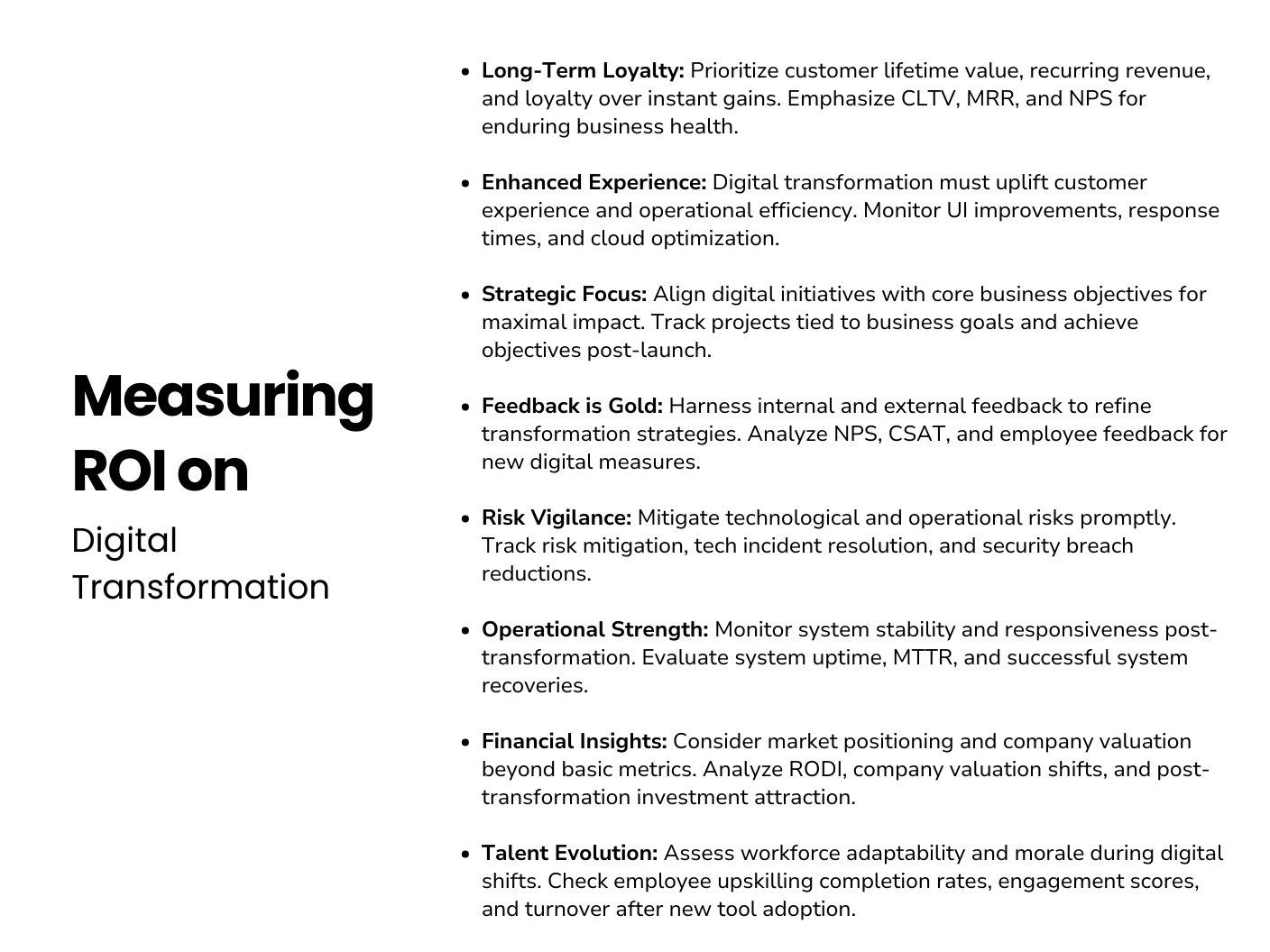
Measuring ROI on Digital Transformation
To achieve recurring revenue and meet customer expectations, businesses must prioritize customer loyalty and adaptability. Essential metrics to measure ROI include CLTV, MRR, and NPS, reflecting the business’s overall health. A successful digital transformation should improve the customer experience and operational efficiency while keeping pace with innovation and scaling solutions. Qualitative feedback complements quantitative measures across business functions. While not an exhaustive list, these metrics can help measure your digital transformation milestones for success.
Executive Leadership and Strategy
Strategic Alignment
- Alignment Rate: Measure the percentage of digital initiatives that align directly with key business objectives.
- Goal Achievement Rate: Track the number of strategic business goals met directly from digital initiatives.
Advanced Financial Analysis
- RODI (Return on Digital Investment): Analyze the return generated from digital investments relative to the cost, assessing financial impact.
- Valuation Impact: Evaluate changes in company valuation attributed to digital initiatives, indicating market perception.
- Investment Attraction Rate: Measure the increase in investments or funding post-transformation, reflecting investor confidence.
Innovation Metrics
- Innovation Output: Count the number of patents filed or innovations introduced within a specific period.
- Digital Time to Market: Measure the speed from concept to launch for digital products or features.
- Market Share Growth: Assess the increase in market share attributable to digital innovations.
Technology and Development Teams
Risk Management
- Risk Mitigation Rate: Quantify the percentage of identified digital transformation risks successfully mitigated.
- Incident Resolution Time: Measure the average time to resolve technology-related incidents, indicating operational resilience.
- Security Improvement Rate: Percentage reduction in security breaches or incidents following digital transformation efforts, reflecting enhanced security measures.
Operational Resilience
- System Uptime: Calculate the average system uptime percentage to evaluate infrastructure reliability post-transformation.
- MTTR (Mean Time To Recovery): Assess the average recovery time from system outages or incidents, indicating system resilience.
- Backup Success Rate: Track the frequency and success of system backups and restorations, ensuring data integrity and availability.
Data Governance
- Audit Success Rate: The percentage of data governance audits passed without significant issues, ensuring compliance and data integrity.
- Data Breach vs. Intervention Success: Compare the number of data breaches to successful security interventions, evaluating data security effectiveness.
- Data Issue Resolution Time: Track the average time to resolve inconsistencies or compliance problems, ensuring data quality and reliability.
Quality and Performance Metrics
- Software Quality Metrics: Including bug rates, crash reports, and user-reported issues post-release. These metrics provide insights into the technical quality and stability of digital solutions.
- Performance Efficiency: Measures the speed and reliability of digital services, which is crucial for user satisfaction and operational continuity.
Agility and Scalability Metrics
- Deployment Frequency: The frequency at which new updates, features, or patches are deployed, indicating the agility of the development process.
- Scalability Index: A measure of how effectively digital infrastructure can scale to meet growing user demands without compromising performance.
Customer Experience and Marketing
Stakeholder Feedback
- Digital NPS: Net Promoter Score specific to digital initiatives to gauge external customer satisfaction and loyalty.
- Digital CSAT: Customer Satisfaction Score is used to assess the immediate impacts of digital changes on customer perceptions.
- Employee Digital Satisfaction: Conduct surveys to gather employee feedback on new digital tools or processes, measuring internal adoption and satisfaction.
Customer Engagement and Product Usage Metrics
- Feature Adoption Rate: Measures the percentage of users actively using new features post-launch, indicating digital enhancements’ real value and appeal.
- Active User Growth: Tracks the increase in active users over time, reflecting the success of digital initiatives in attracting and retaining users.
Customer Insight and Satisfaction Metrics
- Customer Effort Score (CES): Gauges how much effort customers must exert to resolve their issues, use new features, or achieve their objectives with your digital tools.
- Sentiment Analysis: Leveraging AI tools to analyze customer feedback across various channels, qualitatively measuring customer sentiment towards digital transformations.
Human Resources and Talent Development
Talent and Upskilling
- Upskilling Completion Rate: Percentage of employees who complete digital upskilling or retraining programs, demonstrating a commitment to talent development.
- Post-Training Engagement: Monitor changes in employee engagement scores following digital skill enhancements.
- Digital Transition Turnover Rate: Track turnover rates related explicitly to implementing new digital tools or processes, assessing the impact on workforce stability.
Operations and Process Management
Collaboration and Workflow Efficiency Metrics
- Collaboration Tool Adoption: Tracks the uptake and effective use of digital collaboration tools, reflecting on how digital transformation facilitates teamwork and remote work.
- Workflow Automation Rate: The percentage of business processes automated post-digital transformation, indicating efficiency gains and potential reductions in manual errors.
Financial Flexibility and Resilience Metrics
- Cost-to-Serve: Measures the change in the cost of serving customers before and after digital transformation, assessing efficiency gains.
- Revenue Resilience Index: Evaluates how digital revenue streams have contributed to the company’s ability to withstand market fluctuations.
Innovation and Research Teams
Innovation Efficiency Metrics
- Innovation Rate: The ratio of new products or features launched to the available products or features. This metric highlights the company’s ability to innovate and refresh its offerings.
- R&D Spend Efficiency: Evaluates the return on investment for research and development expenses, linking financial inputs to innovation outputs.
Sustainability and Corporate Social Responsibility
Sustainability and Social Impact Metrics
- Digital Carbon Footprint: Assessing the environmental impact of digital operations, from data center energy consumption to the lifecycle of digital devices, aligning with sustainability goals.
- Social Impact Score: Evaluating the broader societal impact of digital initiatives, including accessibility improvements and contributions to digital literacy.
Success hinges on the ability of different departments— from executive leadership, technology and development teams, marketing, and HR to operations—to work collaboratively towards shared digital objectives. Each group must utilize specific metrics relevant to their expertise to drive improvements, measure progress, and adapt strategies aligning with overall business goals.
 Challenges in Digital Transformation
Examining the obstacles and accomplishments of standard companies can provide valuable insight into the digital transformation process.
Common challenges
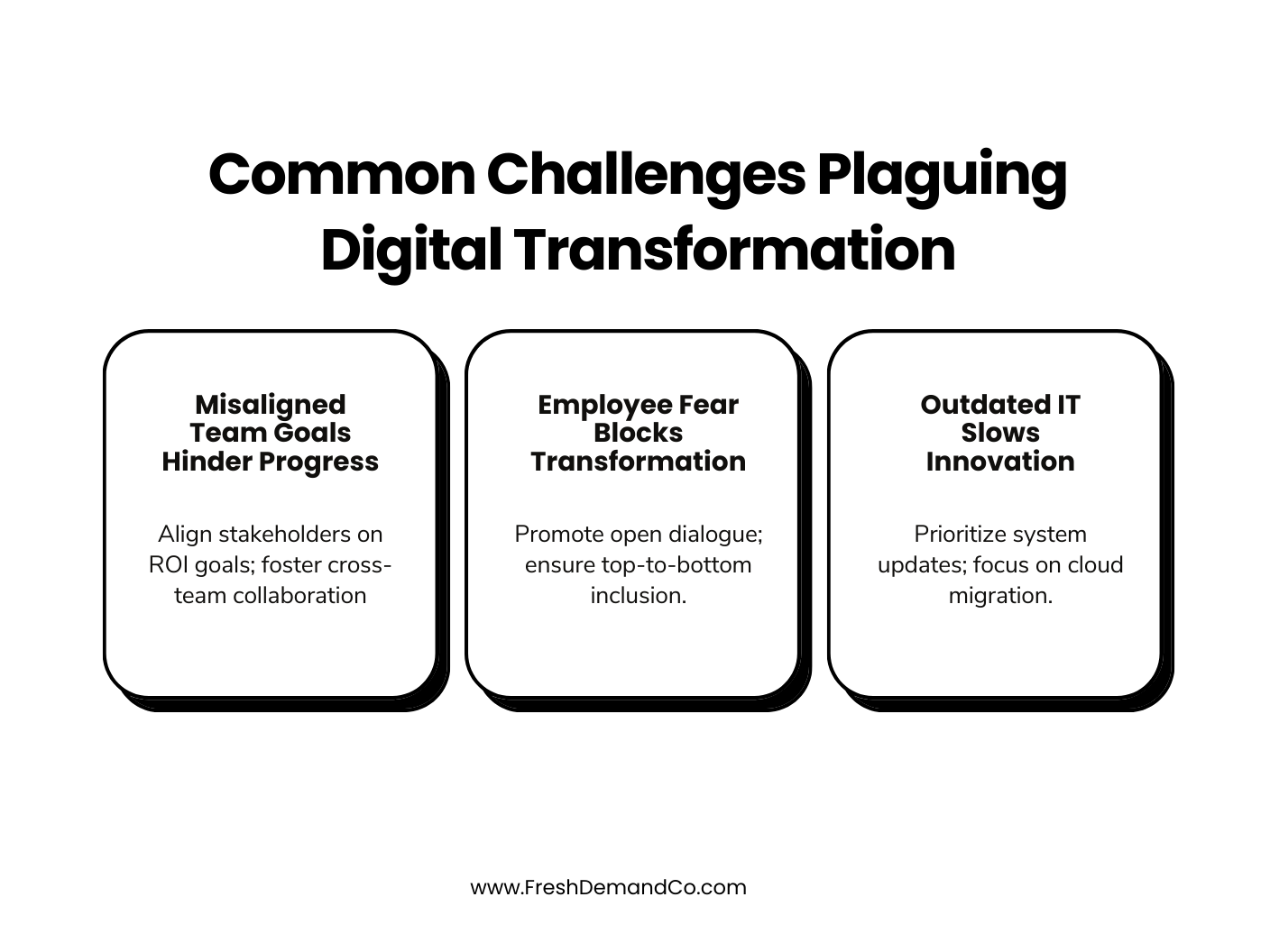
Organizations looking to transition their business operations through digital transformation may face various challenges that can hinder their successful completion. From employee resistance and lack of expertise to redesigned processes, the challenge of digital change for any organization is significant but manageable. It is essential to recognize and address these common challenges to gain an advantage:
Disjointed Cross-functional Priorities
Aligning desired outcomes among stakeholders is essential for the success of digital transformation. However, if there is a lack of commitment to shared return-on-investment goals, it can hinder progress. This misalignment can lead to teams working at cross-purposes, making it challenging to efficiently address critical issues such as data privacy and IT scalability.
Internal resistance to change
When a company changes its established working methods, it can be challenging for employees to use them for a long time. This shift can cause uncertainty or fear among employees, affecting their morale and performance reviews. Senior leadership should promote open communication between management and staff to address this issue. It is essential to ensure that the company takes input from key individuals at all levels and implements new initiatives based on their feedback. This will help navigate opposition effectively.
Buried legacy systems
Organizations often have scattered IT systems accumulated haphazardly through acquisitions and organic growth. This can create challenging migration scenarios, requiring manual upkeep due to limited feedback loops. Slower processes can allow competitors to dominate the market. It’s crucial to plan carefully, keeping components up-to-date and monitored to support innovation objectives rather than hinder progress.
Critical Factors for Successful Digital Transformation
Several key factors emerge as critical for successful digital transformation:
Customer-Centric Approach
Understanding and prioritizing customer needs and experiences have been central. You must continuously evolve your products and services to meet and exceed customer expectations.
Agility and Innovation
The willingness to pivot business models, such as moving from traditional licenses to subscription services and investing in new technologies, allows companies to stay ahead of the digital curve. Innovation is in product development and how you approach market challenges and customer needs.
Data-driven decision-making
Leveraging data analytics and machine learning to gain insights into customer behavior, market trends, and operational efficiency will enable targeted strategies and personalized customer experiences.
Ecosystem Expansion
By building and nurturing ecosystems around your products, including developers, partners, and third-party integrations, successful digital transformation creates more value for customers, enhancing the utility and stickiness of their offerings.
Investment in Talent and Culture
Recognize that digital transformation is as much about people as technology; these companies have invested in upskilling their workforce, fostering a culture of innovation, and attracting top talent passionate about driving change.
Security and Compliance
As businesses increasingly rely on digital platforms, the importance of security and regulatory compliance has grown. You must invest significantly to ensure your products meet the highest data protection and privacy standards. This is essential for building trust with customers.
Scalability and Flexibility
Offering scalable solutions that can grow with the customer’s business and providing the flexibility to adapt to changing needs is crucial. This approach allows customers to tailor the services to their specific requirements, ensuring long-term relationships.
What it all boils down to…
The rate at which technology and innovation progress is unlikely to slow down anytime soon. Overextending your teams can be as detrimental as stagnation. The hallmark of truly innovative companies lies in their leadership’s ability to guide, empower, and hold their teams accountable effectively. Clear objectives, trust, and enabling team members lead to success.