
How Neuromarketing Reveals Subconscious Drivers of Behavior
The importance of customer experience in creating positive brand engagement is well-known. However, providing a satisfying customer experience is becoming increasingly complicated due to changing expectations, evolving channels, and advanced technologies. If you’re like many others, you’re probably interested in adopting new business models and technology integrations to meet and exceed your customers’ expectations. At Fresh Demand, we believe that traditional market research methods will evolve through innovative fields such as neuromarketing and neuroeconomics, complemented by AI-powered predictive analytics. This combination will provide unprecedented insight into the subconscious drivers of buyer choices and behavior. This article explores how these cutting-edge disciplines, rooted in neuroscience and psychology, can redefine marketing strategies, enhance customer experiences, and fuel innovation in the tech industry.
 What is Neuromarketing and Neuroeconomics?
Neuromarketing and neuroeconomics are interdisciplinary fields that combine psychology and neuroscience to decode consumers’ subconscious responses. These fields provide valuable insights into emotional engagement and attention focus.
Neuroeconomics, on the other hand, investigates how the brain makes decisions. It shows how clients evaluate factors such as value, risk, and trust, especially in complex purchase decisions that involve cost, functionality, and long-term returns on investment.
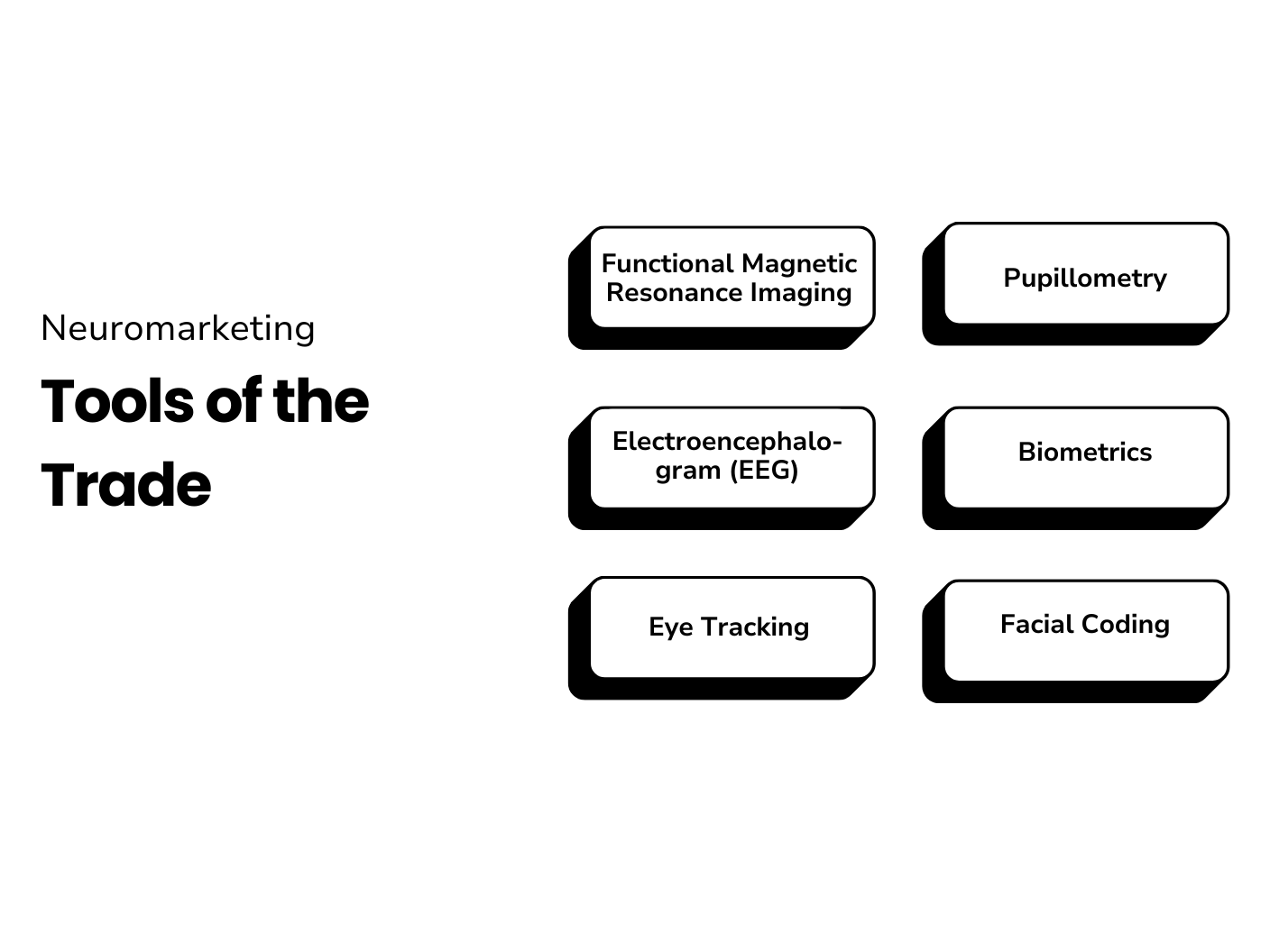
Before delving into how to use these tools for marketing, let’s first discuss the tools of the trade.
Neuromarketing: Tools of the Trade
Functional Magnetic Resonance Imaging (fMRI)
fMRI, a neuroimaging technique, maps brain activity by tracking changes in blood flow. This method yields high-resolution images of brain structures and identifies active brain regions during specific tasks or experiences. Widely utilized in neuroscience and neuromarketing, fMRI helps dissect how the brain responds to diverse stimuli and scenarios.
Electroencephalogram (EEG)
EEG is a non-invasive neurophysiological test that records brain electrical activity by placing electrodes on the scalp. It aids in studying brain function, diagnosing neurological conditions, and monitoring brain activity during tasks. EEG is a valuable tool for assessing cognitive processes and emotional responses in neuromarketing.
Eye Tracking
Eye tracking technology records and analyzes a person’s eye movements and gaze points. It sheds light on where individuals focus their visual attention when exposed to stimuli like advertisements or web content. In marketing research and user experience design, eye tracking provides vital insights into user interaction with visual elements.
Pupillometry
Pupillometry involves measuring changes in pupil diameter, which can fluctuate in response to various stimuli, including light, cognitive processes, and emotional arousal—widely employed in psychology and neuroscience, pupillometry aids in studying cognitive load, emotional responses, and attention levels.
Biometrics
Biometrics entails measuring and statistically analyzing unique physical or behavioral characteristics of individuals. Common biometric identifiers include fingerprints, facial recognition, iris scans, and voice patterns. Biometrics plays a crucial role in authentication, security, and identification across various applications, from smartphone unlocking to access control and identity verification.
Facial Coding
Facial coding is a technique used to analyze facial expressions for insights into emotional states and responses. It involves observing and interpreting facial muscle movements to gauge an individual’s emotional reactions. Market research and user testing frequently employ facial coding to assess emotional engagement and customer satisfaction through facial cues.
Incorporating these tools and techniques from neuromarketing and related fields can give businesses a deeper understanding of consumers’ subconscious preferences and behaviors, enabling more informed decisions and innovative strategies.
 Influencing Marketing Strategies
Neuromarketing can be applied to all aspects of marketing. Here’s how it comes to life in relation to the four Ps of marketing: product, price, place, and promotion, as evidenced by extensive research.
- Product: Predict customer preferences and profile different demographic groups. This leads to more targeted and successful product strategies specific to global audiences.
- Price: Determine how much customers are willing to pay and what discounts or subscription terms will best convert buyers.
- Place: Examine how product presentation and environment influence buyer behavior. For B2B SaaS technology, this translates to interface design like user dashboard layout, navigational ease, and visual presentation of software features.
- Promotion: Evaluate the effectiveness of advertisements, comparing the impact of rational versus emotional messaging and assess how ads are remembered and rated, using methods like EEG. For B2B SaaS companies, neuromarketing can help you fine-tune promotional strategies, ensuring marketing messages resonate with your ideal customers’ specific pain points and aspirations.
The goal is to gain a more nuanced, data-driven understanding of consumer preferences and behaviors.
Complementing AI-Driven Predictive Analytics
When paired with AI-driven predictive analytics, neuromarketing offers a comprehensive approach to understanding and influencing B2B buyer behavior. This synergy allows for deeper customer insights, refining UI/UX design, and ensuring messaging engages decision-makers. Neuromarketing goes beyond traditional metrics by studying the brain’s response to marketing stimuli, thus optimizing strategies such as email campaigns and digital content to better align with implicit customer needs.
This combination is particularly powerful in product development and customer experience. By integrating neuromarketing insights, companies can design products and experiences that resonate subconsciously with their target audience. When used alongside AI analytics, neuromarketing provides a nuanced view of customer behavior, significantly enhancing the effectiveness of targeting and personalization efforts.
 Business Use Cases
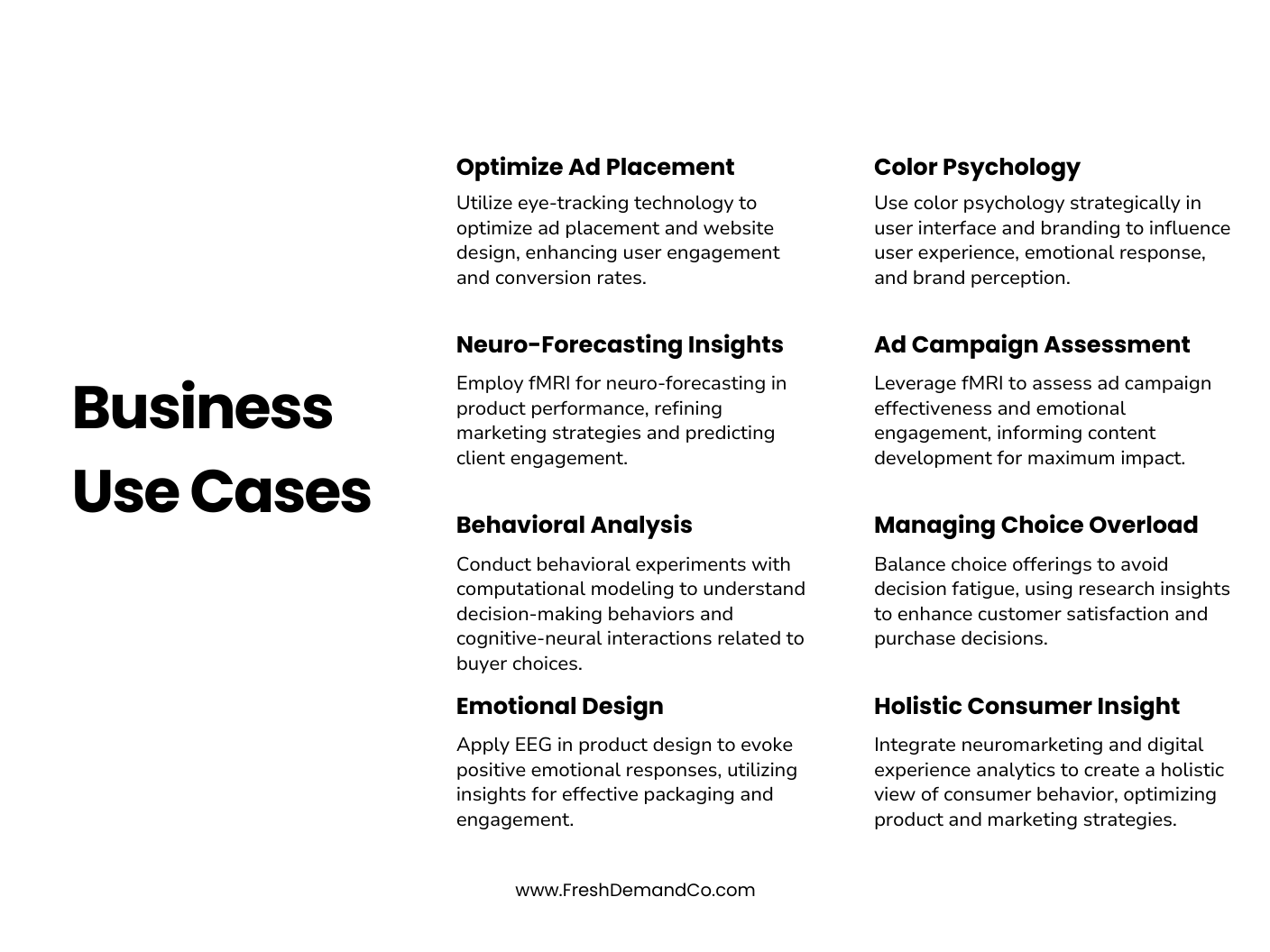
Eye Tracking and Eye Gaze
Eye tracking technology reveals how consumers focus on different elements in advertisements, guiding where to place critical messages. For example, studies show that consumers pay more attention to ad content when a baby in the image looks at it rather than directly at the viewer. Beyond ad content, eye-tracking heat maps can be pivotal in website design and store layouts. Retailers use this to optimize shelf placement and online businesses’ ease of website usage. For B2B SaaS, this translates to designing user interfaces and experiences that foster long-term engagement, streamlined upsells or cross-sells, and subscription renewals.
Predicting Product Performance
Using fMRI, one can predict purchase behavior, revealing a product’s potential success or failure. This could lead to anticipating performance and refining marketing and inventory strategies in retail. In B2B SaaS tech, fMRI can help you predict client engagement patterns, revealing a software’s potential adoption rate and user satisfaction. This insight allows SaaS companies to use neuro-forecasting to optimize product features and tailor marketing strategies to user needs.
Behavioral Experiments
These experiments are designed to mimic real-life decision-making scenarios. Participants might be asked to choose between different products or services, with their choices providing insights into preference patterns and value perceptions. Employing computational modeling, you can predict and analyze decision-making behaviors. These models can simulate how various cognitive processes and neural mechanisms interact during economic choices.
Effective Packaging
Beyond marketing, EEG is used in product design, helping companies tailor products that evoke positive emotional responses. Frito-Lay’s neuromarketing efforts led to a refined packaging strategy targeting women’s preferences. Insights revealed that complex ad processing and guilt-related decision-making areas were more active in women. Thus, the company avoided direct “guilt-free” messaging, opting for subtler colors and designs implying healthy choices. Recognizing the physiological markers reflected by subconscious reactions was better than verbal responses. This resulted in a significant increase in positive impressions, higher female engagement in snack aisles, and record sales. This strategy, informed by nuanced consumer behavior insights, demonstrates the effectiveness of tailored marketing efforts.
Color Psychology
The strategic use of color in user interface design and branding is crucial. Color can influence user experience, emotional response, and brand perception. Effective color schemes on platforms and marketing materials can significantly enhance user engagement and brand recognition in the digital space. For consumer products like Coca-Cola, using the iconic red is crucial in evoking specific emotions and influencing consumer behavior.
Ad Efficiency with fMRI
fMRI technology helps compare advertising campaigns’ effectiveness before release, as demonstrated by the National Cancer Institute’s study on smoking cessation ads. Beyond ads, fMRI helps in movie and game development, analyzing emotional engagement to predict success before launch. In addition, retail giants Walmart and Amazon use neuromarketing to craft compelling ads.
Engagement Levels in Audio vs. Video Content
One study found that audio content, despite self-reported preferences for video, elicited stronger physiological responses, including higher heart rate and emotional arousal. However, some factors, like subject motion and content type, may affect results. Craft compelling stories using descriptive language that sparks the imagination and incorporates sensory words. This approach can generate a powerful emotional response, even in non-fiction contexts.
Decision Fatigue
Research shows that presenting too many choices can overwhelm consumers and reduce purchases. A study at Columbia University found that a more extensive selection (overload) attracted more attention but resulted in significantly fewer purchases than a limited selection. Additionally, research by Kathleen Vohs at the University of Minnesota suggests that making choices can deplete one’s stamina and decision-making ability, particularly for risky decisions later on. In business, it’s essential to balance offering enough choices to meet customer preferences and avoiding overwhelming them. This further emphasizes the importance of effective customer guidance and decision support.
Loss Aversion and Anchoring
Loss aversion and anchoring are fundamental principles in neuromarketing, rooted in extensive research. These principles highlight the human inclination to avoid loss and depend on initial information when making decisions, significantly impacting behavior. Furthermore, businesses can leverage these insights to formulate effective sales strategies and negotiation tactics that harness cognitive biases to drive successful outcomes.
Identify Important Product Benefits
Neuromarketing studies, like those by PayPal, can help you identify which benefits are more likely to resonate with your customers. For example, PayPal found that messages related to speed and efficiency are more appealing than safety and security. This concept could be relevant to banking and food delivery industries, where time-based outcomes could lead to higher customer satisfaction and loyalty.
Hidden Responses
As seen in this compelling Frito-Lay’s Cheetos ad study, you can uncover consumer reactions that might not be expressed verbally. Uncovering hidden responses is also vital in cybersecurity and technology firms, political campaigns, and public service announcements, where understanding subtle reactions can shape effective messaging.
Building Online Trust
Studies on online consumer behavior found that intuitive design elements significantly influence trust formation, especially in high-risk decisions. E-commerce platforms and online services can enhance user trust by focusing on intuitive and aesthetically pleasing design elements.
Implications for Design
Neuromarketing design harnesses the power of visual hierarchies and influences user actions, driven by the brain’s three major systems: System 1, System 2, and System 0. This approach leverages human cognitive processes like intuition and emotion to create compelling, conversion-focused designs. Inspired by research, principles like reciprocity, social proof, and scarcity are crucial in crafting persuasive user experiences that lead to success.
Enhanced Digital Experiences
A great way to bolster the above is through digital experience analytics tools like ContentSquare, which allow you to track user behaviors in real-time. This includes real-time user interaction analysis, heatmaps, session recordings, and journey analytics. ContentSquare offers a comprehensive view of user engagement, pinpointing areas for enhancement in websites and applications to refine user experience.
 Ethical Considerations in Neuromarketing
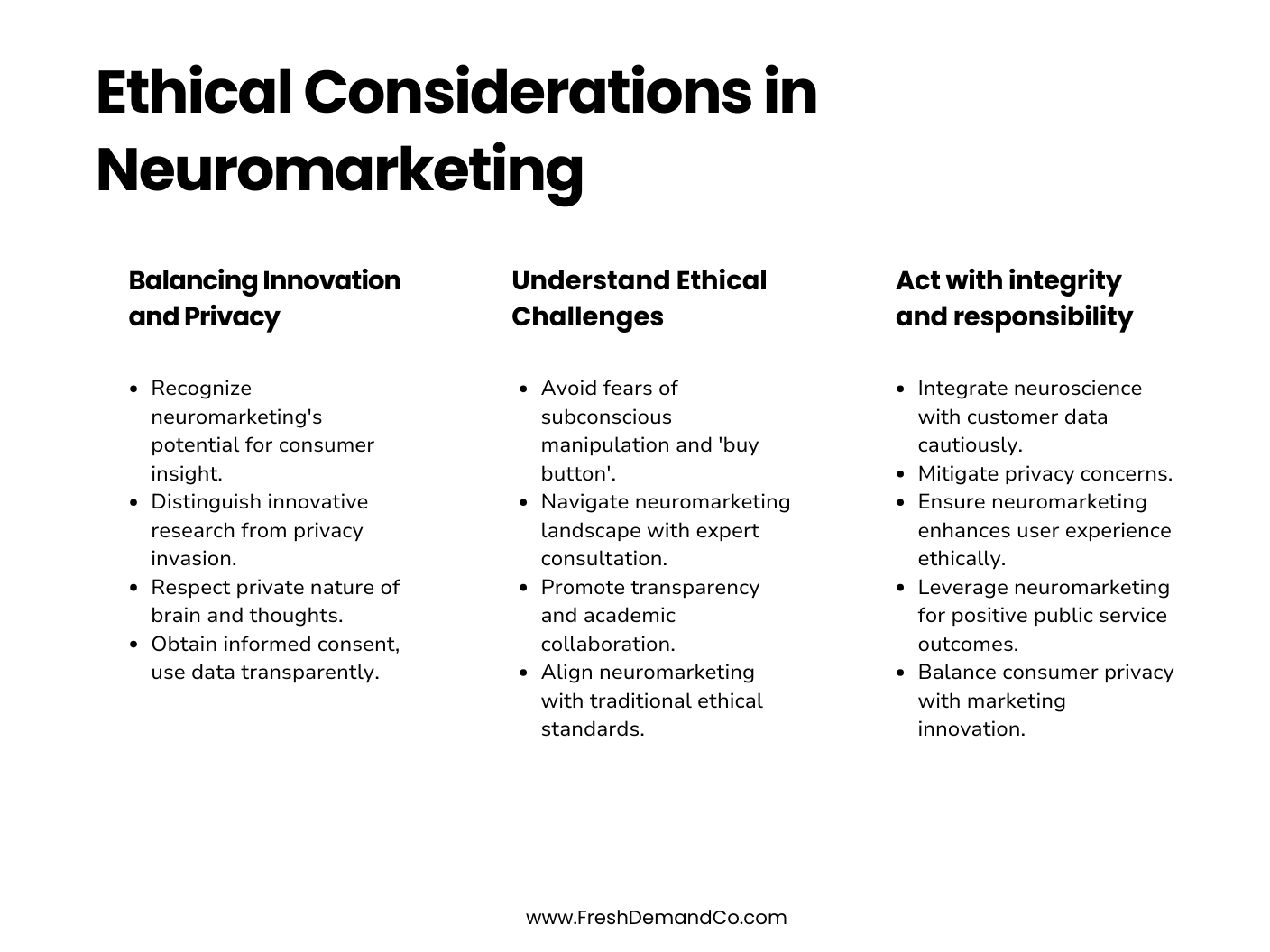
Balancing Innovation and Privacy
The rapid advancement of neuromarketing has ushered in an era of unprecedented insight into consumer behavior. However, it also raises significant ethical questions, particularly regarding consumer privacy and the potential for manipulation. Understanding these concerns is crucial for businesses aiming to implement neuromarketing responsibly.
Privacy and the Perception of Neuromarketing
By delving into consumers’ subconscious responses, neuromarketing distinguishes between innovative research and perceived invasion of privacy. While typical consumer behavior, such as purchase history, is considered public, the brain and thoughts are generally viewed as private. Using brain science can be seen as an intrusion into this private space, potentially leading to consumer backlash.
Mitigating Privacy Concerns
Despite these concerns, the reality is that neuromarketing studies usually involve a minor, consenting sample of participants, making direct privacy violations for the average consumer unlikely. The key lies in obtaining informed consent and ensuring data is used responsibly and transparently. This approach aligns neuromarketing with traditional methods like focus groups regarding ethical standards. However, the industry needs to be vigilant about maintaining these standards, especially as neuro-testing techniques become less invasive and more widespread.
Integrating Neuroscience with Customer Data
The ethical implications extend to businesses integrating brain science research with customer data. For example, leveraging neuroscientific insights about consumer behavior at specific times (like targeting women with certain ads based on menstrual cycles) could be perceived as invasive. Companies must be mindful of using such data, avoiding scenarios where consumers feel their privacy is violated. In B2B SaaS, where data security and privacy are paramount, neuromarketing must be employed with heightened sensitivity to ethical considerations, ensuring that insights enhance user experience without overstepping privacy boundaries.
The Myth of the ‘Buy Button’
A significant ethical concern revolves around the fear of subconscious manipulation – the idea that neuromarketing could find a ‘buy button’ in the brain, compelling consumers to purchase against their will. However, this fear is largely unfounded. Neuromarketing research can help identify factors influencing purchase decisions but doesn’t override factors like mood, environment, or social influences. As such, it’s unlikely ever to threaten free will.
Navigating the Neuromarketing Landscape
Businesses exploring neuromarketing must navigate a landscape where research firms may overpromise results. Understanding these techniques requires specialized knowledge, and companies should consider consulting with or hiring experts in neuroscience to evaluate neuromarketing proposals and ensure ethical compliance.
Promoting Transparency and Collaboration
Enhancing transparency in neuromarketing practices and encouraging academic collaboration could improve research rigor and alleviate ethical concerns. Open sharing of methods and adherence to informed consent would benefit marketers and consumers.
Addressing Ethical Concerns for Positive Outcomes
While neuromarketing poses ethical challenges, it also offers significant benefits. Improved targeting can lead to more relevant advertising, reducing consumer annoyance and waste. Moreover, neuromarketing has the potential to enhance public service campaigns, promoting positive behaviors and social contributions.
While this way of marketing opens up new ways of understanding consumer behavior, businesses must navigate these waters ethically, respecting consumer privacy and ensuring informed consent, to harness its full potential responsibly.
The Future of Neuromarketing
As neuromarketing and predictive analytics evolve, it offers a more comprehensive and objective understanding of consumer behavior. Bridging the gap between science and consumer behavior enables marketers to create more meaningful and effective campaigns, reshaping the landscape of consumer engagement.
Given the pace of change, neuromarketing can help drive innovation in marketing, offering insights alongside predictive analytics to redefine how brands connect with their customers.
Neuromarketing and AI-driven predictive analytics are powerful tools to reshape how brands connect with their customers and set new consumer engagement and satisfaction benchmarks. As technology continues to evolve, using brain science promises to further transform the landscape of consumer engagement, providing brands with deeper insights into what drives customer decisions, whether they are conscious of them or not.
FAQs
How Can Small Businesses or Startups Without Large Budgets Apply Neuromarketing Principles?
Small businesses or startups can apply neuromarketing principles on a smaller scale by focusing on low-cost tools and techniques. For instance, they can use simple eye-tracking software for webcams to understand how customers interact with their websites or ads. Additionally, leveraging online surveys, including emotional response scales or A/B testing, to gauge consumer reactions to marketing stimuli can provide valuable insights. Engaging in social listening to monitor customer feedback on social media can also offer clues into subconscious preferences and behaviors. By focusing on these accessible methods, smaller companies can derive neuromarketing benefits without needing expensive equipment or studies.
What are the Limitations of Neuromarketing Research, and How Can They Be Overcome?
One limitation of neuromarketing research is its potential bias in sample selection, as studies often involve a small group of participants. This can limit the generalizability of the findings to the broader population. To overcome this, researchers can ensure a diverse participant pool and combine neuromarketing data with traditional market research to validate findings. Another challenge is interpreting complex data, which requires expertise in neuroscience. Collaborating with academic institutions or specialized research firms can help businesses analyze and apply neuromarketing insights accurately. Additionally, advancements in AI and machine learning are making it easier to process and understand large sets of neuromarketing data, helping mitigate these limitations.
How Does Neuromarketing Account for Cultural Differences in Consumer Behavior?
Neuromarketing must carefully consider cultural differences, as consumer behavior and subconscious reactions can vary significantly across cultures. Incorporating cross-cultural studies and comparing neuromarketing data from diverse populations can help identify universal versus culture-specific patterns. Moreover, customizing neuromarketing approaches to account for cultural nuances in emotional expression, decision-making processes, and values is crucial. By doing so, marketers can tailor their strategies to resonate with different cultural groups more effectively. Collaborating with local researchers and leveraging insights from cultural psychology can also enrich neuromarketing strategies and ensure they are culturally sensitive and effective.