


The B2B SaaS market is experiencing major growth. Buyers and buying teams are changing, and marketing and sales dynamics are evolving ever faster. Understanding cognitive biases —psychological shortcuts that influence decisions—is crucial in the $261 billion B2B SaaS market. This is especially important as the industry is poised to innovate with an expected 13.7% CAGR through 2030.
Deeply rooted in human psychology, cognitive biases shape customer engagement and decision-making. With the right strategy, you can leverage cognitive biases to effectively navigate AI, remote work, supply chain, digital, and cybersecurity advancements.


- Anchoring Effect: First impressions, like initial pricing and features, shape client perceptions and influence decisions, forming a strong brand narrative.
- Framing Effect: How information is presented—emphasizing benefits or drawbacks—guides client perceptions.
- Loss Aversion: Buyers are more motivated by what they might lose than gain.
- Bandwagon Effect: Leveraging social proof and endorsements influences client decisions.
- Status Quo Bias: Showcasing the advantages of new solutions over existing ones, primarily through personalized demos and success stories, helps overcome resistance to change.
- Ethical Implications: Responsible use of cognitive biases and balanced and transparent communication fosters trust and respect for an individual’s decision-making.

The anchoring effect greatly influences initial perceptions, where the first information (the ‘anchor’) shapes subsequent opinions and decisions. For instance, the initial pricing or a standout feature can anchor a client’s perception of a product’s value and utility. Recognizing this cognitive bias, marketers and sales professionals can determine pricing models, highlight product features, and shape brand narratives. The skillful use of initial anchors is crucial in guiding clients toward favorable perceptions and informed decisions.
Tactics for Effective Anchoring
- Implement Thoughtful Pricing Strategies: Establish initial pricing that reflects the product’s inherent value and positions it in the market. A premium initial price can set a perception of high quality, while time-based discounts can create a sense of value and urgency.
- Accentuate Standout Features and Innovations: First, introduce your product’s most innovative or unique features. This approach helps differentiate your product in a competitive market and establishes a high-value perception.
- Narrative Anchoring: Utilize storytelling to anchor your product emotionally in the client’s mind. Highlight your product’s problem-solving capabilities and client satisfaction. How will you help your clients today and in the future?
- Diverse Anchoring Approaches: Consider various methods, including historical trends, market norms, and competitor pricing, to inform your pricing and marketing strategies.
- Negotiation Tactics: Be conscious of the anchoring effect during negotiations. Establish a favorable starting point and steer the direction of your negotiation.
Anchoring in Action
A leading SaaS onboarding company launched an interactive, AI-driven product as its flagship offering. The product enhanced user engagement and reduced onboarding time, immediately capturing clients’ attention. This set the tone for the product’s overall perception as cutting-edge and customer-centric.
Risks of Anchoring
While the anchoring effect is powerful, misusing it can lead to unrealistic expectations or misperceptions. Overpricing may deter potential clients or create a price anchor that’s hard to adjust later. Under-emphasizing key or less crucial features can skew clients’ understanding of the product’s value, leading to disappointment or churn. Thus, setting realistic, transparent, and aligned anchors with the product’s value is essential.
Practical Strategies for Marketers
- Unique Selling Propositions: Emphasize aspects that set your product apart, such as industry-leading features or superior integration capabilities.
- Use Comparative Marketing Wisely: Compare your product with competitors to set favorable anchors regarding features, pricing, or performance.
- Avoid Over-Anchoring: Avoid letting past data be the only influence on current decisions, especially in rapidly changing markets.
- Balance Historical Data with Market Trends: Use current market dynamics, innovative forecasting, and planning to maintain relevance.
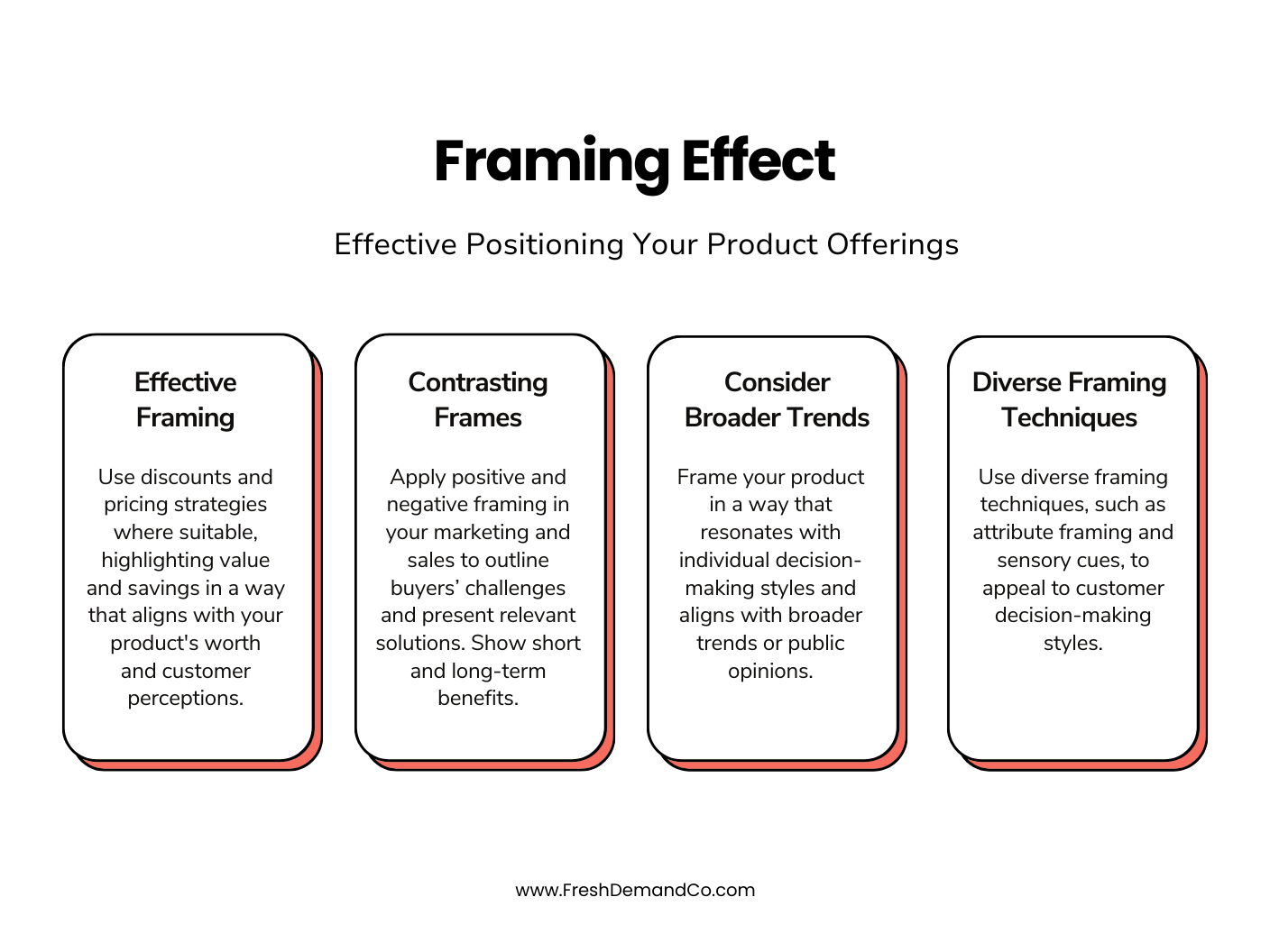
How you frame a product will influence the perception of its value and relevance—for example, highlighting positive over negative problem-based attributes and using auditory and visual cues to influence decisions.
Strategies for Effective Framing
- Utilize Value Frames: Highlight discounts in a way that resonates more effectively. Develop your discount strategy carefully to avoid setting unrealistic customer expectations while maintaining product value perception. For example, on high-value items, frame discounts in absolute dollar terms rather than percentages to emphasize savings.
- Apply Positive and Negative Frames: Adopt contrasting frames in marketing, such as outlining your buyer’s problem (negative frame) and presenting your SaaS product as the solution (positive frame).
- Frame as Threat or Opportunity: Depending on the audience’s perspective, frame your offerings as a defense against significant business threats or an opportunity for substantial growth. A mix of both framing techniques can be used to build a compelling story.
- Consider Individual and Systemic Effects: Frame your product in a way that resonates with individual decision-making styles and aligns with broader trends or public opinions that may affect the systemic perception of your product.
- Leverage Auditory and Visual Framing: Use tones, inflections, colors, and imagery in marketing materials to craft the desired impression and influence decision-making. Applying the deeper psychology behind these signals can boost your product’s perceived trustworthiness and efficiency.
- Frame with Different Reference Points: Present the benefits of your product with different reference points, such as comparing long-term value versus immediate cost savings.
Framing Effect in Action
A cybersecurity SaaS company effectively used framing when introducing its new software. They positively framed the product by emphasizing enhanced protection and advanced threat detection. Conversely, they employed negative framing by highlighting the risks of cyber-attacks and data breaches with outdated systems. Combined with security-conveying dark colors and urgent red accents, this approach appealed widely, driving significant upgrade adoption across client segments.
Balancing Framing Strategies
Over-reliance on positive framing can lead to inflated expectations, while excessive negative framing might instill unwarranted fear or urgency. It’s crucial to find a balance to avoid misleading clients. Poorly executed framing strategies make the brand appear manipulative, potentially eroding trust and damaging long-term client relationships. The framing should be grounded in facts and reflective of the genuine value the product offers.
Framing Techniques for Marketers
- Employ Attribute Framing: Emphasize the positive attributes of your SaaS product. For example, if your software increases efficiency, highlight it as “maximizing productivity” rather than “minimizing time waste.” Consider your buyer’s pain points.
- Use Gain vs. Loss Framing: Frame messages by focusing on the potential gains or emphasizing what clients might lose by not choosing your product.
- Strategically Frame Default Choices: Present a default option that aligns with your customer preferences.
- Implement Auditory and Visual Elements: Consider auditory cues (like voice tone) and visual elements (color schemes and imagery) to reinforce your product’s message.
- Practice Critical Thinking and Reflection: Encourage clients to engage more deeply with your product through content that stimulates reflective and analytical thinking, helping them see beyond the immediate framing of information.

Loss aversion implies a stronger drive to prevent losses (like avoiding failure) than to seek gains (like enhancing performance). Although this approach might seem manipulative, it’s effectively used to emphasize the risks clients face without your services and the advantages of avoiding such losses.
Effective Sales Techniques
- Emphasize Competitive Disadvantages and Economic Implications: Focus on the risks and financial consequences of not adopting your offering, such as falling behind in market competition or incurring financial losses.
- Create a Narrative of Urgency: Create relevant messaging about why immediate action is necessary, such as staying ahead technologically to improve productivity and performance.
Loss Aversion in Action
A cybersecurity company demonstrates how to avoid potential data breaches and financial losses. They contrast risks with success stories of robust protection using their software. This approach, reinforced with time-sensitive offers and market trend insights, effectively taps into loss aversion.
Balancing Tactics
Overemphasizing loss aversion can backfire by creating a fear-based decision-making environment. This might lead to client resentment or post-purchase dissonance if the expected losses don’t materialize or the gains are not as significant as portrayed. Marketers must balance loss aversion tactics with positive messaging to ensure a well-rounded and ethical story.
Applying Loss Aversion in Marketing
- Tailor Messaging Around Client Pain Points: Identify specific challenges and inefficiencies your clients face without your solution. Consider the broader implications of loss aversion on decision-making and risk interpretation.
- Utilize Comparative Metrics Effectively: Present data-driven comparisons highlighting performance gaps.
- Implement Time-Sensitive Offers: Use limited-time promotions to create a sense of urgency.
- Educate on Evolving Market Dynamics: Leverage content marketing to inform clients about industry advancements and the risks of not keeping pace.

In the context of SaaS technology, the bandwagon effect plays a significant role in influencing client decisions. This phenomenon occurs when clients are more likely to adopt new technologies or workflows if they see others, especially peers or industry leaders, doing the same. It’s driven by the desire to conform and the fear of missing out on prevalent trends. This effect can be particularly potent in tech industries, where staying ahead or in line with competitors is crucial. However, it also risks clients adopting solutions impulsively without thorough evaluation. Thus, while the bandwagon effect can speed up adoption rates, SaaS providers must ensure their offerings meet client needs to sustain long-term satisfaction and loyalty.
Bandwagon Strategies
- Highlight Industry Endorsements and Adoption Rates: Emphasize the trust in your product by showcasing industry leader endorsements and adoption statistics.
- Combine Testimonials with Data for Impactful Stories: Merge customer success stories with relevant performance metrics, such as customer retention and lifetime value.
- Foster a Community of Advocates: Create and nurture online forums and social media platforms where users can share their experiences, building a community that validates and endorses your product.
- Utilize Media to Reinforce Market Relevance: Use third-party reports and analyses on market trends and technology advancements to reinforce your product’s relevance.
- Showcase Real-World Customer Success: Share detailed case studies and testimonials from satisfied customers, highlighting the tangible benefits and potential outcomes attributed to your offerings.
Bandwagon Effect in Action
A SaaS firm specializing in cloud-based video conferencing utilized the bandwagon effect by showcasing its extensive use by Fortune 500 companies and highlighting endorsements from key industry figures. This strategy fostered a perception of their platform as the top choice among market leaders, prompting similar-sized companies to adopt it for alignment with industry norms, especially in aspects like legal compliance, integration, and security.
Balancing Hype and Authenticity
Using the bandwagon effect risks hyping a product beyond its capabilities, potentially causing client discontent and harming brand credibility. Excessive focus on product popularity might also deter clients from seeking bespoke solutions. Thus, it’s crucial to substantiate popularity claims with authentic user feedback and solid performance metrics.
Practical Bandwagon Tactics for SaaS Marketing
To enhance your product’s market appeal effectively:
- Utilize Social Proof Strategically: Combine customer testimonials and user-generated content from platforms like Trustpilot and Gartner to build credibility. Highlight real-world satisfaction to underscore trust in your product.
- Highlight Industry Recognition: Feature your product’s awards and high ratings from notable industry and technology review platforms to showcase market leadership and excellence.
- Leverage Expert Endorsements: Conduct webinars with industry experts who use or recommend your product. Their endorsement enhances credibility and offers valuable insights.
- Form Co-Marketing Alliances: Engage in joint marketing with complementary service providers to broaden the reach and solidify your product’s standing as a top choice.
- Integrate Customer Feedback in Communications: Embed high ratings and positive testimonials in your marketing materials, such as email campaigns and your website, to emphasize customer satisfaction and effectiveness.
- Showcase Competitive Advantages: Participate in analyst reports like the Forrester Wave, using comparative analysis to illustrate your product’s unique value and strengths.
- Create Achievement-Focused Content: Develop content that discusses your accolades, ratings, and customer successes, weaving a narrative of quality and commitment.
- Actively Participate on Review Platforms: Encourage customer reviews and interact with feedback on these platforms. Engagement can elevate your product’s visibility and trustworthiness.

Status quo bias refers to the inherent resistance to adopting new technology or workflows, favoring current, established systems. This cognitive bias stems from a natural inclination to stay with what is known and familiar.
Counter Status Quo Bias
- Conduct Comprehensive Benefit Analysis: Go beyond basic advantages to show how your product enhances efficiency, productivity, and ROI, tailored to address the client’s unique challenges.
- Offer Customized Trials and Demonstrations: Let clients experience firsthand how your solution integrates with their existing workflow and fulfills their specific business requirements.
- Highlight Success Stories: Share case studies or success narratives that focus on overcoming initial hesitations and the significant value of adopting your product. Emphasize stories illustrating the ease of transition, support provided, and long-term benefits realized.
Status Quo Bias in Action
Facing client resistance due to status quo bias, a SaaS firm promoting a new project management tool overcame hurdles by emphasizing its tool’s easy integration with current systems, thereby reducing fears of high transition costs and disruptions. They showcased success stories from similar businesses, underscoring operational enhancements and dispelling fears of negative impacts. The company offered tailored demos and trials for clients to experience the benefits directly, addressing concerns about regret and blame by empathizing with decision-makers. Furthermore, they spotlighted the inefficiencies and hidden costs of not upgrading, positioning their tool as essential for operational advancement.
Understanding Client Resistance
Navigating the status quo bias demands a careful approach, as overly forceful methods can increase client discomfort or opposition. This challenge is amplified with clients firmly committed to their existing solutions. It’s vital to balance advocating for change with understanding client apprehensions. Engaging in open dialogues helps to address concerns and perceived risks of new solutions. Offering robust support through personalized demonstrations and relevant case studies can alleviate transition anxieties and highlight the advantages of the new solution. Respecting the client’s readiness for change is crucial for successful adoption and lasting satisfaction with the product. Such a strategy ensures smoother transitions, builds trust, and lays the groundwork for sustained client relationships.
Strategic Implementation Against Status Quo Resistance
- Seamless Integration and Supportive Transition: Emphasize how effortlessly the new solution can be integrated with existing systems. Highlight essential benefits, such as comprehensive onboarding and ongoing support.
- Visioning for the Future: Show how your offering will position clients for future success and align with their long-term strategic goals.
- Customized Solution Demonstrations: Show how you align with your client’s business and industry. Show real-life scenarios where the new solution can resolve specific challenges or create new opportunities.
- Building Trust with Testimonials and Feedback: Compile testimonials based on critical concerns and narratives aligned to overcoming objections.
- Conduct Educational Initiatives: Develop educational content and workshops tailored to demonstrate how your SaaS solutions efficiently address your clients’ daily operational needs and enhance their job performance.
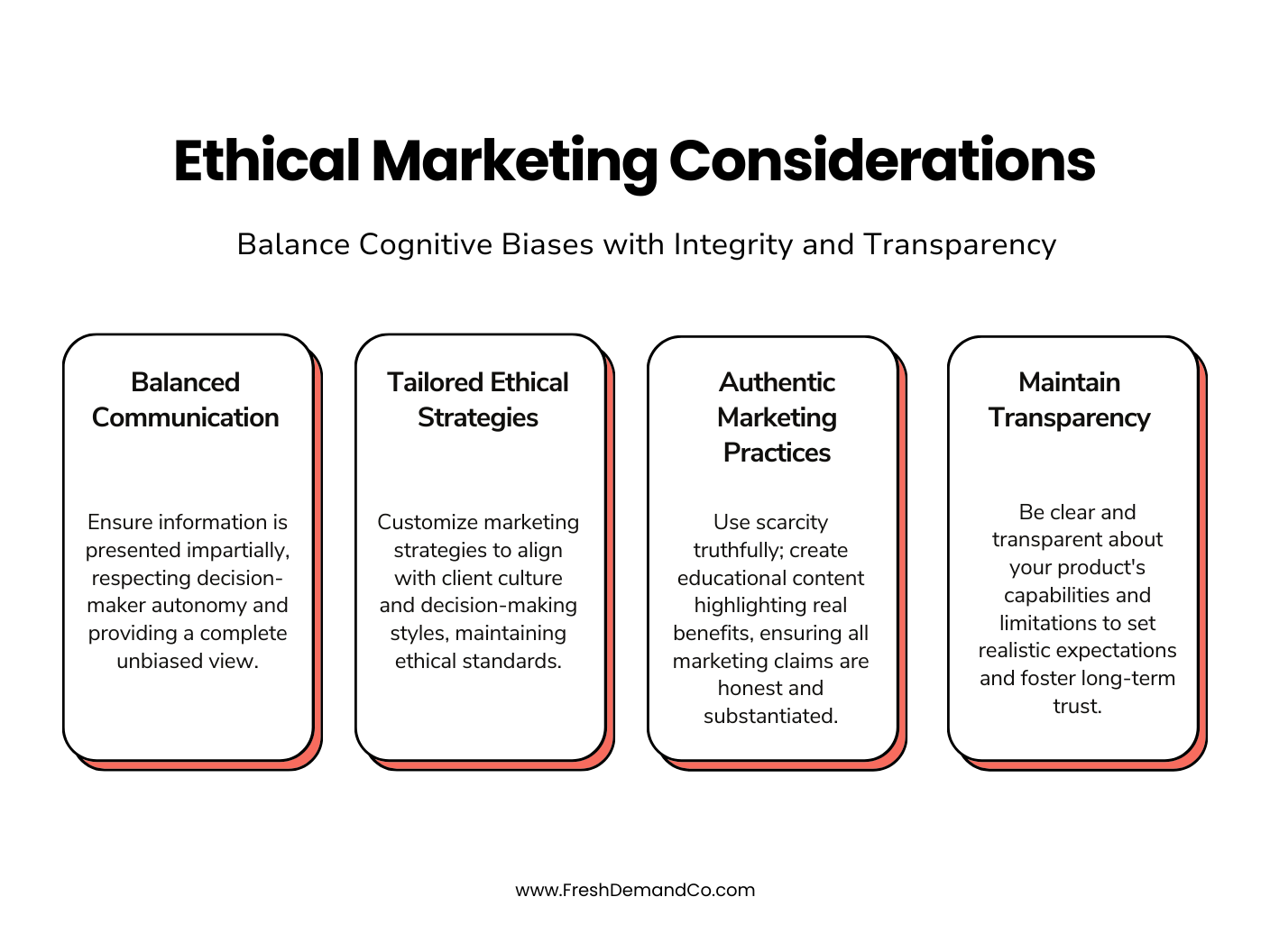
Using cognitive biases in your marketing and sales approach must be done ethically. It’s crucial to influence customer decisions responsibly, avoiding manipulation. This requires a deep understanding of consumer psychology and a commitment to honest communication.
Leveraging Cognitive Biases
- Balanced Communication: It’s crucial to present balanced information, avoiding overemphasizing the positives or negatives. This approach respects the decision-maker’s autonomy and provides a complete picture.
- Customized Strategies: Tailoring your approach based on the client’s culture and decision-making style enhances the effectiveness of your marketing while upholding ethical standards.
- Feedback and Adaptation: Regular monitoring and client feedback are essential for fine-tuning strategies and ensuring ethical marketing practices.
Practical Applications and Responsibilities
- Authentic Scarcity and Educational Marketing: Ensure that any scarcity used in marketing is based on actual limitations and complement this approach with educational content that backs up the genuine benefits of your product.
- Responsible Use of Social Proof: Utilize testimonials and endorsements ethically, avoiding misleading impressions about your product’s popularity or effectiveness.
- Transparency and Clarity: Be clear about your product’s capabilities and limitations to set realistic expectations and build long-term trust.
- Regular Ethical Reviews: Continually assess your marketing strategies against ethical standards with integrity and honesty in marketing and sales.
As the SaaS market grows and evolves, using cognitive biases and understanding their ethical considerations becomes beneficial and essential. These tools empower marketers to craft strategies that resonate with their audience, fostering stronger connections and driving successful outcomes. In an industry where the technological landscape constantly shifts, such psychological insights provide a stable foundation for making informed, impactful marketing decisions.
FAQs
What strategies can SaaS companies use to counteract negative cognitive biases that may deter new customer acquisition?
To overcome negative cognitive biases, SaaS companies can implement educational marketing strategies that address misconceptions and highlight the evidence-based benefits of their products. This could involve creating content that demystifies the technology for non-technical decision-makers or using case studies of successful implementations. Engaging in transparent communication that openly discusses potential drawbacks and how they are mitigated can also help overcome skepticism. Offering trials or demo versions allows customers to experience the product, reducing the impact of negative biases by replacing speculation with actual user experience.
How can SaaS companies leverage cognitive biases to enhance product development and innovation processes?
SaaS companies can use cognitive biases in product development through user feedback and behavior analysis in the design process. This ensures that new features align with user expectations and address common biases. For instance, understanding the anchoring effect can guide the prioritization of features that will set a positive initial perception. Additionally, recognizing the bandwagon effect, developers can incorporate social proof elements, such as user testimonials or industry accolades.
What analytics tools can be used to reveal cognitive bias patterns?
Google Analytics and Mixpanel can identify cognitive bias impacts by monitoring user interactions on pricing pages or with marketing materials. Of course, this would require proactive use of these biases and a strategic approach to measuring the outcomes. A simple example would be looking at bounce rates after a price increase. This may signal the anchoring effect, where the initial price sets expectations against which the new price unfavorably compares. Conversely, enhanced engagement with materials emphasizing potential feature loss showcases loss aversion.
SaaS companies can complement analytics with direct feedback through surveys (SurveyMonkey or Typeform) and behavioral experiments. This approach allows for a nuanced understanding of customer motivations, combining the objective data from user interactions with subjective insights from customer feedback. Together, these methods provide a comprehensive view of how cognitive biases like the anchoring effect and loss aversion shape customer engagement, loyalty, and satisfaction.
How can small and midsize SaaS companies practically assess the influence of cognitive biases on customer retention and value over time?
In addition to the above, we suggest monitoring social media and online review platforms for customer feedback and discussions. Social listening tools can help you gather unsolicited insights into customer perceptions influenced by cognitive biases.
Platforms like Brandwatch or Sprout Social, beyond their capacity for scheduling and monitoring, offer advanced analytics to dissect data from social listening. These tools are adept at quantifying customer sentiment, tracking mention volumes, and pinpointing trends that hint at underlying cognitive biases in public perception. Such insights are invaluable for understanding how biases like the bandwagon effect or confirmation bias might be shaping customer views and decisions.
Simultaneously, Visual Website Optimizer (VWO) facilitates a deeper dive into customer preferences through A/B testing, multivariate testing, and other experimental setups. This enables SaaS companies to systematically test hypotheses about customer behavior, such as comparing different pricing models or the framing of product features. For example, A/B testing with VWO can reveal whether customers have a stronger response to monthly versus annual plans, uncovering the anchoring effect’s role in pricing strategy effectiveness. Similarly, experimenting with how product features are described can illuminate the framing effect’s impact on customer adoption and preference.