

How to Overcome Challenges and Build Trust in B2B SaaS Sales Enablement
Evolving your B2B SaaS sales enablement team through product inception and growth phases is complex. In their pursuit of expansion, such businesses often face rising acquisition costs, lower lead quality, and subpar customer lifetime value (CLV).
As the momentum for digital transformation accelerates, there’s a burgeoning demand for SaaS solutions within the cloud industry, even in the face of challenges. Reinforcing this trend, Gartner underscores that SaaS dominates the cloud service arena, representing most of the global software market.
As the dominance of SaaS grows in the coming years, it becomes imperative to weave a narrative that resonates deeply, fostering trust and ensuring they stand out in this evolving marketplace.
Join us as we delve into crafting strategies that tackle objections, manage concerns, elucidate the intricate buying process, and design content harmonized with diverse customer personas.
 Key Takeaways
- In the densely populated B2B SaaS landscape, standing out requires a combination of strategic positioning, demand generation, engaging content, robust partnerships, and continuous market awareness. Engage and retain your audience’s interest through content syndication, webinars, and collaborative ventures.
- Foster trust with clear communication, transparent pricing, and an emphasis on security. Recognize the multifaceted buying journey by customizing your approach for each stakeholder, ensuring content and value propositions target their unique challenges.
- Equip sales teams with essential tools like sales playbooks and competitor insights, ensuring effective conversion from interest to sales. Embrace objections as avenues for deeper engagement and prioritize post-sale support, nurturing long-lasting partnerships and continual feedback-driven enhancements.
- Offer a versatile and scalable SaaS solution. Ensure it integrates smoothly with existing systems, scales as the client’s needs grow, and consistently demonstrates a clear return on investment.
 Mastering Objection Handling in B2B SaaS Sales Enablement
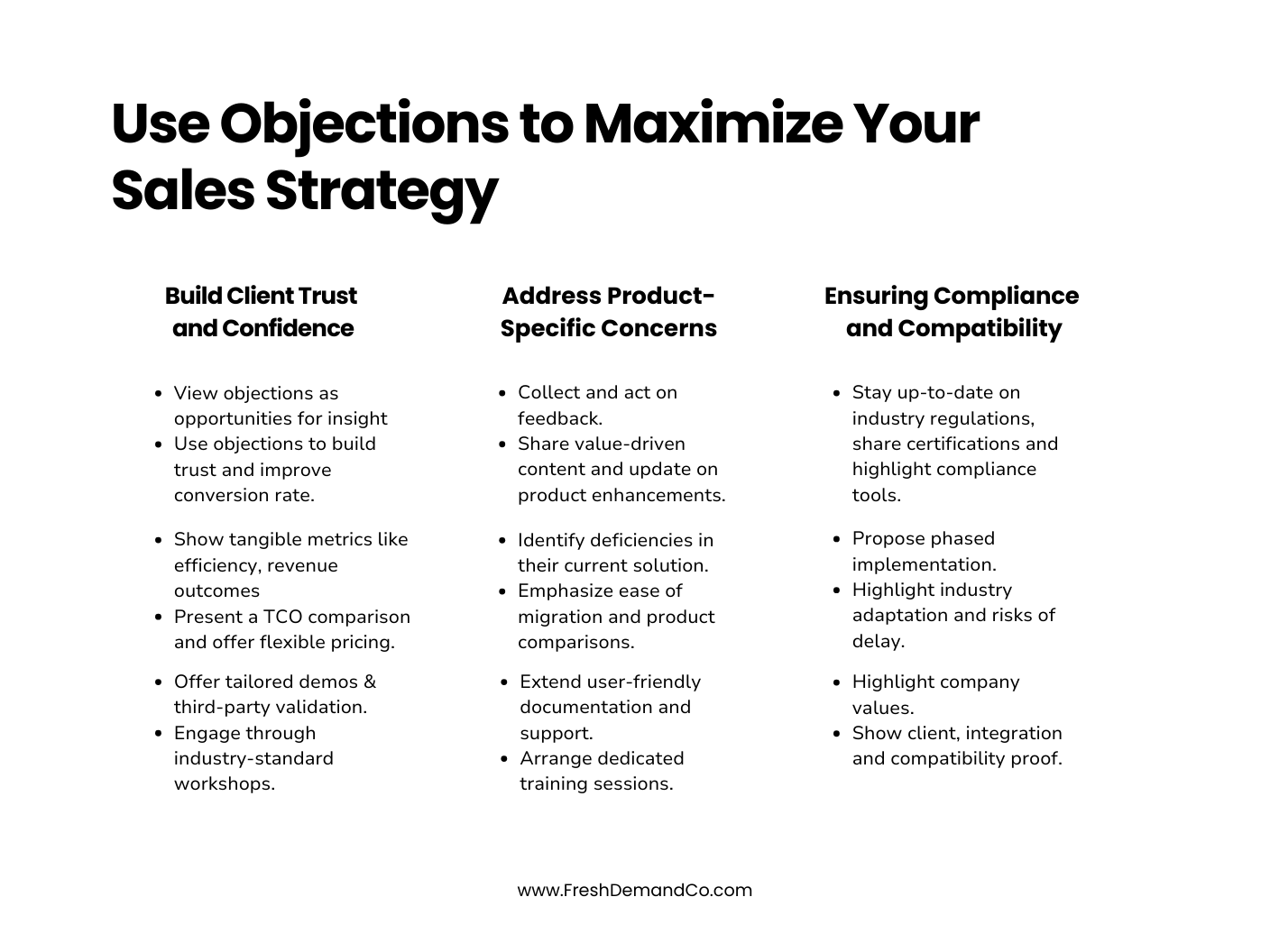
Objections are vital touchpoints in the sales journey, opening doors to constructive dialogues. Approaching them with an open mind reveals insights into potential clients’ genuine concerns, hesitations, or past experiences. Instead of viewing objections as hindrances, astute tech companies see them as insights to delve deeper into their clientele’s psyche. By addressing these reservations effectively, companies enhance their conversion rates and establish a foundation for enduring trust-centric relationships.
Countering Price Objections
In an environment where every penny counts, ensuring that potential clients perceive the value of your product is crucial to overcoming price-related objections.
- ROI Deep Dive: Highlight the overarching benefits of your solution, translating product features into palpable outcomes like boosted efficiency, time savings, or revenue enhancements.
- Total Cost of Ownership (TCO) Breakdown: Offer a panoramic view of the cost spectrum by comparing the total costs of your solution against competitors or traditional methods.
- Flexible Pricing Models: Cater to varied fiscal needs with tiered pricing, bulk discounts, or promotional offers.
- Trial or Pilot Programs: Alleviate doubts by allowing prospective clients to experience the product’s value firsthand.
Building Confidence Post, ‘I need to think about it.’
When clients are on the fence, reaffirming your product’s unique value and benefits can tip the balance in your favor.
- Customized Demonstrations: Craft demonstrations that hit the mark, spotlighting their unique challenges and objectives.
- Third-party Validation: Boost credibility through industry accolades, favorable rankings, or positive analyst feedback.
- Peer Reviews: Guide them to independent platforms for unbiased user perspectives.
- Engagement Workshops: Reinforce your expertise by hosting sessions on industry standards and best practices.
Reengagement Post ‘Not Interested’
Persistence combined with a diplomatic approach can transform initial disinterest into a potential opportunity.
- Feedback Collection: Take a step back and seek candid feedback to recalibrate your approach.
- Value-Driven Content Sharing: Engage them subtly by sharing insightful content germane to their industry, positioning yourself as a valuable resource.
- Product Updates: Maintain the connection by highlighting enhancements that resonate with their evolving needs.
- Tailored Check-ins: Establish touchpoints that address relevant industry changes, emphasizing the enduring relevance of your solution as a guiding tool.
Addressing the ‘We already have a solution’ Objection
Changing to a new system can be daunting; illustrating the unmatched benefits and ease of transition is pivotal.
- Gap Analysis: Identify and showcase how your product bridges the deficiencies of their existing solution.
- Migration Ease: Demystify the process through real-world testimonials, robust support commitments, or migration tool walkthroughs.
- Comparison Sheets: Present compelling comparison matrices underscoring the edge your solution holds over competitors.
Overcoming ‘It’s too complex’ Concerns
A product’s value diminishes if clients find it challenging to use; emphasizing simplicity and offering robust support can counteract these concerns.
- User-Friendly Documentation: Create accessible resources like succinct user guides, FAQs, or illustrative video walkthroughs.
- Dedicated Support: Pledge continuous support through personalized onboarding sessions or dedicated helplines.
- Training Workshops: Regularly organize training capsules to empower their team to fully exploit your product’s capabilities.
Addressing ‘Are you compliant with our industry regulations?’ Concerns
Compliance is non-negotiable; proving your solution meets industry standards can allay fears and build trust.
- Understanding the Regulatory Landscape: Stay updated on pertinent industry regulations and standards.
- Certification Showcase: Establish credibility by flaunting pertinent certifications.
- Focused Compliance Tools: Highlight product features designed to ease compliance management.
- Testimonials on Compliance: Share genuine testimonials to validate your solution’s efficacy in meeting industry regulations.
Tackling the ‘We’re not ready yet’ Concern
Hesitation often stems from more profound reservations. Directly addressing these can speed up the decision-making process.
- Phased Implementation: Introduce a modular adoption strategy, gradually enabling them to transition to the new system.
- Insights on Industry Preparedness: Provide data or studies that stress the importance of timely adaptation in their sector.
- Risk Assessment: Illuminate the potential pitfalls of postponement and elucidate how your solution acts as a buffer against these looming risks.
Addressing ‘Concerns about Vendor Compatibility’
A harmonious partnership is as important as the product itself; highlighting your commitment to collaboration ensures a smooth client experience.
- Company Ethos Presentation: Spotlight your company’s values, principles, and commitment to fostering strong partnerships.
- Testimonial Showcase: Provide endorsements from existing clients attesting to the harmonious and productive collaborations they’ve experienced with your team.
- Partnership Approach: Elucidate your organization’s methodology towards collaboration, emphasizing mutual growth, understanding, and the provision of tailored support.
- Compatibility Assurance: Reiterate the compatibility of your software solution with diverse business needs and workflows, assuring a seamless integration experience.
Objections in B2B SaaS should not be seen as obstacles but as catalysts. By transforming these objections into constructive conversations, tech companies can refine their sales approach and forge profound and enduring ties with their customer base. This deepened relationship is especially crucial given the intricate dynamics of the SaaS purchasing landscape.
 Effectively Addressing B2B SaaS Sales Enablement Concerns
Navigating the B2B SaaS industry requires strategic actions prioritizing transparency, demonstrating value, and building trust.
Transparency in Communication & Pricing
- Proactive Alerts: Inform customers about upcoming maintenance or updates.
- Issue Resolution: Keep clients updated on any disruptions and their resolutions.
- Feedback Portals: Allow clients to voice concerns, highlighting the company’s commitment to growth.
- Transparent Pricing: Be clear about all costs, including potential future charges, helping clients budget accordingly.
Demonstrating Value & Product Evolution
- Webinars: Use real-time interactive sessions to deep-dive into product features.
- Customer Success Stories: Showcase real-world ROI through case studies.
- On-demand Training: Make training resources readily available, ensuring clients can maximize product value.
- Feature Roadmaps: Offer insights into future product enhancements, signifying an ongoing commitment to improvement.
Scalability & Customization
- Built for Growth: Ensure the product is adaptable for both small startups and large enterprises.
- Integration Options: Highlight seamless integrations with existing tools and systems.
- Customizable Features: Stress the product’s flexibility, demonstrating its ability to adjust to clients’ requirements.
Data Management, Analytics, & Security
- Data-Driven Insights: Elevate the product’s capabilities in deriving actionable insights from data.
- Security Protocols: Detail measures like encryption and two-factor authentication.
- Certifications & Third-party Audits: Use external validations to bolster product credibility.
- Data Sovereignty: Address compliance with regional data storage mandates.
Comprehensive Customer Support & Post-Sale Journey
- Always-On Support: Ensure 24/7 availability, catering to a global clientele.
- Dedicated Account Managers: Provide clients personalized attention, understanding their unique business challenges.
- Regular Check-ins & Feedback Loop: Proactively engage with clients, refining products/services based on their feedback.
- Continued Partnership: Emphasize ongoing support, training, and updates even after the sale.
Exit Strategy & Renewals
- Transition Assurance: Highlight a hassle-free experience for businesses wanting to switch or migrate.
- Seamless Renewals: Detail straightforward contract renewal processes and introduce opportunities for upselling or cross-selling.
SLAs, Guarantees & Client-Centric Development
- Service Commitments: Clearly outline service levels and frequently demonstrate adherence.
- No-Obligation Trials: Offer potential clients risk-free trials, giving them confidence in the product.
- Client-Centric Innovation: Use client feedback as a compass for product enhancements.
By taking a proactive, client-centric approach, B2B SaaS companies can effectively mitigate concerns, build lasting trust, and solidify their standing in a competitive marketplace. One of the most potent ways to achieve this is through tailored sales content.
Sales Enablement: The Matrix of Buyers and Buying Teams
In the dynamic world of B2B SaaS, the acquisition of technical solutions is more than a mere transaction—it’s a multi-staged journey that requires understanding and engagement with a range of stakeholders. Vendors must recognize and cater to these individuals’ diverse perspectives and requirements to ensure a seamless procurement process.
Decision Makers
-
- Role: Typically, high-ranking executives, often from the C-suite, are vested with the power to greenlight or decline significant acquisitions.
- Interactions: Liaise with gatekeepers, influencers, and financial analysts to ensure the solution aligns with organizational goals and promises a compelling ROI.
- Focus: Strategic alignment, financial impact, and the broader vision of the proposed solution.
Influencers
-
- Role: Senior managers, department heads, or domain experts enrich decision-making with specialized knowledge.
- Interactions: Bridge the feedback gap between end-users and decision-makers, frequently initiating interactions with potential vendors and overseeing initial evaluations.
- Focus: Operational benefits, compatibility with existing processes, and potential enhancements in departmental functions.
End-users
-
- Role: Frontline employees across different departments who will interact with the software daily.
- Interactions: Relay their real-world experiences, challenges, and needs to influencers and partake in product demonstrations and trial runs.
- Focus: The software’s usability, impact on everyday tasks, and associated learning curve.
Gatekeepers
-
- Role: Senior managers, department heads, or domain experts enrich decision-making with specialized knowledge.
- Interactions: Engage directly with vendors during technical evaluations, advising decision-makers on potential technical challenges or synergies.
- Focus: Adherence to security protocols, scalability potential, integration possibilities, and the quality of post-purchase technical support.
Financial Analysts
-
- Role: Dissect the financial ramifications, forecast ROI, and gauge the cost of procuring the solution.
- Interactions: Collaborate tightly with decision-makers to furnish them with financial forecasts and engage with vendors during price negotiations.
- Focus: Alignment with budgetary constraints, cost-benefit examinations, and assessing the long-term fiscal outcomes.
B2B SaaS procurement is a collaborative journey, often sparked by end-users identifying operational challenges and guided by influencers seeking solutions. As gatekeepers evaluate technical fit and analysts confirm the financial viability, decision-makers synthesize these insights to reach a final verdict. For vendors to succeed, they must adeptly traverse each stage, aligning their strategies to every stakeholder’s unique role, from identifying issues to making the final purchase. In doing so, vendors transition from solution providers to invaluable strategic partners in the competitive SaaS market.
 Crafting Impactful Sales Enablement Content
Understanding your diverse B2B audience is vital. The market is filled with challenges, preferences, and goals, so using a one-size-fits-all content strategy doesn’t cut it. Instead, success hinges on creating content that directly speaks to each unique type of buyer. This tailored approach, ideally with a focus on account-based marketing, helps bridge the gap between what your customers need and what you offer, transforming your company into an invaluable partner. As we delve into the strategies to make this happen, let’s explore how to align your content with the specific roles and goals that define each stage of the B2B SaaS procurement process.
Here’s how businesses can master this tailored approach:
Buyer Persona Analysis
Move beyond basic demographics. Conduct deep-dive interviews, surveys, and data-driven research to fully understand your target audience’s pain points, goals, and roles. Employ customer journey maps to gain insights into their buying cycle.
Customer-Centric Content
Strategically lay out content according to the buyer’s journey. Ensure that every content piece addresses distinct challenges and queries from the awareness stage to the decision-making stage.
Personalized Content Recommendations
Utilize artificial intelligence and data analytics to curate personalized content suggestions for each buyer persona. Offer relevant resources like blogs, webinars, and case studies based on their online behavior and interactions.
Interactive and Immersive Content
Design immersive and interactive digital experiences. Use virtual product demonstrations and interactive calculators to capture the buyer’s attention and showcase the value proposition.
Content Performance Analytics
Implement advanced analytics tools to monitor the efficacy of your sales enablement content. Continuously gauge the impact of various content assets on the buyer’s journey and fine-tune your strategy accordingly.
Sales Enablement Tech Integration
Invest in a comprehensive sales enablement technology stack that includes AI-driven chatbots, CRM integration, and content management systems. These tools can provide real-time insights to sales teams, helping them tailor their conversations and presentations to individual buyer personas.
As we discuss strategies for creating impactful sales enablement content, remember that these methods go beyond grabbing attention to building lasting relationships. The ability to empathize with your audience, tailor content to their journey, and use technology and data analytics to personalize their experiences represents a significant shift in how businesses approach sales and marketing. These insights pave the way for more than just sales enablement; they enable true partnership, ensuring your brand’s continued influence in the ever-changing B2B SaaS landscape.
 Demand Generation Techniques for B2B SaaS Sales and Marketing Teams
Demand generation plays an essential role in driving effective B2B SaaS sales enablement. Establishing a significant footprint in the market requires a blend of traditional and innovative strategies. Here’s how you can amplify your brand’s presence to amplify your sales strategy.
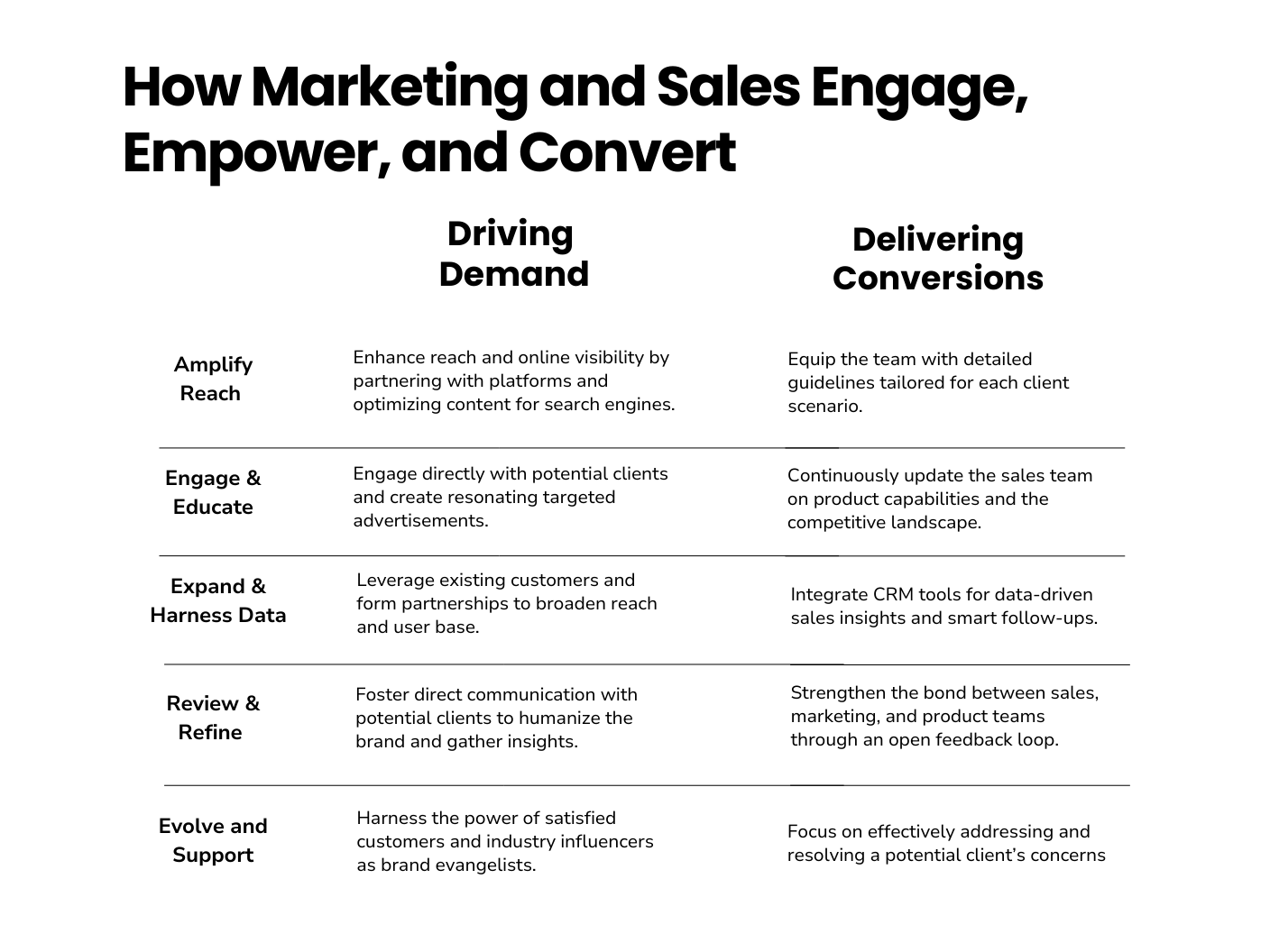
- Content Syndication: Partner with relevant platforms to share your content with a broader audience. Quality content enhances your brand’s reach and establishes authority in your niche.
- Webinars & Live Q&A Sessions: Engage with potential clients directly. Host topic-specific sessions that cater to common industry challenges, positioning your product as a solution. This engagement humanizes your brand and provides an avenue for direct feedback.
- SEO & Organic Growth: In a digital age, visibility on search engines is non-negotiable. Optimize your content to rank high, ensuring those actively seeking solutions find yours at the top.
- Affiliate and Referral Programs: Word-of-mouth still wields considerable power. Leverage satisfied customers and industry influencers to become evangelists for your solution.
- Engaging Ads: In an era of short attention spans, your ads must resonate. Create targeted ads that address specific pain points, driving potential clients further down the conversion funnel.
- Collaborative Ventures: Focus on building synergistic relationships. Form partnerships with service providers that complement your offerings. Such collaborations can result in joint promotions, broadening your user base.
Demand generation combines strategic positioning, leveraging partnerships, and continually meeting market needs. As you master these techniques, you’ll notice a surge in brand awareness and interest. But interest alone isn’t enough. Once you’ve captured a potential client’s attention, how do you ensure your sales team is well-equipped to close the deal? This leads us to sales enablement.
B2B SaaS Sales Enablement Best Practices
Converting interest into sales isn’t merely about the charm of your sales representatives. It hinges on the depth of their knowledge, the tools at their disposal, and their ability to effectively address a potential client’s concerns. With a plethora of competing solutions in the market, your sales team must not only convince potential clients of the merits of your product but also illustrate how it outshines competitors.
Here are some best practices:
- Sales Playbooks: Consider these as essential guides for your team. Offer detailed guidelines for different scenarios they may face, ensuring they are always prepared and have a strategy in place.
- Tailored Sales Scripts: Every client has unique needs. While foundational scripts provide a starting point, they should be adaptable to cater to specific client queries and concerns.
- Product Training Sessions: The tech industry evolves rapidly. Regularly update your sales team about product enhancements. Adequate training equips them to address technical queries and instills confidence when showcasing product capabilities.
- Competitor Analysis Tools: In a competitive space, awareness of what the ‘other side’ offers is crucial. Equip your team with insights on how your solution stands out, ensuring they always have an answer to the question, “Why do you over them?”
- CRM Integration: The modern sales process is data-driven. Integrate robust CRM tools to track, analyze, and predict customer interactions. Omnichannel integration allows for ‘smart’ follow-ups.
- Feedback Loop: Sales is a two-way street. Establish mechanisms for the sales team to relay feedback. Open communication helps refine strategies and strengthens the bond between the sales and product teams.
Sales enablement isn’t just about providing tools and creating an ecosystem where your sales team thrives. When demand generation brings potential clients to your doorstep, an empowered sales team ensures those doors remain wide open, welcoming new opportunities and partnerships.
Conclusion
The B2B SaaS sales journey is multifaceted, a delicate dance that blends trust-building, value demonstration, and nurturing long-term relationships. It begins with the allure of strategic demand-generation techniques that draw prospects into the brand’s universe. Then, as they edge closer, a well-equipped and empowered sales team takes over, guiding them through the intricate decision-making corridors. From a prospect’s initial engagement, where finely-tuned content makes its mark, to deeper discussions that address specific needs and paint a vivid picture of unparalleled value, every touchpoint is a testament to the brand’s commitment and credibility.
However, the essence of B2B SaaS sales isn’t merely securing a deal but forging partnerships. For businesses to ascend the ladder of success in this dynamic landscape, the shift must be towards constructing lasting, impactful bonds rather than just transient transactions. By blending potent demand-generation techniques with robust sales enablement practices, companies lay the foundation for these bonds. This approach meets immediate sales aspirations and paves the way for continuous growth and prosperity in the fast-evolving world of SaaS. B2B SaaS sales are more than selling a solution; it is about becoming an indispensable partner in a client’s successful journey.