


To stay ahead in the ever-evolving B2B SaaS industry, businesses must understand their dynamic buyer personas, tailor their messaging strategies, and conduct rigorous performance evaluations. This article will discuss the essential practices that B2B SaaS companies should adopt to strengthen their market presence and maximize their return on investment. We’ll cover optimizing sales tactics, improving up/cross-sell opportunities, measuring content efficacy, and selecting the most impactful metrics.
Key Takeaways:
-
- Continuously refine buyer personas using integrated data and technologies to ensure tailored and relevant messaging.
- Merge comprehensive market insights with modern technologies to craft compelling narratives prioritizing benefits around the buyer’s jobs to be done.
- Adopt a research-driven approach, diversify content, and emphasize sales enablement and feedback for adaptability.
- Develop an ABM strategy, prioritize alignment with buyer personas, spotlight value propositions, and leverage tailored communication strategies.
- Choose and use metrics that align with business goals, focusing on actionable insights while deploying modern analytical tools.


The digital era has transformed the B2B buying process, with buyers now researching extensively to refine their vendor options. Understanding buyers as they progress from awareness to interest, consideration, and finally to closing is crucial, as it enables businesses to tailor their approach, ensuring they effectively address each stage of the decision-making journey.
Dynamic, well-researched buyer personas steer marketing and sales strategies in the right direction. By establishing a thorough methodology for crafting and continuously updating these essential profiles, businesses can stay attuned to evolving customer needs and preferences, ensuring sustained engagement and success.
CRM and Deal Analysis
By thoroughly analyzing past interactions, businesses can proactively tackle challenges and enhance strategies, making historical data vital for shaping future initiatives and providing a comprehensive understanding of customer touchpoints.
- CRM Insights: Examine your CRM system to track customer behaviors. Map the entire customer journey, highlighting decision-driving touchpoints leading to conversions.
- Review of Wins and Losses: Analyze past deals to discern common trends. Identify what sets successful conversions apart and learn from missed opportunities. Such insights spotlight messages or features that resonate with various buyers.
- Engagement Metrics: Tools like Google Analytics or Hotjar provide a glimpse into how prospects engage with your website. This data highlights their primary areas of interest.
Customer Profiles
Every customer has a unique story influencing their decisions. Teams prioritizing creating detailed and relatable customer profiles find themselves better equipped to address specific needs, turning potential opportunities into successful conversions.
- Detailed Profiling: Go beyond just age and location. Understand customers’ attitudes, behaviors, needs, and goals.
- Profile Representation: Convert these detailed profiles into visual representations, helping teams connect with and think about their target audiences.
- Scenario Building: Develop realistic scenarios based on these profiles to guide strategy and decision-making.
Agile Marketing and Sales Strategies
Evolving B2B SaaS market dynamics require agility. Adapting strategies promptly in response to customer behavior and industry trends distinguishes top performers in a competitive arena.
- Predictive Analysis: Utilize AI-driven tools that forecast upcoming trends or behaviors based on current data. This anticipatory approach allows you to be several steps ahead.
- Agile Marketing: Embrace a flexible approach. Continuously track campaign results and make ongoing tweaks to ensure that marketing strategies consistently meet the evolving needs of your audience.
Continuous Engagement & Collaboration
Crafting effective strategies demands eliminating barriers and promoting teamwork. Through proactive feedback collection and tuning into shifting customer needs, businesses ensure their buyer personas authentically mirror real-world scenarios.
- Feedback Ecosystem: Establish a structured feedback system. Harness insights from client-facing teams like sales and client services; proactively reach out to existing clients through surveys or feedback-driven events.
- Internal Collaboration: Gather cross-functional teams to discuss buyer behavior shifts and evolving preferences. This holistic gathering brings diverse perspectives, ensuring buyer personas are all-encompassing and reflect real-world complexities.
Integration of Tech and Tools
Leveraging technology goes beyond simplifying processes; it uncovers hidden insights, adding depth and nuance to persona creation, thus improving the business’s understanding of its audience.
- Sentiment Analysis: Leverage AI tools like MonkeyLearn to gauge customer sentiment from reviews, social media, and support tickets. These platforms provide a more nuanced understanding of customer pain points and satisfaction, ensuring insights are accessible to all team members.
- Persona Management Platforms: Leverage platforms like HubSpot or Xtensio that offer tools to craft, manage, and refine buyer personas, making them accessible to all team members.
Continuous Learning
With the B2B SaaS sector’s constant evolution, cultivating a culture of continuous learning becomes non-negotiable. To remain at the forefront, companies must be aware of industry shifts and ensure their teams’ knowledge grows in tandem.
- Pulse on Industry Movements: Keeping your finger on industry trends is crucial in a domain as dynamic as B2B SaaS. Leverage research firms like Gartner or Forrester to obtain comprehensive industry insights, strategic guidance, and technology trends, empowering your business to make informed decisions and maintain a competitive edge in the market.
- Regular Training Initiatives: As the landscape of your market changes and buyer personas evolve, it’s essential to ensure that your teams stay updated and aligned with these shifts. Hosting consistent workshops or introducing gamified training modules can be engaging methods to refresh their knowledge. This ensures they have actionable insights to cater effectively to your audience.
B2B SaaS companies can sculpt precise and actionable personas by harnessing this comprehensive, data-centric approach. These personas, in turn, pave the way for elevated engagement, conversions, and customer loyalty. With such a refined understanding, developing messaging and positioning tailored to these B2B SaaS buyer personas is crucial.


Gartner research indicates that 75% of B2B buyers prefer a buying experience without sales representatives. However, such self-directed digital purchases can occasionally result in buyer’s remorse. Addressing this, sales and marketing teams should balance digital self-service and personal engagement, promoting seamless transactions and win-win outcomes for both parties. Engaging buyers and buying teams requires a meticulously designed messaging strategy, which becomes the cornerstone of impactful communication.
Develop Buyer Insights
To craft a compelling message, one must delve into a multifaceted understanding of the audience, recognizing that surface-level knowledge often needs to be improved in a complex B2B environment.
-
Market Research: Utilize survey platforms such as Qualtrics, which offers AI-driven insights and complement your research with immersive focus groups or in-depth interviews. The goal is to delve into your audience’s unique challenges, aspirations, and desires, ensuring a holistic grasp of their requirements.
- Behavioral Data Analytics: Utilize Mixpanel, Heap, or Amplitude to gain insights. These tools provide deeper insights into feature interaction, drop-off points, customer lifecycles, and user engagement metrics, allowing for a more informed messaging strategy.
- Social Listening: Use platforms like Brandwatch or Mention to monitor brand mentions and sentiments across the web, understanding real-world perceptions and concerns.
Create a Persona-Centric Content Strategy
With a myriad of messages flooding every channel, tailoring content based on detailed persona insights ensures that your messaging doesn’t just reach but also resonates and engages.
- Tailored Messaging: Recognize the nuances. For example, a Chief Technology Officer (CTO) will prioritize technical implementation and security, while a Chief Financial Officer (CFO) focuses on financial metrics. Customize your messaging to address these unique concerns head-on.
- Benefits-Centric Communication: Move beyond just feature listing. Translate technical capabilities into tangible outcomes. For instance, instead of highlighting “Blockchain Integration,” emphasize “Enhanced data security with Blockchain, ensuring zero breaches.”
- Narrative Building: Stories resonate. Develop engaging stories and case studies that reflect similar personas’ challenges, paths, and successes, allowing prospects to see a representation of their possible journey.
Develop Differentiated Positioning
In the crowded B2B marketplace, pinpoint accuracy in understanding your position relative to competitors becomes the bedrock of differentiated and compelling communication.
- Competitor Mapping: Regularly audit the competitive landscape using tools like SimilarWeb or SEMrush. Understand their messaging, unique selling points, and areas of excellence.
- SWOT Analysis: Identify your strengths, weaknesses, opportunities, and threats in the market context. Position your product or service, emphasizing your strengths and opportunities.
- Jobs to be Done (JTBD) Framework: Delve into your customers’ underlying needs and motivations. Understand the ‘jobs’ they hire your product or service to achieve, and tailor your positioning to address those specific tasks and outcomes more effectively.
- Value Proposition Design: Reframe your unique selling propositions into clear, concise, and compelling value statements that speak directly to each persona’s challenges, ensuring alignment with the jobs they aim to complete.
Iterate Your Messaging Framework
In an era where change is the only constant, adaptability in messaging is not just a strategy; it’s a necessity. Embracing agility ensures your content stays relevant and impactful amidst shifting landscapes.
- Continuous A/B Testing: Don’t limit testing to email subject lines. Experiment with content formats, messaging tones, visual elements, and call-to-actions to discern what captivates your audience best.
- Real-time Feedback Infrastructure: Incorporate tools like Contentsquare or Qualaroo to gather on-spot feedback on your website or platform. Analyze user sentiment and perceptions to refine messaging.
- Dynamic Training Modules: Implement interactive training platforms, like Kahoot to keep sales and marketing teams updated with the evolving messaging, brand voice, and positioning nuances.
Embrace Modern Technologies
Harnessing modern technology is more than keeping up with the times—it’s about setting new standards in engagement and leveraging innovations to create deeper connections and more memorable experiences.
- Chatbots and AI Assistants: Integrate AI-driven chatbots like Drift or Intercom on your platforms. They can deliver real-time personalized messaging based on user interactions.
- AR/VR Demonstrations: For complex SaaS solutions, use augmented or virtual reality tools to offer immersive product demonstrations, making abstract concepts tangible and understandable.
In the B2B landscape, stakeholders come with varied roles and viewpoints. Standing out demands more than delivering messages—it requires precision in crafting them to address these intricate personas. By tapping into data, weaving empathetic stories, and leveraging modern technologies, businesses can create messages that resonate deeply and solidify enduring bonds.


Simply understanding your product’s features falls short in today’s saturated SaaS tech landscape. As the sector evolves, aligning sales strategies with buyer personas’ unique needs and profiles becomes paramount. This alignment is underscored by a notable DemandGen statistic: 77% of B2B buyers engage with at least three digital content pieces before initiating contact with a seller.
As the digital landscape shapes buying behaviors and larger buying teams have become the norm, diving deep into distinct buyer profiles isn’t optional—it’s foundational. To craft sales tactics that resonate, one must understand each member’s role, motivations, and challenges within these expanded teams, moving beyond surface-level engagements to offer tailored solutions.
Create a Comprehensive Buying Team Strategy
The buying process has evolved from an individual’s decision to a collaborative effort involving multiple stakeholders. Today, large purchases, especially in the B2B space, often involve diverse teams, each member having unique concerns and priorities. Sales and marketing teams must acknowledge this evolution and adapt their strategies accordingly.
- Deep Dive into Industry Dynamics: Attend industry webinars, conferences, and workshops to grasp the evolving structure of buying teams.
- CRM Exploration: Regularly mine CRM data, specifically the notes, interactions, and recorded communications, to understand the stakeholders involved in decision-making.
- Sales Feedback Sessions: Organize monthly or quarterly sessions where the sales team can share insights from the ground, offering a direct perspective on buying team dynamics.
Map Out the Buying Team
To cater to buying teams effectively, it’s crucial to identify each member’s role and influence. Typically, a buying team might consist of end-users, technical evaluators, executive decision-makers, financial approvers, and internal advocates or champions.
- Stakeholder Analysis Workshops: Organize collaborative workshops to brainstorm and identify all potential roles within buying teams.
- Persona Development Retreats: Dedicate focused sessions to build comprehensive buyer personas, incorporating direct insights from customer interviews.
- Sales-Marketing Collaboration: Ensure both teams provide input in this mapping exercise, considering their diverse client interactions.
Create Tailored Content
Each team member will resonate with different content types. While an executive might prefer ROI projections, a technical evaluator would lean toward detailed product specifications.
- Content Audits: Review and assess the relevance, accuracy, and effectiveness of existing content pieces for each persona.
- Engagement Metrics Analysis: Use tools like Google Analytics and HubSpot to gauge which content types resonate most with each persona.
- Feedback Loops: After sharing content, gather feedback to understand its efficacy and areas of improvement.
Synchronize Sales and Marketing Efforts
Ensure that sales and marketing are aligned in their understanding and approach towards buying teams. This synergy is critical to provide a consistent message and experience.
- Integrated Campaign Planning: Ensure that both teams are involved from the inception of any campaign, promoting a unified message.
- Unified Communication Channels: Use tools like Slack or Microsoft Teams to foster real-time communication between sales and marketing.
- Shared Goals & KPIs: Establish shared success metrics to ensure both teams work towards common objectives, fostering alignment.
Track Influence Throughout the Sales Process
Given the multiple touchpoints involved with buying teams, tracking which content and interactions influence each member at different stages of the buying journey is crucial.
- Advanced Analytics: Implement tools that provide deeper insights, such as multi-touch attribution models, to understand the various touchpoints influencing decisions.
- Journey Mapping: Visualize the complete journey of each buying team persona, highlighting fundamental interactions and touchpoints.
- Persona-Specific Reporting: Customize CRM reports to showcase persona-specific interactions, offering a granular view of engagement.
Iterate Based on Ongoing Feedback
The buying process is dynamic. As such, feedback from successful and lost sales opportunities should be used to refine the approach continually.
- Loss Analysis: Whenever a deal isn’t successful, thoroughly analyze the gaps in addressing buying team needs.
- A/B Testing: Continually test content variations and strategies to ascertain what resonates best with each persona.
- Quarterly Reviews: Establish a routine of quarterly performance reviews focused solely on strategies related to buying teams, ensuring continual refinement and adaptation.
The next step for B2B SaaS companies with tailored sales tactics for various personas is to enhance the conversion potential of these personalized engagements using strategies like account-based marketing (ABM).
As buying teams take a central role in decision-making, it’s crucial for sales and marketing to evolve collaboratively. This joint understanding and tracking of buying teams underscore the rising importance of precision-targeted strategies, such as ABM, influencing purchases at all levels.
Among the myriad of techniques available, Account-Based Marketing (ABM) stands out for its precision and efficacy. ABM emerges as a beacon for firms aiming to optimize their sales and marketing strategies. By harnessing the power of data, technology, and tailored engagement, businesses can navigate the intricacies of the modern B2B environment, driving conversions and cementing their foothold in the market.
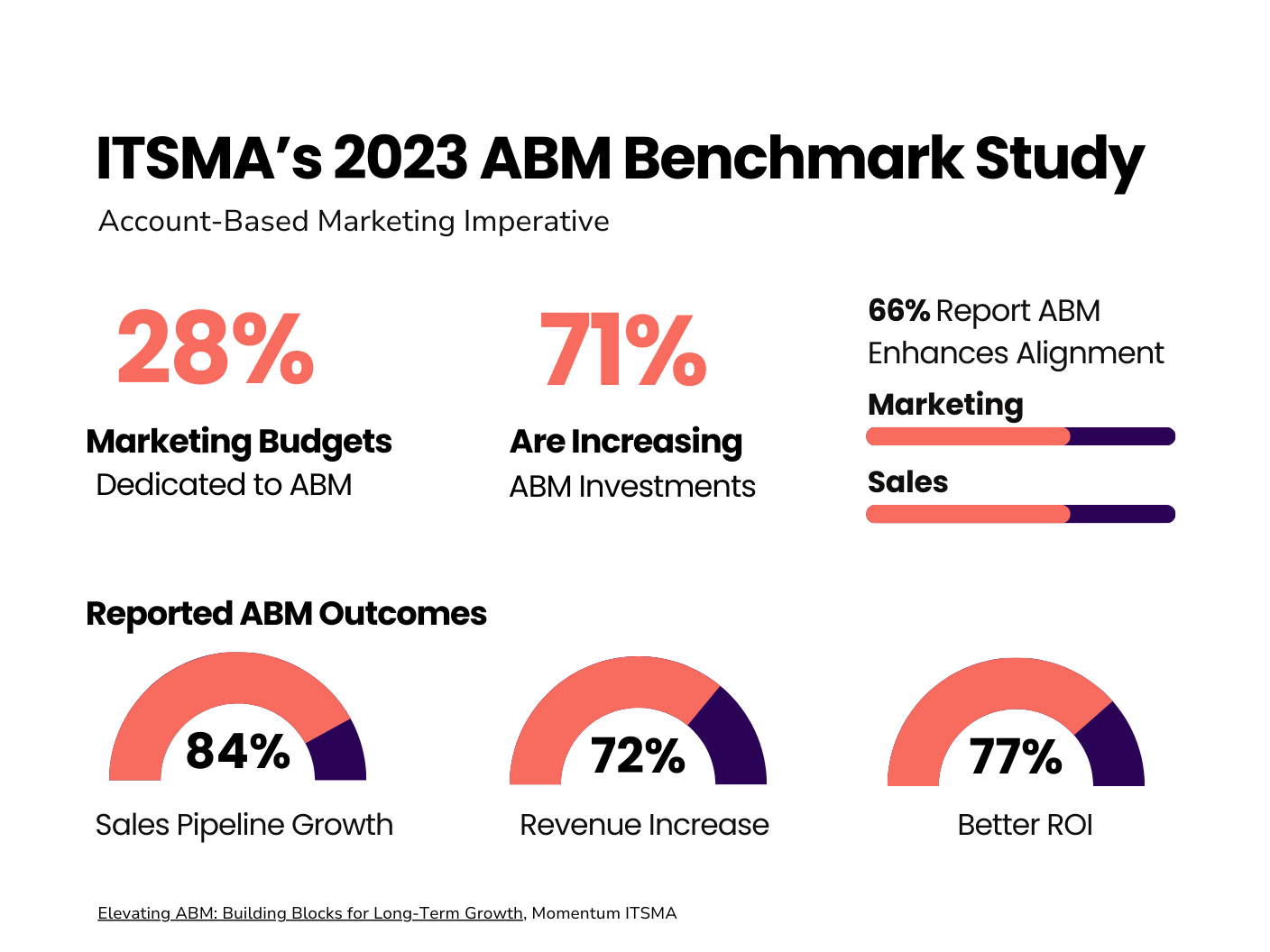
A testament to ABM’s efficacy is the growing investment in this strategy. According to an ITSMA study, 28% of 2023 marketing budgets are funneled into ABM. This trend is further underscored by the 71% of companies ramping up their ABM investments, reflecting an impressive 13.1% year-on-year growth.
The ROI of this investment is evident. Firms practicing ABM report tangible benefits like an 84% increase in their sales pipeline, a 77% boost in revenue, and a whopping 72% who cite a superior ROI compared to traditional marketing techniques. And, crucially, 66% of these companies highlight the improved alignment between their marketing and sales teams, a critical factor for long-term success.
Embracing Personalization in Account Strategy
In today’s dynamic B2B landscape, merely recognizing high-value accounts isn’t enough. Leading organizations are delving deeper, cultivating a thorough understanding of their target accounts’ unique needs and challenges. By harnessing this nuanced knowledge, they craft bespoke marketing campaigns meticulously tailored to each account’s pain points.
The power of personalization cannot be understated; it transcends mere relevance. It fosters genuine connections, demonstrates value recognition, and cultivates trust. Consequently, this heightened resonance leads to amplified engagement and maximizes conversion likelihood.
The Imperative of Data-Driven Decisioning
Data is the lifeblood of modern account-based marketing strategies. Forward-thinking firms integrate their ABM platforms with sophisticated analytics tools, capturing intricate engagement metrics. Each interaction—content engagement, website navigation patterns, conversion pathways—offers actionable insights. In this data-rich environment, intuition gives way to empirical evidence, guiding strategy refinements. As a result, objective, agile, and resource-optimized decisions continually enhance conversion potential.
Leveraging Technology as a Strategic Asset
In the digital age, the strategic incorporation of technology is non-negotiable. Leading organizations effortlessly combine powerful ABM platforms, such as 6sense, with their existing CRM infrastructures. Marketing and sales SaaS technology automates crucial processes and ensures consistent, timely, and scalable interactions. However, more than simply adopting these tools is required. Ongoing updates and adaptability are essential to keep businesses at the forefront of best practices, ensuring they consistently derive maximum value.
Harmonizing Sales and Marketing: A Unified Front
In the intricate dance of ABM, sales and marketing alignment is the choreography that ensures grace. Leading firms provide these departments move in lockstep by regularly convening, establishing shared KPIs, and promoting open communication. The outcome of such harmonization is compelling: undiluted, coherent messaging, efficient resource deployment, and a unified approach to target accounts. A synchronized sales and marketing paradigm amplifies the odds of conversion success.
The Continuous Refinement Paradigm
Stasis is the adversary of success in a realm as dynamic as ABM. Visionary organizations recognize that feedback isn’t just informational—it’s transformational. Post-engagement debriefs, surveys, and direct account feedback are goldmines, offering candid insights into strategy efficacy. This feedback-driven ethos ensures strategies aren’t static but are living, evolving entities. By championing continuous refinement, businesses ensure that their ABM approaches are current and, more importantly, consistently optimized for maximum ROI.
With a foundation in personalization, data insights, technology, and team collaboration, companies build a more robust understanding of their buyers and use that understanding to build trust.
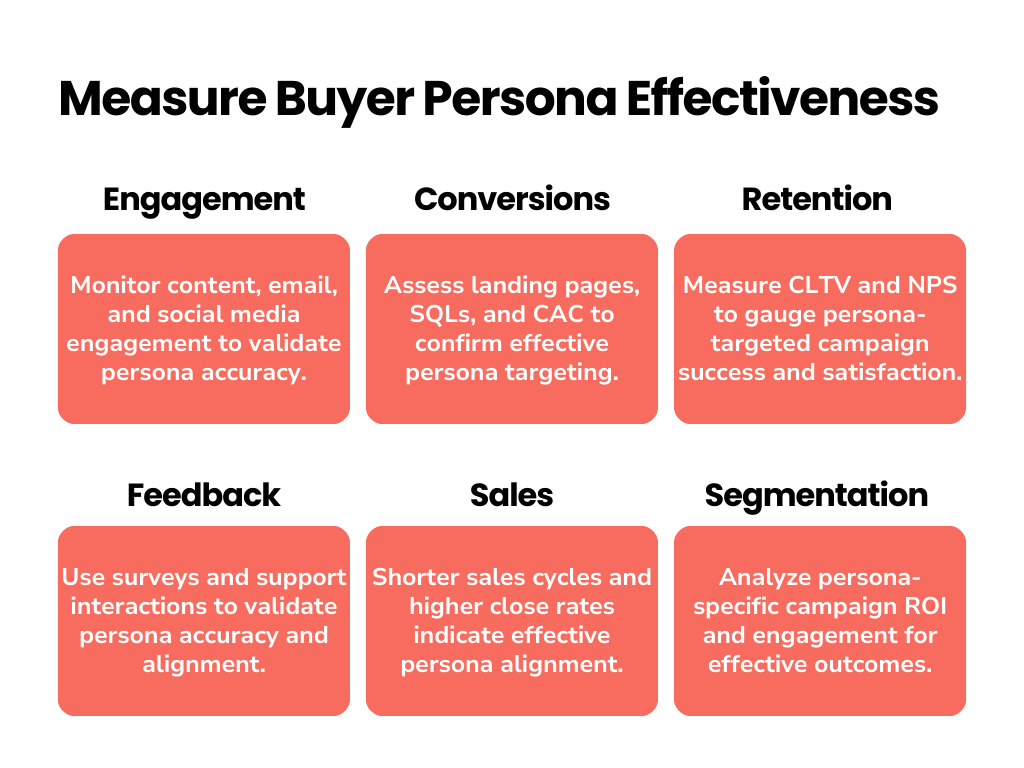
Effectively measuring the success of your buyer personas means ensuring that these fictional representations genuinely contribute to your marketing, sales, and service strategies. A well-defined buyer persona should streamline your targeting, enhance engagement, and boost conversions. Here’s a dive into the metrics that matter to understand the efficacy of your buyer personas and buying team strategies:
Engagement Metrics
Assessing active interactions with persona-tailored content reveals the extent to which the content resonates, acting as a barometer for persona accuracy.
-
- Content Consumption: Monitor which content pieces tailored to specific personas garner the most attention. High engagement indicates accurate persona definition.
- Email Open and Click-through Rates: High rates indicate that your messages resonate with the intended persona.
- Social Media Interactions: A spike in likes, shares, or comments on persona-specific posts signifies your persona targeting is spot-on.
Conversion Metrics
Conversion metrics provide a clear lens into the ROI of persona-based targeting, spotlighting the efficiency of translating interest into actionable leads.
-
- Landing Page Conversion Rates: If landing pages designed for specific personas have high conversion rates, your persona understanding is likely accurate.
- Sales Qualified Leads (SQLs): A rise in SQLs from campaigns targeted at particular personas indicates effective persona-based targeting.
- Customer Acquisition Cost (CAC): A reduced CAC for campaigns aimed at specific personas suggests efficient and precise targeting.
Retention Metrics
Long-term customer value and loyalty, cultivated through persona-centric strategies, underscore the lasting impact of accurate persona targeting.
-
- Customer Lifetime Value (CLTV): An increased CLTV for customers acquired through persona-targeted campaigns indicates long-term value derived from accurate persona targeting.
- Net Promoter Score (NPS): High NPS scores from segments associated with specific personas indicate satisfaction among those targeted audiences.
Feedback and Survey Insights
Direct feedback serves as a foundational cornerstone, calibrating the alignment of personas with the genuine intricacies of the target audience.
-
- Persona-Specific Surveys: Regular feedback from the target audience can validate if the challenges and needs represented in your personas align with the real-world audience.
- Customer Support Interactions: Insights from customer queries and challenges can offer real-time feedback on persona accuracy.
Sales Feedback
The efficacy of the sales process, augmented by well-defined personas, signifies not only alignment but also operational harmony between marketing and sales.
-
- Sales Cycle Length: A shortened sales cycle for leads associated with particular personas suggests that that persona’s marketing and sales alignment is effective.
- Deal Close Rate: A higher close rate for deals associated with specific personas indicates that those personas are well-defined and effectively targeted.
Segmentation and Personalization Performance
Crafting bespoke experiences anchored in accurate personas amplifies user engagement, guiding refined strategic directions.
-
- Segment Analysis: Measure Persona ROI and engagement rates by segment to pinpoint the most valuable and resonating personas.
- Personalization Insights: Assess bounce rates, time on page, and conversion to gauge the efficacy of persona-aligned content and targeting.
In essence, monitoring the success of your buyer personas involves a blend of quantitative metrics and qualitative feedback. Regularly revisiting and refining your personas based on these insights ensures that they remain relevant, accurate, and actionable, driving your marketing and sales efforts toward sustained success.
The Strategic Imperative for B2B SaaS Companies
In this competitive B2B SaaS environment, success isn’t merely about having a superior product but creating strategies that align with the buyer’s needs. Companies can confidently navigate the market by committing to dynamic buyer personas, using tailored messaging, coupling with account-based marketing, sharpening sales tactics, and tracking actionable metrics. To streamline conversion optimization, maximize opportunities, and maintain a laser-sharp focus on the metrics that matter, embracing these key takeaways is paramount for any B2B SaaS business aiming for the pinnacle of success.