


A successful digital transformation relies on effective leadership and resilient teams. Yet many companies struggle with altering employee behaviors and actions during change. A few key statistics highlight this challenge: Accenture Research reveals that while 95% of executives are fast-tracking digital transformation, 97% find these efforts fail to drive growth. Additionally, a Gartner study shows that employee resistance, with two-thirds opposing change, further impedes the success of new initiatives. This is where emotional intelligence (EI) becomes crucial. High EI in teams enables leaders to connect, empathize, and facilitate smoother transitions, fostering a culture that embraces change.
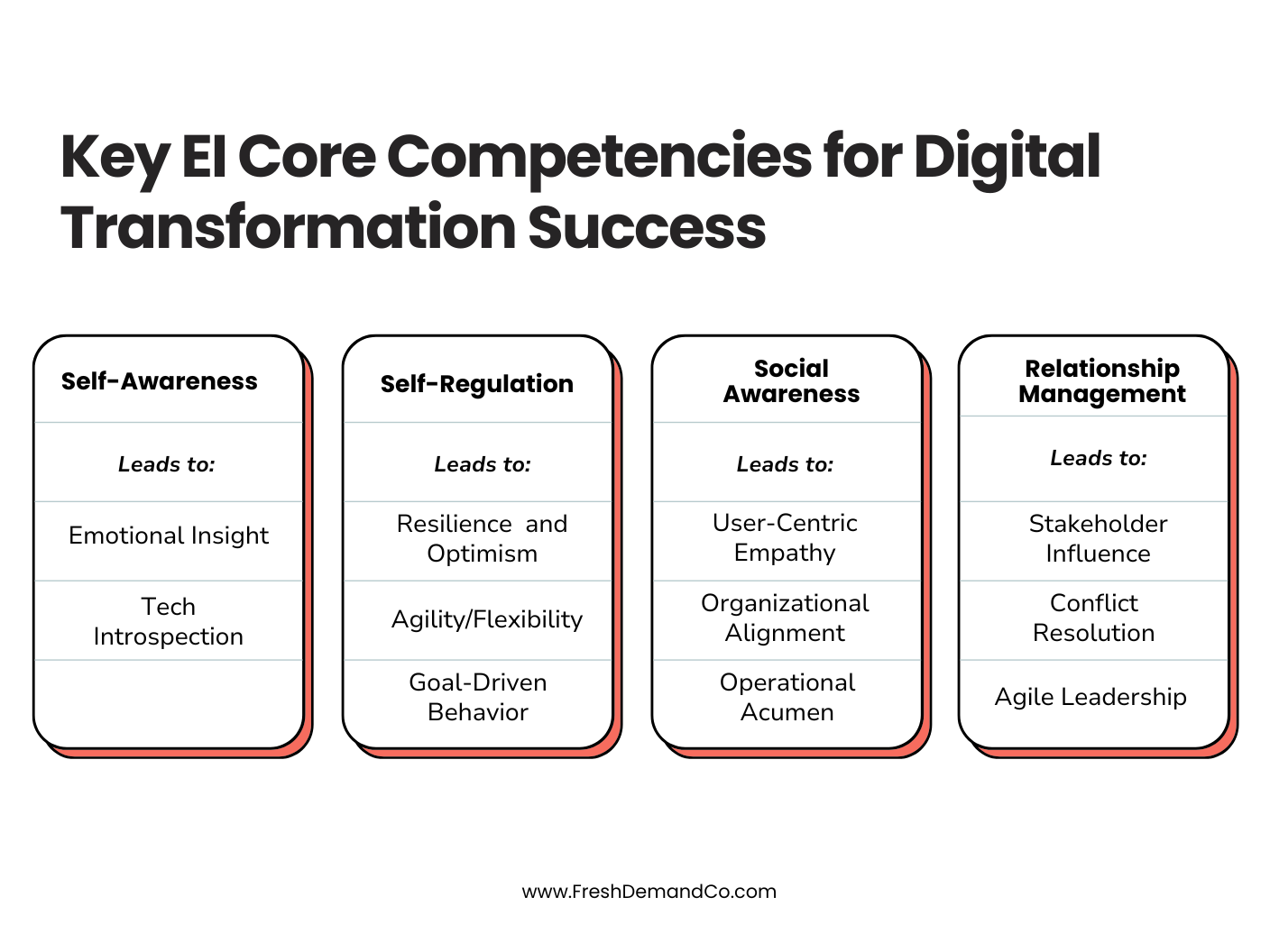

In the article below, we discuss how the fundamental EI competencies align with the complexities of digital transformation. Daniel Goleman’s research shows that emotional intelligence accounts for 90% of what distinguishes top leaders from their peers. The future will be shaped by leaders and teams skilled in EI who can navigate transformation and change.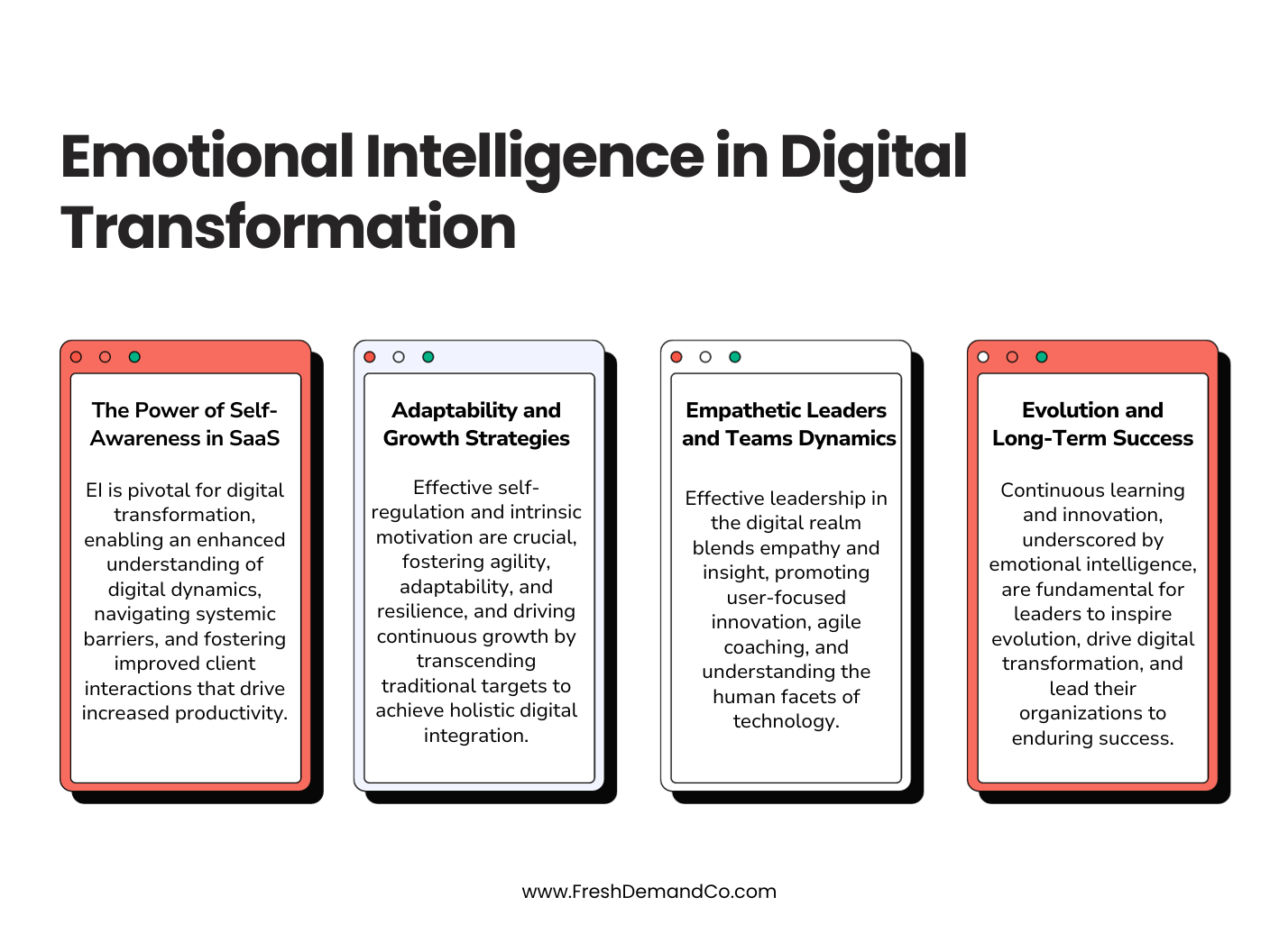
Self-Awareness
Global digital transformation spending will reach 3.4 trillion U.S. dollars by 2026. Yet organizations often encounter systemic barriers, ingrained biases, and outdated practices that impede innovation during change. Cybersecurity threats, change management, data privacy, and new technologies further complicate digital transformation.
Leaders expect quick wins, but change is often met with resistance. That’s where self-awareness comes into play.
Self-awareness will become increasingly critical for teams that navigate change and adapt to new markets and industries. Self-aware individuals know their thoughts, feelings, motives, behaviors, and how they impact others. They’re equipped to make strategic decisions in fast-changing, high-stress scenarios because they know how to play to their strengths, compensate for their weaknesses, and manage their emotional triggers.
Embracing Self-awareness as a Practice
Self-aware leaders create a culture of ongoing reflection, which is essential for modifying behaviors and boosting productivity. They immerse themselves in reflective activities such as:
- technology assessments (current and future needs)
- open and honest feedback loops
- user experience needs and satisfaction (internal and external)
- coaching sessions to reskill and upskill teams
- mindfulness exercises to promote well-being
By encouraging self-awareness, your teams will be better equipped to refine strategies that adapt to the evolving digital landscape and your organizational goals.
Self-Regulation
Mastering self-regulation goes hand in hand with self-awareness. Self-regulation is the ability to manage one’s emotions regardless of the circumstances. Think back to the last time you felt high levels of uncertainty, perhaps during rapid technology shifts and market changes. Did you maintain calmness and clarity or experience fear, anxiety, and burnout?
Individuals skilled in self-regulation can face intense situations with a clear head. They can pivot when they fail, reset clear, attainable goals, keep their impulses in check, and adapt to changing priorities without losing focus.
The ability to self-regulate has a domino effect on how well your teams work cross-functionally, break down siloed mindsets, and promote a culture of collaboration and innovation. Building self-regulation means being open and flexible to creative problem-solving regardless of the situation. Leaders who do this model healthy coping mechanisms that help their teams become more resilient during complex and challenging times and anticipate and prepare for future change.
Intrinsic Motivation
Intrinsic motivation, the drive to pursue activities for their enjoyment rather than external rewards, is crucial for fostering engagement, creativity, and performance. This concept, supported by self-determination theory and neuroscience, highlights the importance of nurturing internal motivation during change.
Leaders skilled in emotional intelligence (EI) can unlock this intrinsic motivation within their teams, promoting an environment where curiosity and personal achievement align with organizational goals. Research by David McClelland shows that managers high in EI not only meet but often exceed their objectives by 20%, while those low in EI typically underachieve by the same margin.
By aligning team members’ personal aspirations with the company’s mission, leaders ensure everyone contributes meaningfully to growth and adaptation during digital transformation. This approach underscores the significant role of EI in harnessing intrinsic motivation to drive collective success and sustainable growth.
Empathy and Social Awareness
Empathy is more than a nice-to-have skill; it’s about a deeper understanding of others’ feelings and considering their perspective.
This becomes even more important when dealing with complex enterprise-wide change. High performance and speed are often prioritized at the detrimental cost of social awareness, which can lead to a toxic company culture.
Leaders who understand empathy build aligned teams that work better together and are more prepared to handle the fast pace of operational and digital change. They’re good at ensuring everyone feels heard and supported, making it easier for the team to move forward regardless of the change ahead.
Ongoing People Development
Now more than ever, organizations must commit to ongoing education and skill development. This involves fostering a culture of curiosity and adaptability among employees, encouraging them to embrace new technologies, methodologies, and best practices. Continuous learning also requires access to up-to-date resources and training programs, both internally and externally, to keep teams well-equipped for the digital journey ahead. By prioritizing continuous learning, organizations can harness the full potential of digital transformation, staying agile, innovative, and future-ready in an ever-changing digital world.
Personal and Professional Development
Beyond equipping your team with new skills, employees want to be empowered to seek new knowledge, experiment, and apply their learning directly to their tasks. Research underscores the importance of job characteristics like autonomy and feedback.
In an agile environment, leaders allow employees to explore and learn in ways that align with their personal and professional goals. Regular, constructive feedback helps employees understand how their broader learning goals align with your organization’s objectives.
A big piece of digital transformation is the way your company views learning. Are you creating a culture that supports and rewards learning? Do you encourage employees to engage in learning activities that are not just about meeting immediate job requirements but also about personal growth and development?
Agile leaders recognize and value learning as integral to everyday growth.
Conflict Resolution
Leaders with high emotional intelligence (EI) are often skilled in conflict resolution. McKinsey emphasizes that compassionate leaders enhance team loyalty and engagement, especially during crises. We’re all human, and that fact can be forgotten during conflict and chaos.
During conflict, the focus must remain on workplace harmony and securing client trust. This is especially relevant for cybersecurity teams facing the looming stress and burnout due to the evolving cyber threats. Emotional intelligence becomes the linchpin, enabling you to manage emotions effectively, foster inclusive cultures, optimize team communication, and proactively mitigate risks.
Research by Stein and Book reveals that EI plays a substantial role in job success, responsible for 27-45% of it, which is even more significant for leaders. High performers blend cognitive abilities with EI for optimal performance.
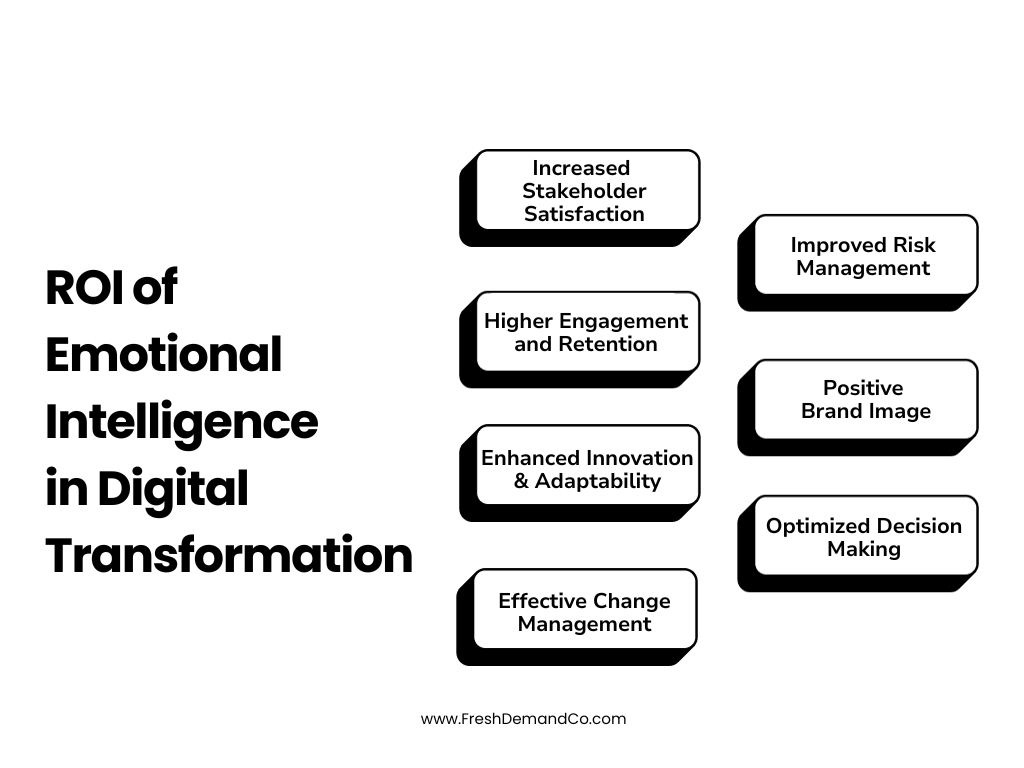
Having established the role and importance of emotional intelligence above, let’s now consider the tangible returns. When leaders prioritize and invest in emotional intelligence, they foster a positive work environment and drive quantifiable business results.
Increased Stakeholder Satisfaction
Research shows that customers who feel an emotional connection to a brand are over twice as valuable as those who are satisfied. These emotionally engaged customers tend to purchase more, care less about price, and are more inclined to recommend the brand to others. This connection often stems from a positive customer engagement through seamless buyer experiences.
Identifying the specific experiences that forge these emotional connections can be challenging, as customers may not always pinpoint what moves them. Yet, businesses can achieve superior returns by strategically focusing investments on initiatives that strengthen emotional ties. In the B2B SaaS sector, this approach can enhance service offerings and improve client retention. When customers feel understood by a company, they often express it as “This company gets me.” Thus, placing a premium on building emotional connections makes financial sense and fosters lasting loyalty and satisfaction.
Reduced Turnover and Higher Employee Engagement
Creating a work environment focused on EI boosts employee engagement and commitment and cultivates mutual respect. A report by The Energy Project and the Harvard Business Review highlighted that respect from leaders profoundly impacted employees’ trust, safety, and focus. Employees who felt respected were 55% more engaged, 63% more satisfied, and 110% more likely to stay with their organization.
Research from TalentSmartEQ supports this. It demonstrates that Emotional Intelligence is a significant predictor of job performance, accounting for 58% of success across all types of jobs. Additionally, individuals with high EI levels earn approximately $29,000 more annually than their lower EI counterparts. Even a small increase in EI can boost annual salary by around $1,300.
Considering the high costs associated with employee turnover, particularly in the tech industry, fostering an EI-centric culture enhances team cohesion and productivity and translates into significant financial savings. This is especially true during digital transformation, where stability and adaptability are key.
Enhanced Innovation & Adaptability
A Harvard Business Review Analytic Services survey reveals that organizations with high emotional intelligence (EI) enjoy a significant advantage in innovation. These companies experience increased creativity, productivity, enhanced customer experiences, and greater loyalty. They are characterized by empowered, creative teams that understand and value each other’s diverse perspectives. Emotional intelligence fosters trust within the organization, a crucial factor for encouraging risk-taking and facilitating innovation.
Despite recognizing the importance of EI, many companies fail to leverage its benefits fully, missing out on critical growth opportunities. For B2B SaaS firms, integrating EI into their culture promotes an environment rich in feedback and continuous learning. Such an environment enhances their ability to respond to market changes quickly, positioning them to innovate faster than competitors in a fast-paced industry.
Effective Change Management
In the face of continuous digital transformation, leaders with a solid emotional intelligence foundation are better equipped to navigate their teams through uncertainties. Traditional change management often overlooks the emotional aspects of change. However, a change mindset that prioritizes understanding and managing personal emotions, especially fears and anxieties, can lead to more successful transitions and implementations. This approach strengthens team culture and enhances decision-making. In short, your mindset drives change, not vice versa.
Risk Management
Recognizing and addressing the emotional underpinnings of resistance, such as fears of appearing incompetent or concerns about autonomy, can preemptively address team conflicts and project setbacks, ensuring smoother transitions and efficient implementations.
A study on the “Effect of Emotional Intelligence and Leadership Styles on Risk Intelligent Decision Making and Risk Management” reveals that while nearly 48% of respondents believed their organization’s risk management practices were above the industry average, only 29.5% viewed their risk attitude as neutral. A significant 95.38% felt that implicit or explicit biases influenced critical decisions.
Yet, these biases can be mitigated with the right emotional intelligence strategies, leading to more informed decision-making and a higher ROI in digital transformation initiatives.
Cultivating a Positive Brand Image
Companies are evaluated not just on their offerings but also on their culture. An EI-focused organization inherently fosters inclusivity and empathy, which strengthens brand reputation. Recent studies show the significance of EI in shaping brand perceptions, with a change in emotional intelligence leading to a 52.0% increase in brand trust and a 55.4% increase in brand loyalty.
Optimizing Decision Making
Central to emotional intelligence is the alignment of emotion with reason. Leaders adept at recognizing and managing their emotions can better perceive others’ feelings and motivate employees, leading to improved decision-making and conflict management. Balancing emotion with reason allows executives to make decisions that merge data-driven insights with the human perspective. According to research from a global consulting firm, DDI, and the Harvard Business Review, organizations with emotionally intelligent leadership outperform competitors by acting more decisively, navigating complexity efficiently, and proactively addressing business challenges.
Call to Action for B2B SaaS Leaders
You need more than technological prowess to succeed. The complex dance of digital transformation, especially in the B2B SaaS industry, demands a harmonious blend of technology and human perspective. Emotional intelligence emerges as a way to bridge the gap between the need for transformation and growth and the resistance to change that is all too common. By harnessing the power of EI, leaders not only navigate the complexities of change but also unlock unparalleled ROI. From fostering stakeholder loyalty to driving innovation, from managing risks to optimizing decisions, the tangible benefits of EI are undeniable. As the landscape of B2B SaaS continues to evolve, leaders who prioritize and cultivate emotional intelligence will be at the forefront, steering their organizations toward sustained success and a competitive edge in the market.