


When it comes to digital transformation, the spotlight is often on technological advancements, AI, and data analytics. But behind the intricate world of codes and algorithms lies the foundational human element: emotional intelligence (EI). This intangible quality, defined as the ability to understand, interpret, and manage our own emotions, as well as the feelings of others, has become increasingly crucial in navigating the digital age.
The Current Landscape
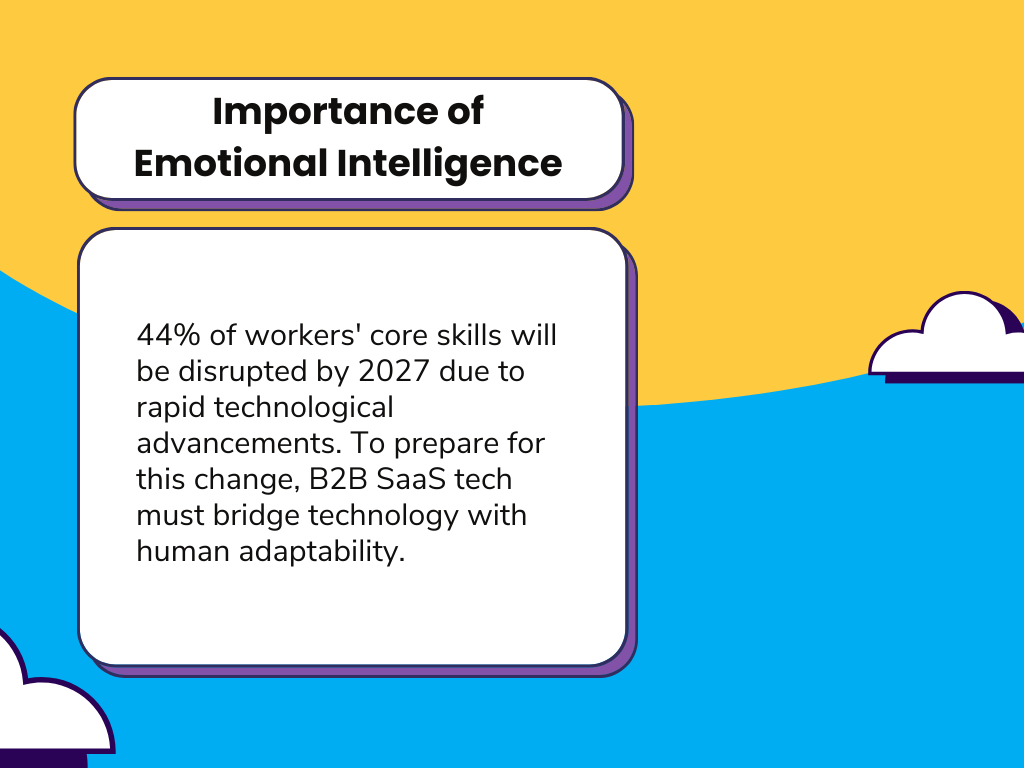
Rapid technological advancements will disrupt 44% of workers’ core skills by 2027, outstripping the rate of contemporary training programs. In response, the World Economic Forum highlights adaptability, spotlighting skills like creative thinking, resilience, flexibility, and lifelong learning as essential. Intrinsically linked to emotional intelligence, these skills guide companies in navigating the tumultuous waters of digital transformation.
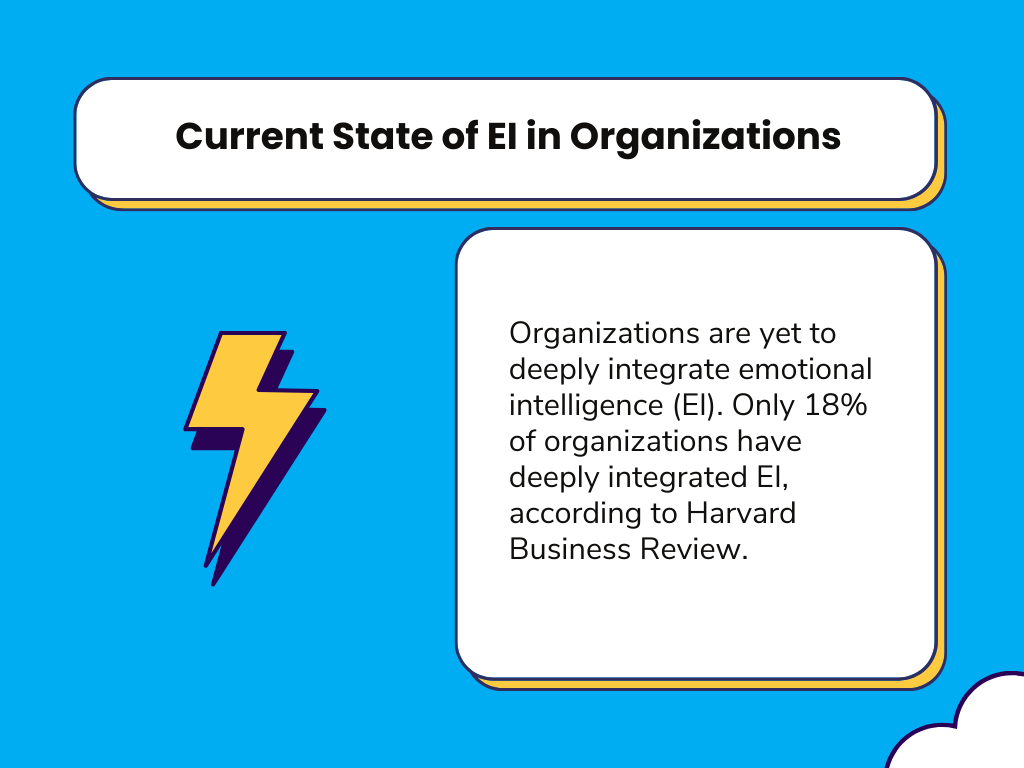
According to a recent Harvard Business Review study, only 18% of employees believed their organizational culture deeply integrated EI. Yet, numerous studies over the past few decades continually show the impact of EI in the workplace as a driver of revenue, productivity, and innovation.
Considering the rising demand for emotionally intelligent skills, corporate cultures must harness EI’s power swiftly. Failing to do so, even without understanding its importance, could hinder team well-being and overall performance.
Key Takeaways
- Beyond technological advancements, emotional intelligence (EI) is the pivotal human element for understanding and managing emotions in the fast-paced digital age.
- As rapid tech changes threaten to disrupt worker skills, adaptability rooted in EI—encompassing creative thinking, resilience, and flexibility—becomes the beacon for navigating digital transformation.
- With only a fraction of organizations deeply embedding EI into their culture, the urgency to harness its power is evident. Ignoring EI can jeopardize team dynamics, performance, and overall organizational growth.
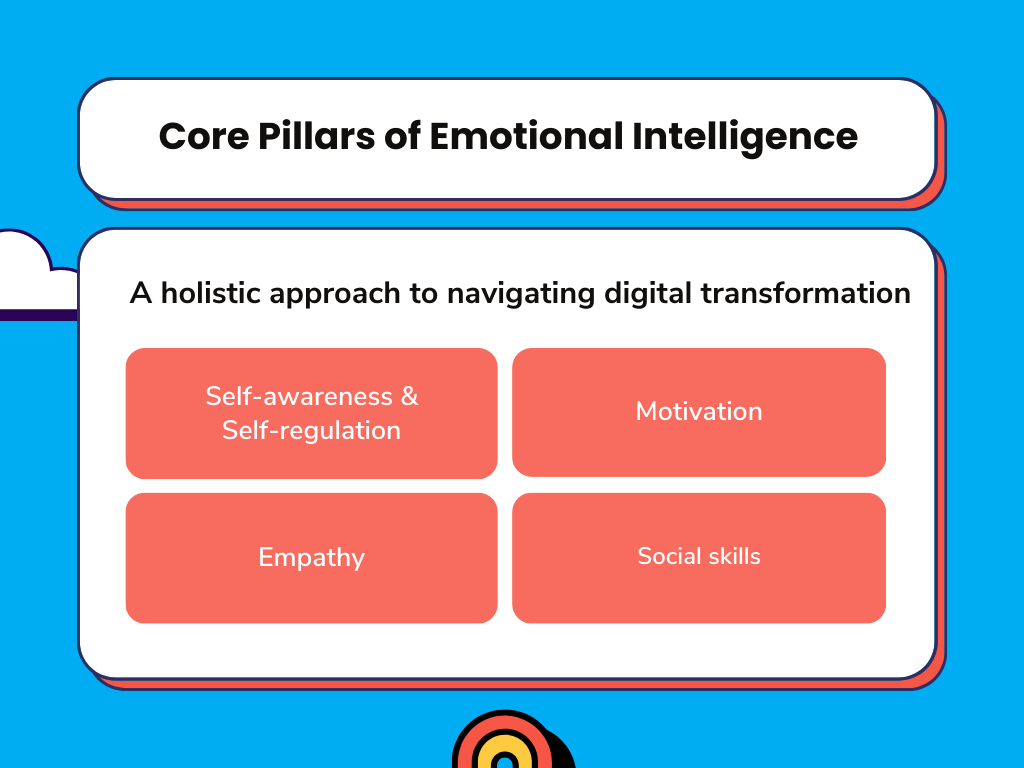
From addressing resistance to change to promoting mindfulness and ensuring effective collaboration, EI is the linchpin that holds the fabric of digital transformation together. Let’s delve into its four core pillars:
Self-awareness
Understanding one’s emotions is foundational to EI, especially when navigating the uncertainties of digital transformation. This pillar is crucial for building trust in remote or hybrid work environments.
[Quick Tip] Regularly meditate to enhance inner awareness, minimize distractions, and foster positive behavioral shifts that elevate workplace productivity.
Self-regulation
Self-regulation involves consciously responding to situations, managing emotions, demonstrating self-motivation, and making informed decisions. It’s essential for personal growth and avoiding burnout in stressful situations.
[Quick Tip] Take a literal breather. Research shows that slow, deep breathing directly influences heart rate, blood pressure, and oxygen levels, affecting overall health and stress response. Nasal breathing, in particular, synchronizes brain activity in key areas, playing a crucial role in managing stress and anxiety.
Motivation
Factors like company culture and leadership styles influence motivation. Cultivating motivation, especially in dynamic virtual environments, is essential for trust-building and directing emotions toward achieving goals.
[Quick Tip] Visualization exercises (mental rehearsal) can amplify motivation, boost confidence, and provide direction amidst challenges. Studies across diverse professions, from surgeons to police officers, have shown that visualization reduces stress and anxiety and improves performance under pressure.
Empathy
Empathy bridges the gap in digital communication, fostering trust and collaboration. It eases resistance to change and enhances customer-centricity by understanding diverse perspectives.
[Quick Tip Empathetic Listening] Brain imaging studies have discovered that the same brain regions are active when we feel emotions and see others experiencing them. To enhance empathy, imagine and actively try to understand others’ feelings and viewpoints. This cognitive perspective-taking can be practiced by consciously considering different perspectives in everyday situations.
Social skills
To navigate market uncertainties, teams must effectively engage with customers, build trust, deepen relationships, and communicate clearly. Embracing challenges outside one’s comfort zone can provide a competitive edge, with active listening and self-awareness crucial for optimal interactions.
[Quick Tip: Role-playing Exercises] Role-playing can refine interpersonal interactions, offering insights into diverse communication styles and challenges and ensuring effective digital interactions.

The Role of Emotional Intelligence in B2B Saas
The Cornerstone of Digital Transformation
Emotional Intelligence is the cornerstone of successful digital transformation, fostering trust within virtual teams and enabling rigorous collaboration. Here’s a deeper look into its pivotal role:
Managing Change and Uncertainty
Digital transformation demands a comprehensive approach to address the inherent challenges of shifting entire teams and an organizational culture. In the B2B SaaS, factors like evolving customer behaviors and the need for specialized skills underscore the importance of EI. It’s not just about technology and processes; employees’ emotional readiness and resilience are paramount. Teams must cultivate a proactive mindset while staying abreast of trends and responding to unforeseen challenges.
Promoting Effective Team Collaboration
Collaboration is the heartbeat of digital transformation. For genuine progress, teams must share insights and trust one another. For example, product and marketing teams can better understand client needs by tapping into EI, especially empathy, leading to meaningful products and user experiences. Cross-functional leaders should champion collaboration, clearing the pathway for shared outcomes.
Building Trust in Virtual Teams
Building trust in distributed teams involves understanding diverse personalities and leveraging tools like feedback and recognition. EI equips individuals to gauge, understand, and harness emotions to enhance project outcomes. Addressing disagreements, for instance, becomes smoother when teams focus on shared objectives and employ empathy.

Challenges with EI in B2B SaaS Companies and How to Address Them
The digital landscape is ever-shifting, from the relentless pace of technological evolution to the intricacies of client relationships. Emotional intelligence is a pivotal tool to navigate these challenges, fostering team cohesion and deepening client understanding.
Change Resistance
Resistance to new technologies or processes often stems from fear or confusion. By leveraging EI, teams can empathize with these concerns, communicate effectively, and guide stakeholders through the change. A proactive approach, rooted in understanding and patience, can help turn resistance into acceptance.
Communication Gaps
Considering the swift pace of change, communication between teams, partners, and clients can become hindered. EI equips teams to discern these subtle undertones, ensuring that essential insights are captured and acted upon, enhancing product development and client relationships.
Stress & Burnout
The rapid pace of product development and ever-changing market dynamics can lead to stress and burnout. EI aids in recognizing the early signs of burnout, allowing for timely interventions, promoting mental well-being, and ensuring sustained productivity.
Shifting Org Structures
As companies grow, mergers and acquisitions can introduce cultural shifts. EI is crucial in facilitating smooth transitions, ensuring teams from different backgrounds understand, respect, and collaborate effectively.
Addressing AI Demands
The rise of AI introduces both technological challenges and concerns about obsolescence. EI-centric training can help teams transition smoothly, managing anxieties and ensuring they have the skills needed for the AI-driven future.
Client Retention & Expansion
Clients’ needs to evolve rapidly. Accelerated timelines for upgrades or new features can strain relationships. EI ensures teams can empathize with client concerns, address them effectively, and foster trust, leading to retention and expansion.
Strategic Alignment
Teams often work in silos in large organizations, leading to misaligned goals. EI bridges this gap, ensuring that teams communicate effectively, understand shared objectives, and work harmoniously towards a unified strategy.
Tech Teams and Innovation
With the constant evolution of technology and often limited resources, tech teams face the challenge of meeting ever-growing demands. EI helps product and development teams understand user needs, prioritize tasks, and ensure that innovations are technologically advanced and user-centric.
The Consequences of Neglecting Emotional Intelligence
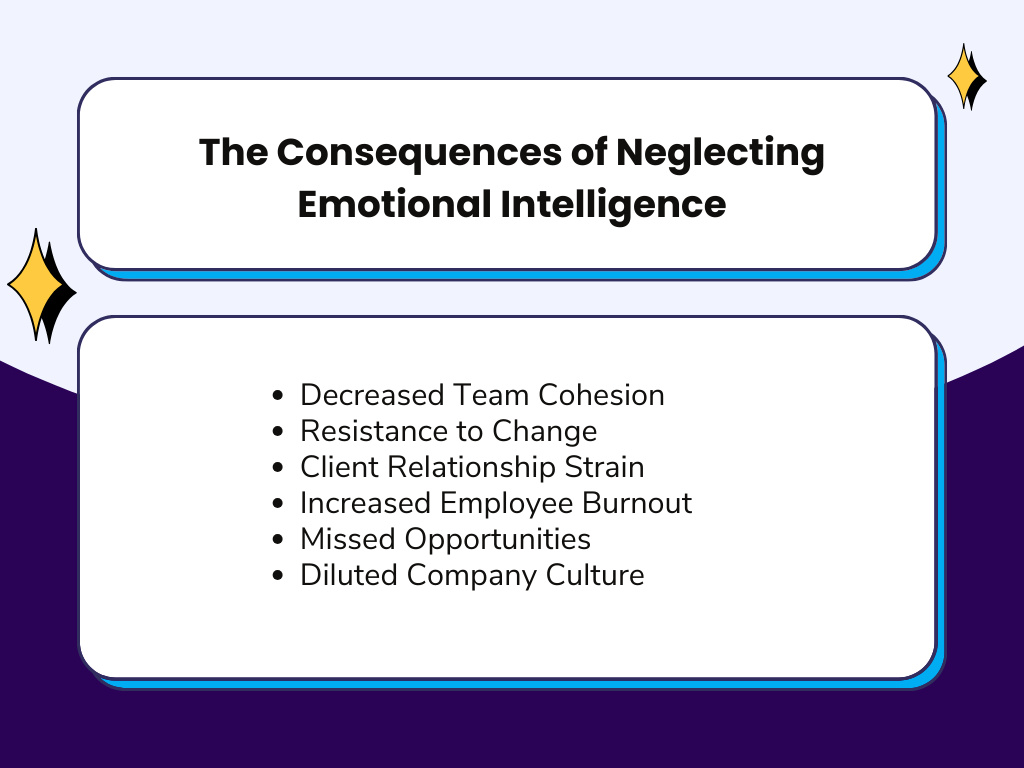
When Emotional Intelligence isn’t a priority, companies face several pitfalls:
Decreased Team Cohesion
A lack of EI can lead to misunderstandings, resulting in fragmented teams. This fragmentation hinders product development and leads to minimal collaboration in a toxic work environment.
Resistance to Change
Without a deep understanding of the emotional dimensions of change, teams can become resistant, leading to stagnation and missed opportunities in the digital transformation journey.
Client Relationship Strain
A lack of empathy and understanding can erode clients’ trust in the company, leading to reduced retention rates and potential revenue loss.
Increased Employee Burnout
Without tools and training centered around EI, employees are at a higher risk of burnout. As a result, this can lead to increased turnover rates, recruitment costs, and a loss of valuable institutional knowledge.
Missed Opportunities
Ignoring EI’s emotional insights can lead to missed market opportunities. Yet, growth opportunities are necessary to ensure long-term innovation and the company’s ability to stay ahead of competitors.
Diluted Company Culture
An organization that neglects EI risks diluting its culture. As culture suffers, companies experience poor morale, decreased productivity, and increasingly toxic work environments, making it less appealing for current and potential employees.

Case Studies: Emotional Intelligence Driving B2B SaaS Transformations
Major corporations increasingly recognize the value of EI in driving change and fostering a culture of innovation and resilience. This is evident in how several leading companies have integrated emotional intelligence into their organizational strategies and practices. Let’s explore some compelling case studies that highlight the pivotal role of EI in driving successful B2B SaaS transformations.
Google: Prioritizing Empathy and Genuine Connection
Under CEO Sundar Pichai’s stewardship, Google has adopted an EI-centric leadership model. Pichai emphasizes the role of leaders as coaches and harbors a genuine curiosity about the holistic growth of each team member. This approach, manifested in specific programs and initiatives, has positioned Google as a benchmark for fostering a positive organizational culture.
Equifax: Navigating Challenges through Collaborative Leadership
Lufthansa Group: Strengthening Soft Skills for Seamless Transition
In response to rapid digital disruptions, Lufthansa emphasized soft skills and self-awareness. The company introduced targeted mindset training encompassing modules on emotional intelligence, adaptability, and proactive problem-solving. As a result, employees became adept at fluidly navigating the ever-shifting business landscape.
Microsoft: Integrating EI for a Cohesive Organizational Fabric
Microsoft’s dedication to embedding EI in its foundational training showcases its vision for the future. The training modules emphasize self-awareness, empathy, and other pivotal EI components, empowering employees with the tools to navigate change.
For companies striving in the digital age, embracing emotional intelligence isn’t just beneficial—it’s a cornerstone for innovation and lasting success.
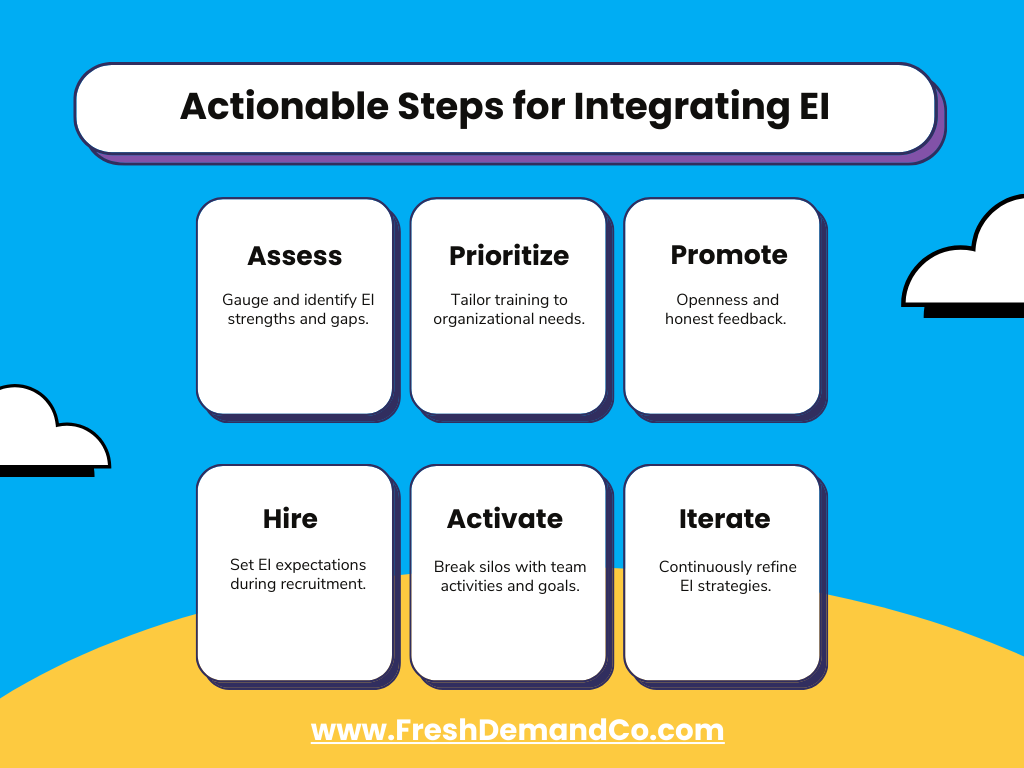
Actionable Steps: Integrating Emotional Intelligence in B2B SaaS Operations
Companies must take proactive measures to harness the transformative power of Emotional Intelligence (EI) in the B2B SaaS sector. Here’s a step-by-step guide to integrating EI into your operations:
Assess the Current EI Landscape
-
-
- Initial Assessment: Gauge your organization’s emotional intelligence levels before implementing changes. Conduct surveys or use professional EI assessment tools to determine your team’s standing.
- Identify Gaps: Once you have the results, identify areas where your organization excels and falls short. This assessment will help tailor your EI initiatives more effectively.
-
Prioritize EI Training
-
-
- Customized Programs: Allocate resources to specialized training programs that enhance emotional intelligence. Understand your organization’s unique needs and select training addressing those areas.
- Diverse Training Options: Consider a mix of workshops, webinars, long-term courses, and ongoing executive coaching. Different teams or individuals might benefit from various training formats.
-
Promote Open Communication
-
-
- Feedback Mechanisms: Create a culture where team members can openly express their emotions and concerns. Implement tools or platforms where employees can provide anonymous feedback if they prefer.
- Regular Check-ins: Hold regular feedback and one-on-one check-ins to facilitate open communication and ensure team members feel heard.
-
Implement EI in Hiring
-
-
- EI in Job Descriptions: When crafting job descriptions, highlight the importance of emotional intelligence traits. This strategic hiring approach sets the expectation right from the start.
- Interview Techniques: During interviews, incorporate questions or scenarios that allow candidates to demonstrate their EI. This interview approach ensures you’re not just relying on their self-assessment but can gauge their EI in real time.
-
Foster Collaborative Environments
-
-
- Team-building Activities: Organize team-building exercises that focus on empathy and understanding. Activities could include role-playing scenarios, group discussions, or even off-site retreats.
- Cross-departmental Projects: Encourage projects that require collaboration between departments. Actively focusing on collaboration and alignment breaks down silos and fosters a deeper understanding of team dynamics.
-
Regularly Review and Iterate
-
-
- Feedback Collection: Don’t treat emotional intelligence as a one-time initiative. Use tools or platforms to collect feedback on EI initiatives continuously.
- Adjustment and Refinement: Review your strategies periodically. Based on the feedback, make necessary adjustments to your approach, ensuring you’re always moving towards fostering a culture of ongoing EI growth.
-
As technological capabilities expand, so does the imperative to anchor our approaches in the human core: understanding, managing, and leveraging emotions. With its intrinsic links to adaptability and collaboration, EI fosters trust, navigates change, and ensures holistic growth. Companies that prioritize and seamlessly integrate EI into their culture and operations are poised to navigate the digital landscape with resilience, innovation, and unparalleled success. However, ignoring the importance of EI leads to diminished team cohesion, missed market opportunities, and a weakened competitive stance. Thus, the message is clear for those who aspire to lead in the digital era: infuse emotional intelligence into every facet of your digital journey, and success will follow.