


The digital landscape is changing, and with it, the strategies to capture and convert your audience. Success lies in creating a strategic plan that is broad in scope and precise in execution. Companies must blend traditional tactics and data with digital innovation. This strategic approach ensures a higher likelihood of conversion. The rapid expansion of the tech industry has led B2B SaaS companies to pursue innovation to outpace their competitors at every turn. Changing your approach to demand generation is critical if your business has reached a point where growth has slowed after a few years. Below, we explore the levers that can be pulled to drive demand for your business.
Key Takeaways
- Bridging old and new tactics broadens reach and deepens engagement. Diverse strategies capture wider audiences, increasing potential leads.
- Integrate modern and traditional B2B SaaS marketing tactics and strategies by understanding critical metrics, such as Traffic Volume, CTR, and ROI. Informed adjustments enhance campaign effectiveness and ROI.
- Tailored content resonates more, driving higher conversion rates. Personalization fosters stronger connections, which improves customer loyalty and sales.
- Stay attuned to market shifts for relevant strategies. Agility in strategy ensures relevance and competitiveness in a changing market.
- Balance traditional methods with digital transformation for comprehensive engagement and conversion. Innovation keeps your brand at the forefront, sustaining growth and industry leadership.

Understanding Demand Generation in B2B SaaS
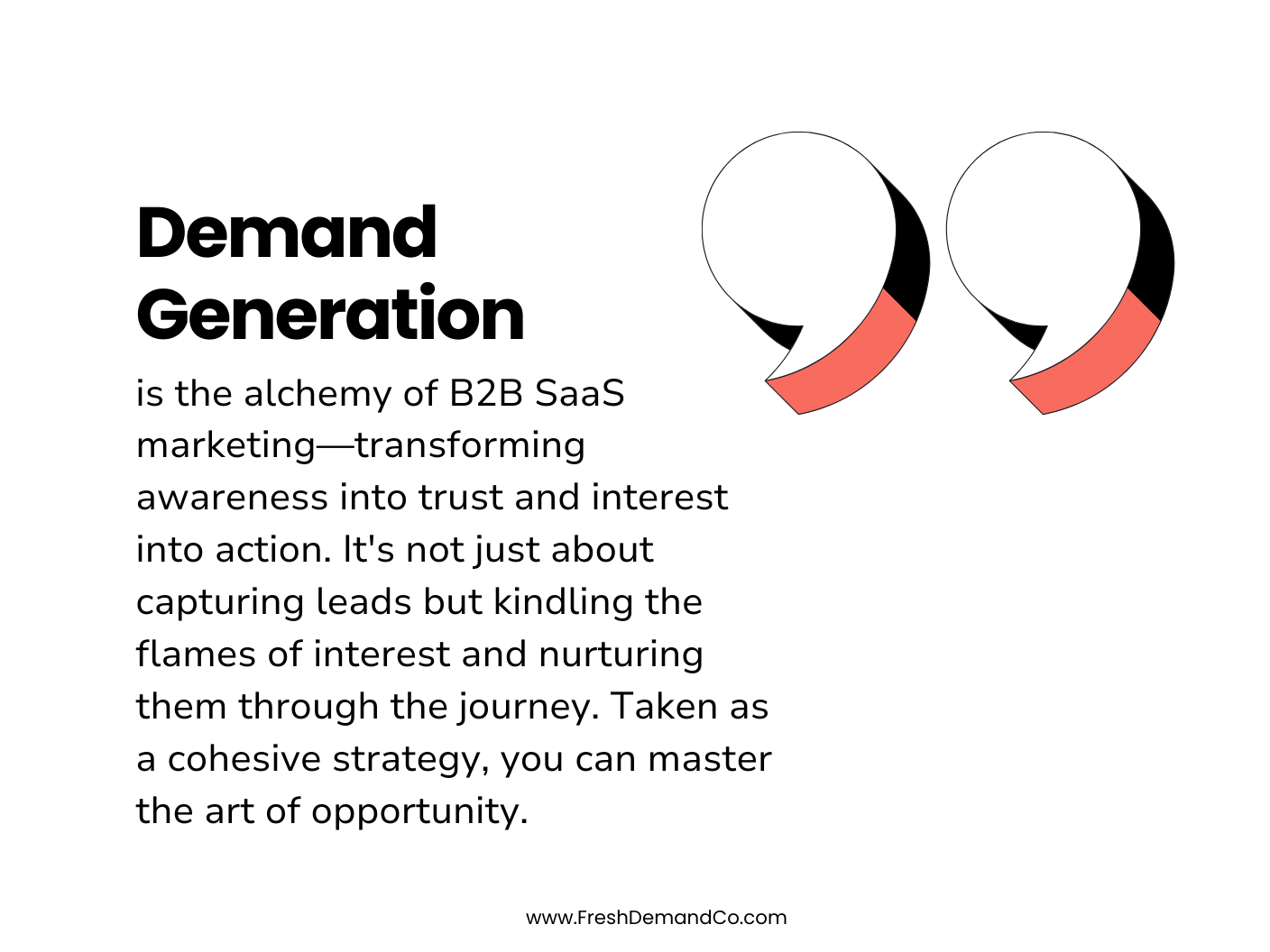
Demand generation is a set of strategic efforts to spark interest in your software solutions. It is both an art and a science, guiding potential customers from the awareness of a problem you can solve while building trust in your brand. This includes guiding them through every stage of the sales cycle. Efficient lead nurturing strategies enable companies to produce 50% more sales-ready leads at 33% less cost.
Differentiating Demand from Lead Generation
One common source of confusion is the difference between demand and lead generation. While demand generation focuses on creating awareness and generating interest in your services, lead generation centers on converting this interest into actionable leads. Confusing these two concepts can result in missed opportunities and inflated customer acquisition costs. To achieve the best results, it is essential to clearly understand the role of demand versus lead generation and seamlessly integrate both aspects into your overarching marketing strategy.

As you explore new trends, it’s crucial to continue with traditional methods that continue to yield results. These include:
Display Advertising
Target your audience based on demographics (individual buyer-focused data) and firmographics (organization-focused) data. Use retargeting to stay top of mind for website visitors who haven’t converted yet. Design dynamic banners and sidebars to communicate your unique value proposition and how you solve industry challenges. Use data-driven insights to refine ad placements, so decision-makers see them.
Email Marketing
According to Litmus, an average return of $36 can be expected for every dollar spent on email marketing. With the right strategy, email marketing remains one of the most potent tools in your marketing arsenal. Create segmented email campaigns that address the varying needs of your prospects at different stages of the sales funnel. Personalization should go beyond using the recipient’s name to include content relevant to their unique challenges and needs. Utilize marketing automation tools to create drip campaigns that nurture leads over time, delivering targeted information and offers based on their interactions with your previous emails. Measure engagement and conversions to continually refine your strategy. To improve performance, test subject lines, email content, send times, etc.
Search Advertising
Develop a robust keyword strategy that targets terms specific to your industry. Focus on long-tail keywords that capture the intent of prospects looking for specific solutions. When someone clicks on the ad, be sure to lead prospects to a landing page that is precisely aligned with the ad’s message, offering clear, concise information and a clear path to conversion. Regularly analyze competitors’ search ads to identify gaps in your strategy and to find new keywords or value propositions that may resonate with your target audience.
Organic Marketing
Create high-quality, informative content (blogs, whitepapers, etc.) that addresses your target audience’s pain points and questions. Utilize customer testimonials, case studies, and user-generated content to build trust. As you create content, optimize it for search engines using relevant keywords, meta tags, and linking strategies. This will improve your visibility in search results and drive organic traffic to your site. Engage with your audience on social media and industry forums to create awareness and build community around your brand.
Elevate Your Co-Marketing Initiatives
Partnerships can unlock new growth avenues for your business. Here’s how to make co-marketing initiatives more effective:
Strategic Partnerships
Identify partners whose products or services complement your own, ensuring that any joint campaign adds value to both customer bases. Look for synergies in customer challenges and how your combined offerings can offer a unique solution.
Co-branded Content
Collaborate on creating high-quality, co-branded content such as webinars, e-books, and industry analyses that leverage the expertise of both parties. This approach enhances SEO through shared backlinks and positions both brands as authoritative voices.
Bundled Offerings
Package complementary services or products at a special rate to introduce your solutions to new audiences. Ensure these bundles are strategically aligned with the needs of both customer bases to drive interest and adoption.
Leveraging Industry Influence
Utilize your partners’ networks to gain introductions to industry leaders and influencers. A joint approach can amplify your message, reaching a broader audience and building credibility through association.
Optimize Every Touchpoint
Sometimes, it’s easy to miss the low-hanging fruit in your demand generation strategy. There is value in maximizing the potential of every customer interaction. Here are a few ideas to deepen engagement across touchpoints:
Thank You Pages
Transform “thank you” pages into strategic assets by incorporating calls-to-action (CTAs) that guide users to the following steps: downloading a whitepaper, registering for a webinar, or exploring related products.
Customer Support Interactions
Leverage customer support as a touchpoint for upselling or cross-selling by providing tailored recommendations based on the customer’s usage patterns and feedback.
Account-Based Marketing
For high-value accounts, customize touchpoints based on deep research and insights into the account’s specific needs, industry trends affecting them, and their history with your brand. Personalized reports, direct mail tailored to their business challenges, and exclusive invites to roundtable discussions can make a significant impact.
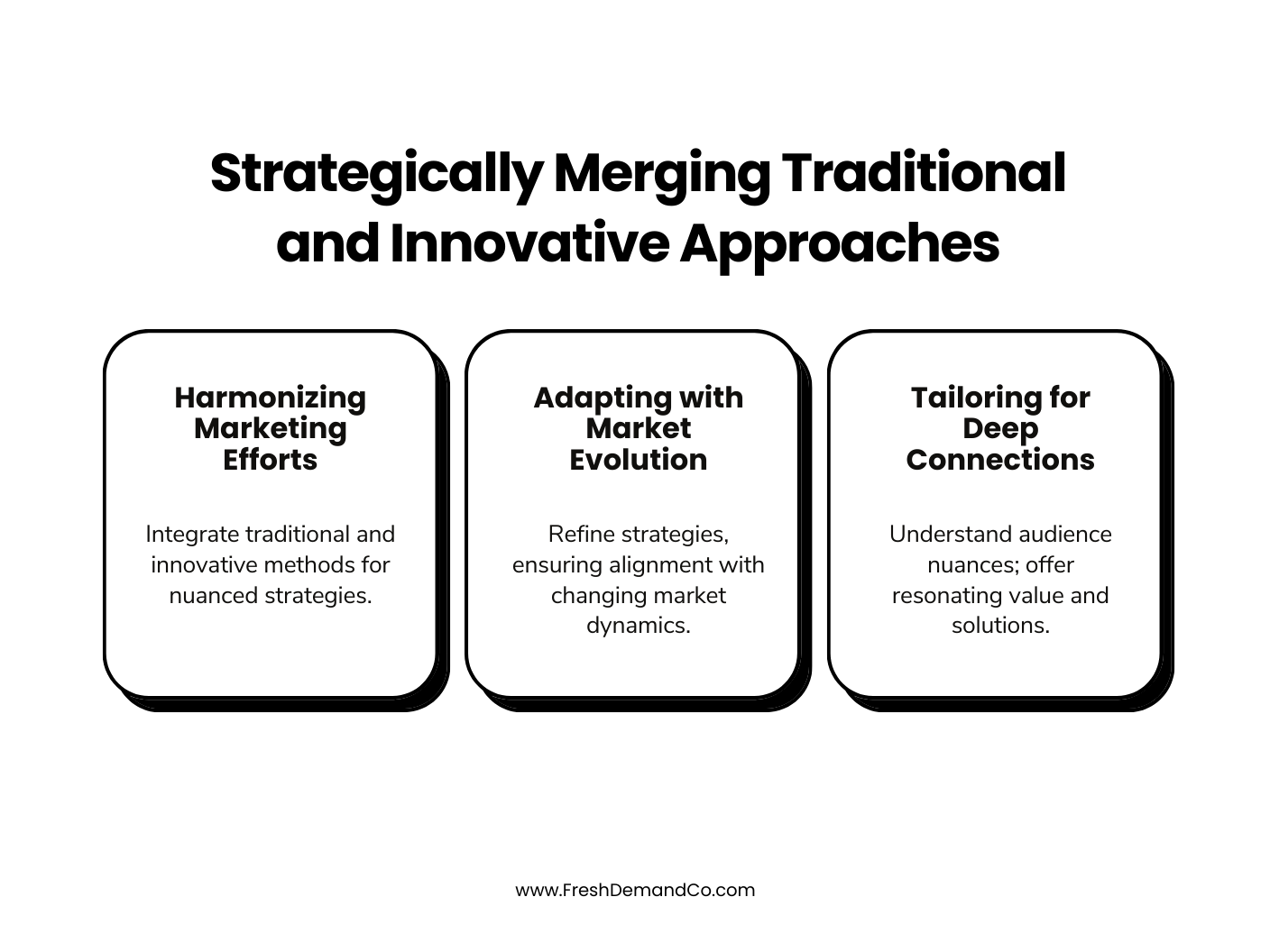
A successful demand generation campaign acknowledges the complexity of the B2B purchasing process, precisely catering to a spectrum of client needs and behaviors. Incorporating advanced analytics to predict market trends and customer preferences sets the stage for highly customized marketing efforts. One way to do this is to integrate predictive analytics to forecast market trends and customer behavior, tailoring your demand generation efforts to future needs.
Adapting to the Evolving Market
The key to staying relevant in a constantly evolving market lies in swiftly adapting and refining your marketing strategies. This means keeping pace with digital transformation and finding new life in traditional channels. For example, by employing machine learning for smarter ad placement and utilizing social listening for instant feedback, you ensure your message is always where it needs to be, resonating with the audience most inclined to engage. More specifically, you can use machine learning to automate and optimize ad bidding strategies, ensuring your content reaches the most relevant audiences at optimal times. Leverage social listening tools to monitor brand mentions and industry trends, enabling agile adjustments to your marketing strategies based on real-time feedback.
Tailored Approaches and Deep Connections
Understanding your unique audience – their pain points, needs, and behavior – empowers you to tailor your approach effectively. It’s about forging a deep connection, offering value, and delivering solutions that resonate. By continuously fine-tuning your strategies, you strive for growth and establish your brand as a trusted industry leader. Leveraging the latest in conversational marketing, such as chatbots and live chats, can significantly enhance the customer journey, providing immediate responses that guide prospects closer to your solution. This approach nurtures leads more efficiently and solidifies your reputation as a responsive, customer-centric brand.
The Continuous Journey of Refinement
The path to mastering demand generation is a continual one, demanding a balance between proven methods and innovative tactics. Integrating digital experiences, like virtual events and personalized web content, into your strategy enriches customer interaction, offering tailored engagement that speaks directly to individual needs and interests. This blend of old and new ensures your marketing efforts remain effective, adaptive, and aligned with your audience’s evolving expectations.
Unearthing the Potential of Traditional Tactics
While digital marketing has taken center stage, the strategic revival of traditional marketing avenues—such as print ads and direct mail—can uncover unique opportunities for B2B SaaS companies. These channels, when reimagined with a modern twist, can significantly enhance your reach, particularly when integrated into a broader, more holistic marketing strategy. By revisiting these classic tactics with a fresh perspective, you can tap into a rich vein of potential, engaging B2B clients with a mix of nostalgia and innovation that cuts through the digital noise.

With so many digital options, placing less value on conventional marketing strategies, such as print advertising and direct mail content, is easy. By simplifying complex concepts, employing captivating visuals, and crafting persuasive messages, these age-old methods can be reinvigorated to align with the specific needs and expectations of B2B clients. While print advertising and direct mail can be costly, they can be very beneficial when packaged with a broader plan. Here are our tips to maximize the value of both.
Print Advertising
- Clarity & brevity: Simplify complex SaaS concepts into easily digestible messages to grab attention quickly.
- Engaging visuals: Use infographics and flowcharts to illustrate the software’s benefits, making it easier for prospects to understand.
- Persuasive copywriting: Highlight your value propositions that are unique to B2B clients, like scalability, integration capabilities, and security features.
- Ongoing A/B testing: Regularly test different designs, headlines, and calls to action to determine the most effective combination for the B2B market. Incorporate QR codes to bridge the gap between print and digital, offering a seamless transition to online content or landing pages.
Direct Mail Content
- Audience segmentation: Use advanced segmentation and personalization to tailor direct mail content to specific business roles, such as IT managers or CFOs.
- Offer real value: Include offers for digital resources like exclusive whitepapers or webinar registrations. This enhances the perceived value of your mailers.
- Surprise and delight: This channel offers a meaningful message that brings joy and wonder to the sales process.

Achieving a robust sales pipeline requires a blend of both traditional and cutting-edge digital strategies. When marketing and sales work together, the outcomes are more significant. 70% of buyers will spend more with brands that provide smooth customer experiences. Below, we explore a comprehensive array of tactics tailored to the unique needs of B2B SaaS companies.
Direct Outreach
Sales-focused Campaigns
- Objective: Forge tangible connections, creating a sales and marketing-aligned message to kickstart the sales cycle.
- KPIs: Response rate, conversion rate, cost-per-lead.
- Strategies: Personalize mail for B2B decision-makers, emphasize clear CTAs, implement unique tracking mechanisms, and test variations to maximize efficacy.
Email Marketing
- Objective: Keep B2B clients informed about product updates, new features, and best practices.
- KPIs: Open rates among decision-makers, CTR for product update emails, conversion from promotional campaigns.
- Strategies: Design concise emails for busy professionals, emphasize CTAs and segment lists based on user roles or company size, and continuously optimize based on feedback.
Brand Positioning
Public Relations (PR)
- Objective: Position the company as an industry thought leader and generate buzz.
- KPIs: Media mentions, interviews, press release count, social mentions, and organic traffic from media sources.
- Strategies: Forge relationships with tech and industry-specific journalists, craft compelling press releases highlighting software advancements, and proactively manage brand reputation.
Traditional Advertising
- Objective: Reinforce brand presence in non-digital spheres where B2B decision-makers frequent.
- KPIs: Brand recall, number of prompted inquiries, leads, and conversions.
- Strategies: Simplify complex SaaS offerings for traditional media, utilize visuals that resonate with B2B audiences, draft compelling narratives, and iterate based on feedback.
Referral & Engagement
Around 84% of B2B purchasers start their buying process through a referral. According to Nielsen, people are also 92% more likely to trust a recommendation from a friend or family.
Word-of-Mouth Marketing
- Objective: Leverage satisfied B2B clients to amplify brand trust.
- KPIs: B2B referrals, client testimonials, case study participation, and sales derived from referrals.
- Strategies: Ensure top-notch user experience, seek client feedback, and incentivize referrals.
Retargeting Advertising
- Objective: Re-engage potential B2B leads who’ve shown interest.
- KPIs: Frequency of ad impressions, conversion rates from retargeted leads, CPA, total reach.
- Strategies: Maintain ad relevancy based on the prospect’s interaction with your platform, highlight unique B2B benefits in CTAs, and refine target settings to focus on key decision-makers.
Social Media Marketing
Three-quarters of B2B buyers utilize social media in guiding their purchase decisions.
- Objective: Build and nurture a community of B2B professionals and enthusiasts.
- KPIs: Engagement rate on B2B-related posts, website traffic from social media, and conversion rate from social leads.
- Strategies: Prioritize platforms like LinkedIn, share case studies and client testimonials, use visuals like infographics, and engage in B2B discussions.
Content Exposure
Content Syndication
- Objective: Amplify reach by republishing content on platforms frequented by B2B professionals.
- KPIs: Backlink count from reputable B2B sites, referral traffic, and leads generated from syndicated content.
- Strategies: Prioritize high-quality, in-depth articles or research that address B2B pain points, collaborate with reputable industry publications, and embed strong CTAs in syndicated content.
Search Advertising
- Objective: Capture B2B professionals actively searching for SaaS solutions.
- KPIs: CPC for high-value B2B keywords, CTR for B2B ads, conversion rate from search leads.
- Strategies: Prioritize keywords specific to B2B challenges, craft compelling ad copies that address B2B pain points, use ad extensions to highlight features like integrations or support, and continuously monitor and optimize for better performance.
Organic Marketing
B2B organizations that maintain active blogs generate 67% more leads monthly than those without a blog.
- Objective: Build credibility and trust among B2B audiences through valuable content and organic engagement.
- KPIs: # of B2B leads from organic leads, engagement rate on B2B content, website traffic from organic searches.
- Strategies: Prioritize content that addresses B2B challenges, such as whitepapers, case studies, and how-to guides. Engage in discussions on industry forums and optimize the website for search engines with relevant B2B keywords.
Events
Event Marketing
- Objective: Facilitate direct interaction with potential B2B clients and partners.
- KPIs: Number of B2B leads acquired, sales closed post-event, brand mentions related to the event.
- Strategies: Host or participate in industry-relevant events, ensure follow-ups post-event, and meticulously track KPIs to refine future event strategies.
Companies can forge meaningful connections with their target audience by leveraging diverse strategies, from traditional direct mail campaigns and event marketing to modern content syndication and social media engagement. This holistic approach, underpinned by personalization and a deep understanding of the audience’s pain points, positions B2B SaaS businesses to survive and thrive in an ever-evolving marketplace.

It’s imperative to recognize the significance of understanding and prioritizing relevant metrics. While many metrics exist, businesses must identify the most pertinent to their goals. Moreover, fostering cross-team collaboration to set clear objectives and devise innovative strategies informed by the insights derived from these metrics is critical to achieving success in the competitive B2B landscape.
AWARENESS METRICS
Traffic Volume
- What It Is: Represents the number of users navigating your website or specific landing pages.
- Why It’s Important: More traffic often means a broader prospect pool. Understanding traffic sources can indicate which channels are most effective.
- How to Optimize: Categorize traffic by origin (organic, paid, referral). This segmentation will spotlight the most potent channels for attracting decision-makers or enterprise clients.
Open Rate (for emails)
- What It Is: Represents the percentage of recipients who open a dispatched email.
- Why It’s Important: High open rates usually signify successful subject lines and sender reputation.
- How to Optimize: Segment B2B email databases by roles or sectors. Personalized content, especially for niche roles, can elevate open rates. Periodically fine-tune subject lines for continued efficacy.
ENGAGEMENT METRICS
Click-Through Rate (CTR)
- What It Is: Reflects the fraction of viewers who act on an ad or link relative to its total exposure.
- Why It’s Important: A high CTR indicates that your content or ad resonates with its audience, making it a direct gauge of content effectiveness.
- How to Optimize: Regularly A/B test ad copies and designs. Messages tailored to B2B pain points tend to captivate better, often resulting in superior CTR.
Engagement Rate
- What It Is: A metric spotlighting audience interaction levels with content.
- Why It’s Important: Active engagement often correlates with interest and can be a precursor to conversion.
- How to Optimize: Craft content that delves into industry-specific issues or offers actionable insights. Platforms like webinars or in-depth articles often resonate more with B2B audiences.
Bounce Rate
- What It Is: The fraction of users exiting your website after viewing only a single page.
- Why It’s Important: High bounce rates indicate content or UX misaligning visitor expectations.
- How to Optimize: Ensure rapid load times, user-friendly interfaces, and mobile optimization. A coherent website structure can invite deeper exploration.
CONVERSION METRICS
Conversion Rate
- What It Is: Measures the percentage of users undertaking a desired action.
- Why It’s Important: Conversions are the endgame; they represent a user’s transition from a prospect to a lead or customer.
- How to Optimize: Craft dedicated landing pages for distinct campaigns. Emphasize clear value propositions and curtail any distractions to augment conversion rates.
Cost Per Click (CPC)
- What It Is: Denotes the average expense incurred for every successful advertisement click.
- Why It’s Important: While attracting clicks is vital, it’s equally crucial they don’t break the bank. CPC offers a lens into the cost-effectiveness of your ads.
- How to Optimize: Refine your keyword strategy to spotlight niche, B2B-focused terms, decreasing competition and CPC while bolstering lead quality.
CUSTOMER VALUE METRICS
Return on Investment (ROI)
Focus on long-term customer relationships by investing in retention strategies to maximize ROI. Track lifetime value to ensure returns exceed customer acquisition costs.
- What It Is: ROI quantifies the profitability of a campaign by contrasting the net profit with the associated expenditure.
- Why It’s Important: An indicator of campaign effectiveness, ROI offers insights into which initiatives yield the most value, ensuring efficient resource allocation.
- How to Optimize: A long-term vision is imperative to ensure optimal ROI. Prioritize building lasting customer relationships and incorporate metrics like Lifetime Value (LTV) and Customer Acquisition Cost (CAC) into ROI assessments. This provides a more encompassing perspective of the campaign’s value over time.
Customer Acquisition Cost (CAC)
- What It Is: The aggregate cost of onboarding a new customer, accounting for all relevant expenses.
- Why It’s Important: It directly reflects the efficiency of your sales and marketing endeavors.
- How to Optimize: While high customer LTV can offset a lofty CAC in B2B SaaS, always look for avenues to streamline and economize acquisition processes.
Customer Retention Rate
- What It Is: Illustrates the proportion of customers retained over a defined timeframe.
- Why It’s Important: Customer loyalty often signals product or service satisfaction and can be more cost-effective than new acquisitions.
- How to Optimize: In SaaS ecosystems, prioritize smooth onboarding, unwavering support, and frequent feature rollouts to captivate B2B clientele and minimize attrition.
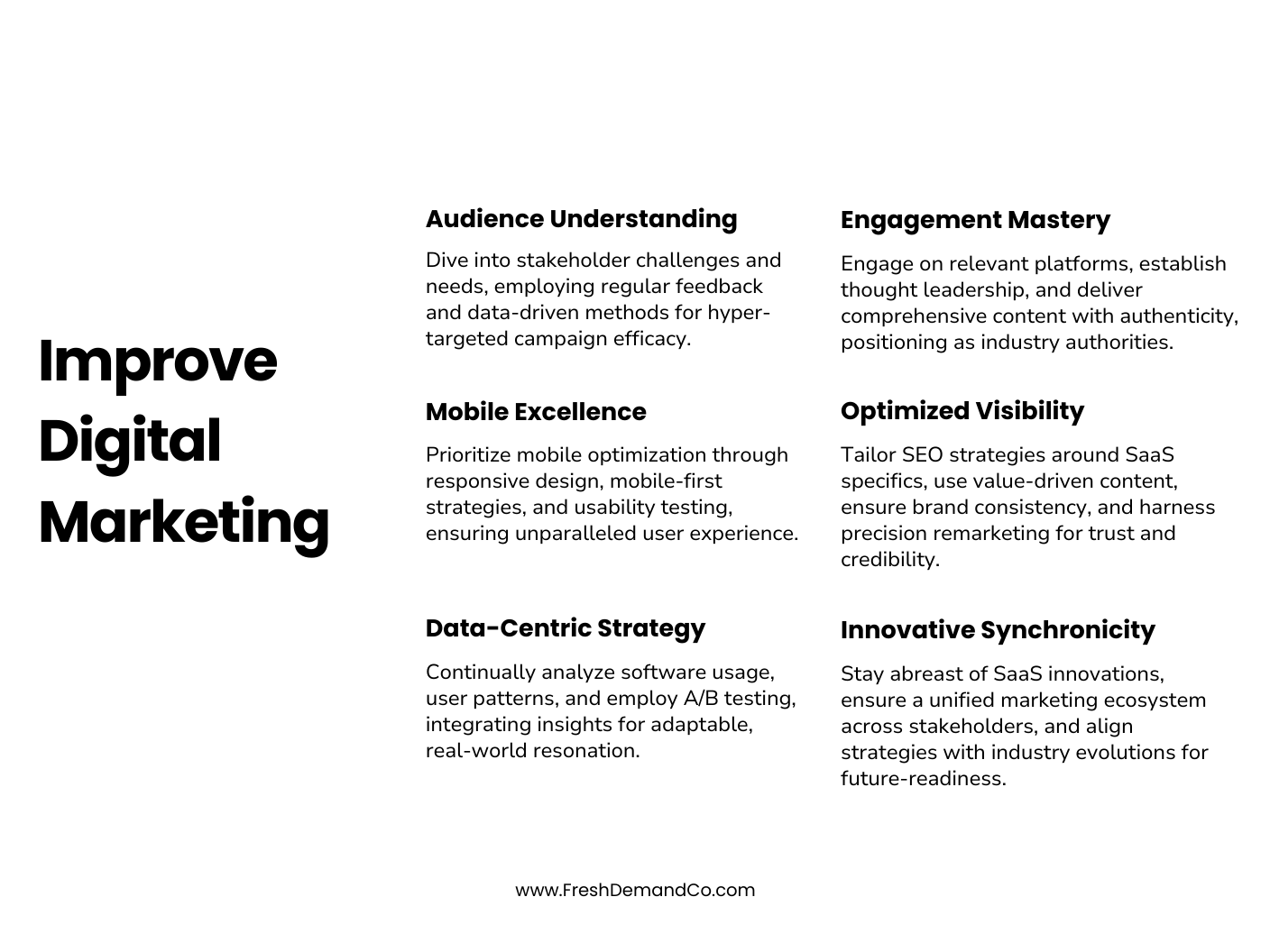
Effective digital enhancement relies on three fundamental principles: profound audience understanding, seamless mobile optimization, and data-driven refinement. By gaining deep insights into stakeholder challenges, ensuring mobile accessibility, and leveraging data for strategic refinement, enterprises can forge lasting connections and stay ahead of evolving industry needs. This section explores these pivotal strategies to empower companies in building trust and delivering value in a rapidly changing landscape.
Deep Audience Insight
Businesses must immerse themselves in enterprise stakeholders’ challenges, needs, and aspirations. By going beyond mere demographics, they can facilitate the creation of detailed personas, allowing for campaigns tailored to specific challenges. Employing regular stakeholder interviews, feedback sessions, and data-driven methods can ensure these personas are continuously updated, ensuring hyper-targeted campaign efficacy.
Mobile Optimization Imperative
The omnipresence of mobile devices underscores the significance of creating digital-first experiences. Companies need to prioritize creating an impeccable digital experience. From responsive design to mobile-first strategies and regular usability testing, ensuring content, tools, and platforms look good and function seamlessly on mobile devices is crucial, offering users an unparalleled experience.
Rigorous A/B Testing
B2B SaaS companies should view A/B testing as a pivotal tool for refining their digital approach. Beyond just ads, testing should encompass value propositions, highlighted features, and specific UI/UX elements. By employing A/B testing software and emphasizing results, companies can cater more effectively to a B2B audience that is solution-centric, ensuring their offerings hit the mark.
Data-Driven Refinement
Embracing a data-centric approach extends beyond just marketing campaigns. SaaS businesses should continually analyze software usage, user behavior patterns, and engagement metrics. By integrating these data insights into strategic decisions, companies can ensure their marketing endeavors resonate and adapt, reflecting their user base’s real-world needs and preferences.
Strategic Social Engagement
Engaging on platforms like LinkedIn or industry-specific forums offers a rich avenue for establishing thought leadership. B2B audiences in these spaces crave insights, knowledge sharing, and genuine interactions. Companies can carve out a significant niche and position themselves as industry authorities by delivering comprehensive content, partaking in discussions, and emphasizing authenticity.
SEO with a B2B Edge
The unique challenges and solutions intrinsic to the SaaS industry necessitate a tailored SEO strategy. Companies can drive organic traffic effectively by honing in on industry-specific keywords, challenges, and use cases. Emphasizing content that delivers value, like case studies and whitepapers, further amplifies this strategy, enhancing search visibility and brand credibility.
Remarketing with Precision
The elongated sales cycles in B2B SaaS make remarketing a potent strategy. But it’s not about generic ad bombardment. Remarketing campaigns should be meticulously tailored to the engagement level of potential clients, ensuring those who’ve shown interest—content consumption or trial initiation—are nurtured further down the sales funnel with precision.
Unwavering Brand Consistency
Across the myriad digital touchpoints, maintaining brand consistency is paramount for trust-building. B2B buyers value reliability, and a consistent brand voice, visual theme, and messaging can instill that trust. With regular brand audits, detailed guidelines, and inter-departmental communication, companies can ensure their brand remains cohesive, irrespective of the platform.
Unified Marketing Ecosystem
Companies must recognize the multi-stakeholder nature of B2B decision-making and emphasize a harmonized marketing ecosystem. This involves synchronizing campaigns across channels, ensuring everyone, from tech leads to top executives, experiences a consistent brand narrative. Utilizing integrated marketing platforms and maintaining a unified vision can be instrumental in achieving this synchronicity.
Pulse on Innovation
Staying abreast of the rapid innovations in the SaaS domain is not just beneficial—it’s vital. This involves more than keeping tabs on marketing trends; it necessitates understanding emerging technologies, integrations, and broader industry evolutions. By aligning marketing strategies with these shifts and product roadmaps, companies can preemptively ensure they are current and future-ready, addressing their B2B clientele’s needs.
By adopting these advanced tactics, B2B SaaS companies can fine-tune their marketing strategies to better align with the unique needs of their audience. This tailored approach amplifies the impact of digital marketing campaigns and strengthens and nurtures long-term relationships with enterprise clients.
Creating Harmony in Your Demand Generation Strategy
The intersection of pioneering demand generation and a harmonious blend of time-tested and avant-garde strategies emerges as the linchpin for sustainable growth and resilience. By leveraging traditional means such as print advertising and direct mail and adeptly integrating them with cutting-edge methods like co-marketing and comprehensive touchpoint optimization, businesses can achieve expansive reach, resonating with potential clients across various platforms and stages. This dynamic approach is further enhanced by a keen emphasis on metrics, actionable insights, and the strategic deployment of data, ensuring that decisions are both data-driven and intuitively aligned with the unique needs of the B2B audience.
Personalization, a clear value proposition, and an unwavering commitment to understanding the target audience remain at the heart of these efforts. As the B2B SaaS landscape relentlessly advances, companies that master this intricate ballet of tradition, innovation, and data-driven strategy will witness growth and establish themselves as adaptable and trusted leaders, adeptly navigating the future’s challenges and opportunities.