

B2B SaaS Marketing: Amplifying Growth Through Co-Marketing
In today’s saturated B2B SaaS landscape, merely adapting to change isn’t enough; one must pioneer novel strategies to stay ahead. As individual B2B SaaS marketing efforts grapple with diminishing returns, a modern and collaborative approach emerges as the game-changer. This guide dives deep into the realm where businesses join forces, leveraging their combined strengths and market insights. By mastering this approach, companies unlock untapped potential, driving unparalleled reach, engagement, and growth in an otherwise competitive arena.
Key Takeaways
- An effective B2B SaaS marketing strategy emphasizes securing strategic partners with aligned goals and offerings. Mutual objectives, unified content vision, and adaptability are essential for achieving synergy and maximizing combined expertise.
- B2B SaaS co-marketing offers a plethora of tactics, from joint webinars and shared content creation to co-branded software features. Using these tactics, brands can amplify their reach, showcase combined knowledge, and drive mutual growth.
- KPIs, such as Customer Retention Rate and Cost Per Acquisition (CPA), serve as critical metrics in evaluating the success of co-marketing campaigns. Regularly monitoring these metrics can provide insights into areas of improvement and drive optimal campaign performance.
- A well-drafted co-marketing agreement establishes clear roles, metrics for success, intellectual property considerations, and financial arrangements. Businesses can prevent conflicts and ensure mutual benefit by outlining responsibilities, performance benchmarks, and exit strategies.
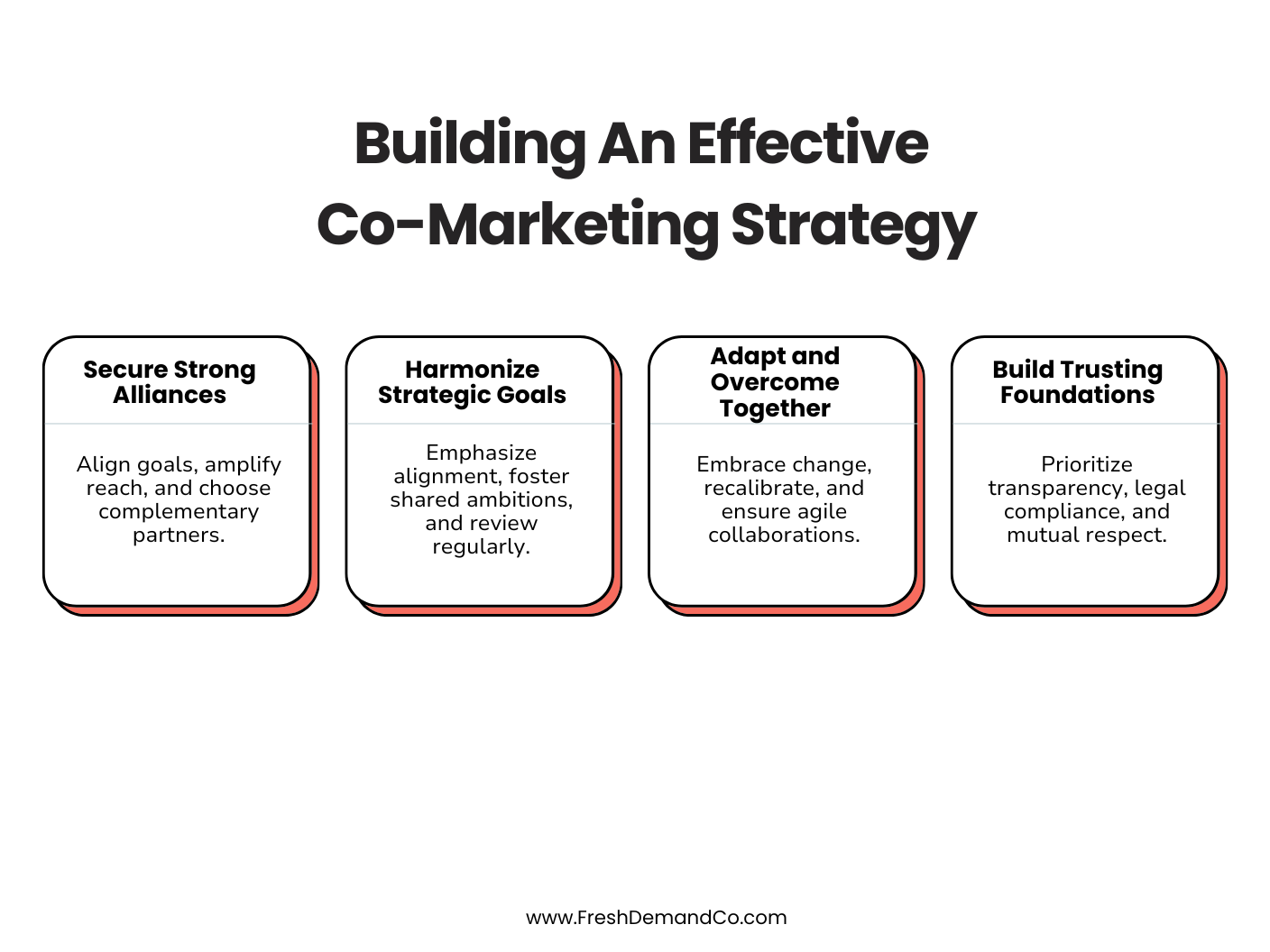 Building An Effective Co-Marketing Strategy
Building a robust co-marketing strategy is paramount in an era where strategic alliances can redefine market dynamics. Let’s delve into the blueprint for creating synergistic collaborations, emphasizing mutual goals and aligned content vision as part of your larger B2B SaaS marketing strategy.
Secure Strategic Partners
Recognizing the value of meaningful relationships is foundational in securing strategic partners. Strategic partnerships magnify the reach and resonance of both parties involved. To ensure success:
- Identify partners whose goals and demographics align with yours.
- Choose partners that complement your offerings.
- Research potential partners’ market positioning, clientele, and reputation.
Unify Objectives
Prioritizing unity in vision ensures a stable and result-driven collaboration. Such alignment prevents potential pitfalls and fosters productive engagements. To ensure success:
- Establish clear shared objectives as a guiding compass.
- Conduct regular touchpoints and alignment sessions.
- Foster an environment where shared ambitions translate into results.
Strategically Align Content Vision
Starting with a unified content vision ensures a consistent brand narrative. A cohesive brand story strengthens collective identity and resonates with target audiences. To ensure success:
- Align on brand values, target audience, buyer personas, and messaging before content creation.
- Develop a shared content philosophy.
- Seamlessly integrate expertise from both content partners.
Explore Omnichannel B2B SaaS Marketing Channels
Prioritizing omnichannel strategies ensures customers experience consistent branding across all touchpoints. Achieving synchronicity across all channels magnifies the impact of collaborative efforts. To ensure success:
- Aim for a consistent brand message across all platforms.
- Map out a comprehensive customer journey integrating all partners’ contributions.
Optimize Collaborations
Understanding the fluidity of market dynamics emphasizes the need for adaptable collaborations. Adaptability ensures enduring relevance in the face of change. To ensure success:
- Conduct periodic reviews using feedback and performance metrics.
- Remain open to strategy refinements.
- Ensure the collaboration remains agile and impactful.
Ensure Mutuality at the Core
Acknowledging the unique strengths each partner brings enhances the collaborative process. Magnifying, rather than merging these strengths, results in a robust combined expertise. To ensure success:
- Recognize and emphasize each partner’s unique capabilities.
- Focus on mutual enhancement rather than mere integration.
Cultivating Resilience in Partnership
Understanding the uncertainties in collaborations emphasizes the need for resilience. Shared stewardship and collective mindsets turn challenges into innovative opportunities. To ensure success:
- Share responsibilities equally among partners.
- Embrace challenges as opportunities for strategic realignment.
Remain Agile
Given the ever-changing digital world, it’s essential to be agile. This agility keeps collaborations effective and outcome-focused. For success:
- Use a robust analytics framework to discern market shifts.
- Recalibrate strategies in response to market behaviors.
Iterate Your Strategy Approach
Valuing feedback is crucial for refining co-marketing strategies. Regular engagement and iteration ensure strategies stay aligned with customer needs. To ensure success:
- Engage periodically with partners and customers for feedback.
- Prioritize an iterative feedback loop based on actionable insights.
Consider Legal and Ethical Implications
Emphasizing trust and transparency safeguards the collaboration’s integrity. Compliance fosters trust and respect, fortifying the partnership’s foundation. To ensure success:
- Draft detailed agreements and conduct regular legal check-ins.
- Remain unwavering in ethical considerations and regulatory compliance.
Having established the foundation of an effective co-marketing strategy, let’s delve into the specific tactics that B2B SaaS enterprises can employ to harness the power of collaboration.
 Popular Co-Marketing Tactics for B2B SaaS Marketing Teams
In the world of B2B SaaS, the power of combined marketing efforts can result in unparalleled growth. Here, we’ll uncover some proven co-marketing tactics that can supercharge your collaborative campaigns, from joint webinars to co-branded software features.
Joint webinars and live events
Hosting webinars or live events can combine expertise, audiences, and resources. This widens the reach and presents an enriched perspective to attendees, highlighting the strengths of both brands.
Shared content creation
Collaborative content such as whitepapers and case studies can effectively showcase each brand’s combined knowledge and solutions. This synergy offers comprehensive insights to the audience and underscores the harmony between the partnering entities.
Co-branded software features or integrations
One of the most tangible ways to display co-marketing in the SaaS realm is through integrating software features or launching co-branded tools. This not only reinforces mutual endorsement but also delivers enhanced value to users.
Mutual referrals and affiliate programs
By establishing a system of reciprocal referrals or setting up affiliate programs, brands can capitalize on each other’s customer base, driving growth and fostering a spirit of shared success.
Collaborative social media campaigns
Jointly running campaigns on LinkedIn, Twitter, or other B2B-focused platforms can amplify visibility. Tailored content that resonates with both brands’ audiences can spark engagement, drive conversations, and fortify brand perception.
While understanding the tactics is essential, measuring the success of these collaborative efforts is equally crucial. This brings us to the vital performance indicators that gauge the effectiveness of co-marketing in the B2B SaaS realm.
 B2B SaaS Marketing Key Performance Indicators (KPIs)
Measure and Optimize For Co-Marketing Success
Beyond the strategies and tactics lies the all-important task of measuring the effectiveness of your co-marketing initiatives. This section will introduce key performance indicators for optimal results to guide and inform your B2B SaaS co-marketing efforts.
Customer Retention Rate
Within co-marketing collaborations among B2B SaaS companies, a significant metric is the Customer Retention Rate. It evaluates how many customers stay connected after joint campaigns. A robust retention rate points towards successful solution integration and sustained value delivery. The way forward is straightforward: compare customer numbers before and after joint campaigns and calculate client retention. Elevate this metric through synergized webinars, workshops, or product tutorials highlighting the combined value proposition.
Customer Satisfaction Index
Central to co-marketing success is the Customer Satisfaction Index, measured through post-collaboration, SaaS-centric surveys. Elevated scores here reflect the optimal compatibility and efficiency of integrated platforms. Companies should proactively address user feedback to enhance satisfaction, ensuring a frictionless experience continually.
Referral Traffic Dynamics
A deep dive into Referral Traffic Dynamics reveals the effectiveness of joint marketing. It’s about measuring both the volume and quality of referred traffic. Utilizing advanced analytics tools is vital. Businesses can refine their collaborative content and promotions by pinpointing which channels drive the most valuable traffic.
Social Media Depth
Beyond mere mentions, Social Media Depth gauges the quality of brand engagement and conversation. Tools like Brandwatch are invaluable for such insights, especially on platforms like LinkedIn. The optimization secret? Tailor content to resonate deeply with shared audiences.
Cost Per Acquisition (CPA)
CPA measures the financial efficiency of collaborative marketing, which is essential given the high Lifetime Value (LTV) of B2B SaaS clients. By understanding CPA, firms can optimize budgets, focusing more on avenues with the highest returns.
Now that we’ve outlined the KPIs that can reflect the success of your co-marketing initiatives, it’s imperative also to address the legal and operational considerations to ensure a smooth and fruitful partnership.
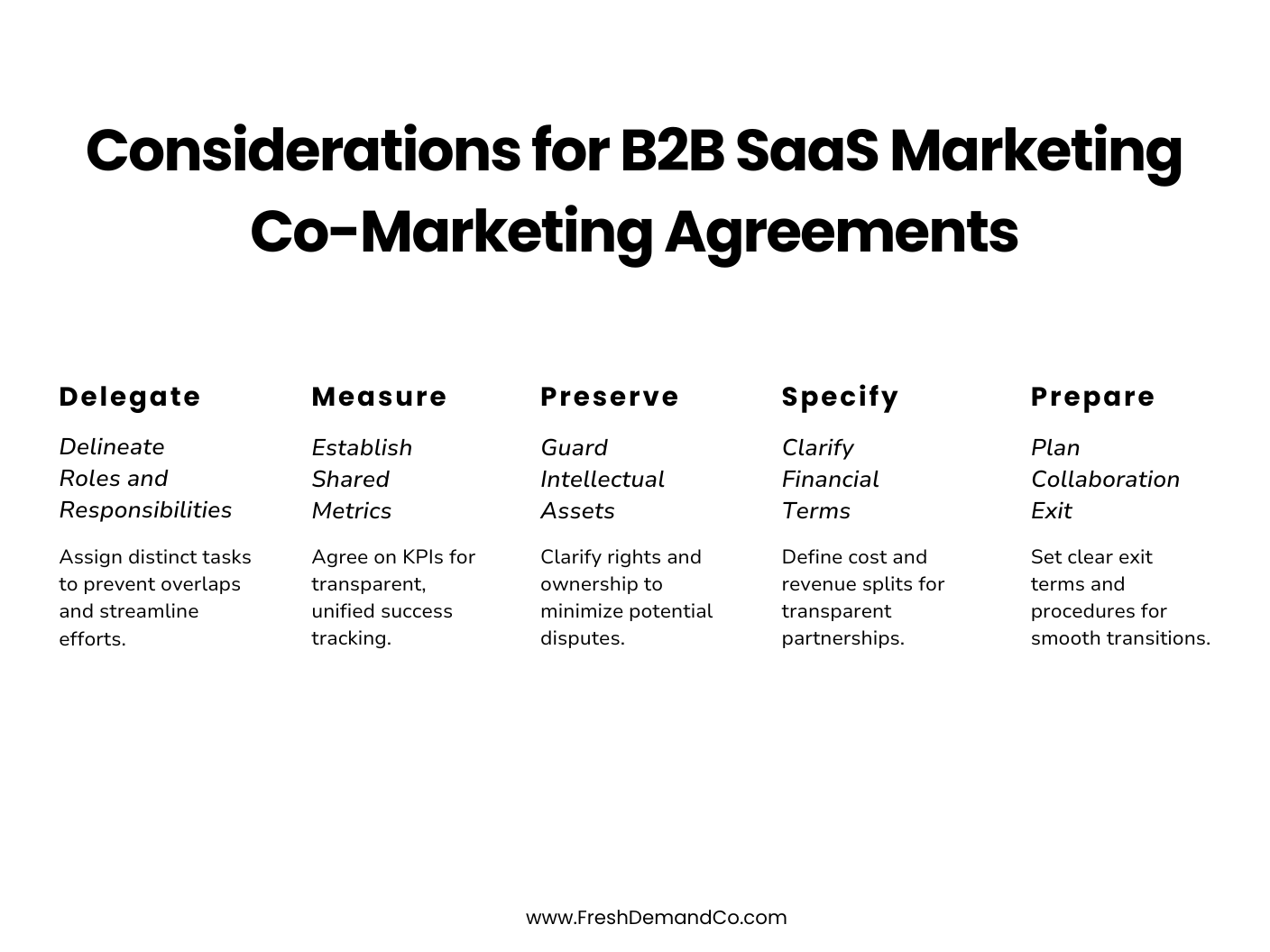 Considerations for B2B SaaS Marketing Co-Marketing Agreements
Co-marketing collaborations, especially in the B2B SaaS realm, can be transformative. However, ensuring clarity and alignment from the outset is essential. A well-drafted co-marketing agreement acts as a guiding document, laying out the operational blueprint and setting expectations for both entities.
Here are some pivotal components to consider when crafting such an agreement:
Defining roles and responsibilities
Articulating roles ensures no ambiguity or overlap in tasks. Determine who is responsible for what – from content creation and event management to outreach and analytics. Such delineation prevents potential conflicts and streamlines collaborative efforts.
Setting KPIs and metrics for success
Mutual agreement on performance indicators is vital. This alignment sets the benchmark for success and creates a transparent mechanism to track progress. Whether customer retention, social media engagement, or lead generation, agreeing upon metrics ensures both parties have a shared vision of success.
Intellectual property considerations
Especially pertinent in the SaaS landscape, protecting intellectual property (IP) is crucial. The agreement should specify rights and ownership of co-created content, software features, and other shared assets. Clarifying licensing, usage rights, and potential IP transfers minimize future disputes.
Revenue sharing and cost allocation
Financial clarity is paramount. Outline how costs related to joint initiatives will be split and detail how generated revenue will be divided. Whether it’s a 50-50 split or a different ratio, clarity in financial arrangements ensures transparency and mutual trust.
Termination and exit strategy
All partnerships should have a defined exit strategy, no matter how successful. Additionally, specify conditions under which the collaboration might end after achieving certain milestones or due to other contingencies. Outlining procedures for asset division, customer communication, and residual revenue sharing can ensure a smooth transition should the collaboration conclude.
The B2B SaaS sector is a maze of innovations and challenges. In such a setting, a solitary approach often encounters limitations. This exploration underscores the significance of a modern collaborative strategy that melds the strengths of multiple entities. After all, it’s not merely about sharing resources but synthesizing unique market perspectives and forging a path of unified ambition. By embracing this mindset, businesses can catalyze their momentum, setting the stage for a future rich in synergies and groundbreaking partnerships.