


Introduction to Account-Based Marketing (ABM)
In the intricate tapestry of B2B marketing, where the threads of innovation, strategy, and technology intertwine, account-based Marketing (ABM) emerges as a transformative approach. It’s not merely a marketing strategy; it’s a paradigm shift—a shift from broad, all-encompassing campaigns to precise, laser-focused initiatives prioritizing quality over quantity. As we delve into the world of ABM, from its historical roots to its promising future, it becomes evident that in today’s saturated market, the mantra is clear: Personalize, Target, and Engage.
Key Takeaways
- Account-based marketing (ABM) is a paradigm shift from broad marketing campaigns, emphasizing targeted, quality-driven efforts. Through collaboration between sales and marketing, ABM focuses resources on high-potential accounts, delivering resonant messaging tailored to unique needs.
- In digital transformation, ABM leverages tech for deeper connections and higher conversions. This B2B approach yields higher ROI, better relationships, and efficient sales.
- The essence of modern business lies in personalization; customers now expect tailored experiences that cater to their distinct requirements. Companies excelling in delivering these personalized engagements gain a competitive edge and underscore the significance of experience parity with product or service quality.
- While ABM presents challenges like perceived complexity, the key to success lies in simplifying the approach, maintaining consistency, and harnessing technology. Modern CRM systems, AI-driven analytics, and digital targeting tools are essential, emphasizing that ABM’s future intertwines strategic finesse with technological advancement.
- The incorporation of AI and machine learning into ABM sets the stage for a revolutionary change in B2B marketing, offering precise targeting and efficient content creation. However, as technology propels ABM forward, the heart of its success remains rooted in understanding and valuing each business’s unique narrative, setting new standards for B2B marketing excellence.
Definition of ABM
Account-based Marketing (ABM) is a strategic approach where marketing and sales teams collaborate to focus their resources on high-potential target accounts rather than casting a wide net over a large audience. At its core, ABM identifies key businesses (or accounts) and tailors unique campaigns to each of them, ensuring messages resonate at a personal and relevant level.
ABM vs. Traditional Marketing
Traditional marketing, especially in B2B, often involves broadcasting a generalized message to a vast audience. The idea behind this is akin to casting a wide net in fishing; the broader you launch, the more fish you might catch. However, with this approach, there’s always the risk of spending valuable resources on leads that may not fit the business well.
On the other hand, ABM is more like spearfishing. Instead of hoping to get as many fish as possible, the aim is to go after the most valuable fish (or accounts). By doing so, businesses can ensure their efforts are more concentrated, personal, and effective.
The Need for Tailored Marketing in Today’s Market
The digital era has transformed how businesses interact with their prospects. Today’s consumers, individuals, and businesses are flooded with marketing messages daily. As a result, generalized pitches often get lost in the noise, making it harder for brands to stand out.
In such a saturated market, personalization becomes the key. Tailored marketing, as offered by ABM, ensures that messages are more than just relevant; they resonate. Companies employing ABM can forge deeper connections by speaking directly to a particular business’s needs, challenges, and aspirations, leading to more meaningful interactions and, ultimately, higher conversions.
Moreover, in a world where customer experience often dictates loyalty, providing a marketing experience that feels bespoke can make all the difference. Businesses that recognize the value of their prospects by offering personalized experiences are more likely to foster long-term, mutually beneficial relationships.

The Origins of Personal Selling
To understand the genesis of ABM, one must look back to the roots of personal selling. Long before digital platforms and sophisticated CRMs, businesses recognized the value of tailored pitches. Salespeople of yesteryears would cultivate relationships, understand each client’s unique needs, and tailor their offerings accordingly. This level of personal touch ensured a sale and a long-term business relationship.
The Mass Marketing Era
However, with the dawn of mass media, especially television and radio, the strategy shifted towards reaching as many eyes and ears as possible. Businesses started broadcasting generalized messages, hoping to appeal to a broad audience. While this strategy did bring results and expanded the reach of many brands, it also led to a diluted personal touch, often treating all potential customers as a homogenous group.
Digital Revolution and the Rebirth of Personal Selling
Enter the digital age. With the advent of the internet and the rise of digital platforms, marketers had a wealth of data at their fingertips. Suddenly, it was possible to understand consumer behavior, track online journeys, and predict buying patterns. These advancements, combined with recognizing the limitations of mass marketing, sowed the seeds for the rebirth of personal selling in the form of ABM.
Digital platforms enabled marketers to identify high-value accounts, understand their specific needs, and craft campaigns that spoke directly to them. It wasn’t just about sending a tailored email; it was about crafting an entire campaign centered around a specific account – from content to ads.
Changing Expectations in the B2B Landscape
As the B2B landscape grew more competitive, the expectations of businesses began to change. Companies no longer wanted to be one of the many recipients of a generic marketing message. They sought vendors and partners who understood their unique challenges and could offer bespoke solutions. This expectation shift was a clear sign that blanket strategies were becoming obsolete.
Moreover, decision-making in businesses became a more collaborative effort. Multiple stakeholders with unique perspectives and pain points now played a role in the buying process. With its focus on understanding and addressing the needs of each stakeholder within a target account, ABM was perfectly poised to cater to this new reality.
The Modern Age of ABM
Today, ABM isn’t just a buzzword; it’s an essential strategy for B2B marketers. Powered by advanced AI algorithms, predictive analytics, and integrated digital platforms, modern ABM goes beyond just personalization. It’s about creating a holistic experience tailored to each account, ensuring a sale and a long-term partnership built on understanding, trust, and mutual growth.

ABM emerges as a transformative strategy in the dynamic world of B2B sales, where the stakes are high and the competition fierce. Businesses can foster deeper connections, drive conversions, and build lasting partnerships by moving away from the scattergun approach of broad campaigns and embracing the laser-focused precision of tailored marketing.
The Downfalls of Broad Campaigns
In B2B marketing, broad or blanket campaigns might seem efficient: create one message, cast a wide net, and hope for the best. However, these campaigns often suffer from several pitfalls:
- Diluted Messaging: When trying to speak to everyone, you often talk to no one. Generic messages might not resonate with any particular segment of the target audience.
- Low Conversion Rates: Because the messages aren’t targeted, they often fail to engage potential leads, leading to lower conversion rates.
- Wasted Resources: A significant amount of time, effort, and money can be wasted on creating and promoting content that doesn’t yield the desired results.
Tailoring Pitches: The ABM Advantage
Account-based marketing, on the other hand, flips the traditional model on its head. Instead of aiming for volume, ABM prioritizes value. Here’s how:
- Precision Targeting: ABM focuses on pre-qualified accounts with a higher conversion likelihood. This ensures that marketing efforts are directed where they can produce the best returns.
- Personalized Messaging: By understanding the specific pain points, challenges, and goals of each target account, marketers can create messages that resonate deeply, increasing the chances of engagement.
- Efficient Use of Resources: Tailored demand generation campaigns mean that every piece of content, every ad, and every outreach effort is purposeful and optimized for results.
Speaking Directly to Decision-Makers
One of the standout strengths of ABM is its ability to directly address the interests and needs of decision-makers. In the B2B landscape, stakeholders often make purchasing decisions, each with their own concerns and criteria. ABM allows for:
- Stakeholder Analysis: Identifying the key decision-makers within an account and understanding their roles and influence in the buying process.
- Bespoke Content Creation: Crafting content that addresses each stakeholder’s unique challenges and aspirations, from the CTO’s technical concerns to the CFO’s budgetary constraints.
- Enhanced Engagement: When decision-makers feel that a campaign speaks directly to their needs, they’re more likely to engage, leading to more meaningful conversations and, ultimately, conversions.
Account-based marketing (ABM) has taken the B2B world by storm for a good reason. By focusing on tailored marketing campaigns for specific target accounts rather than casting a wide net, ABM has ushered in a new era of efficiency and effectiveness.
Here are some of the standout benefits that businesses are experiencing:
Higher Return on Investment (ROI)
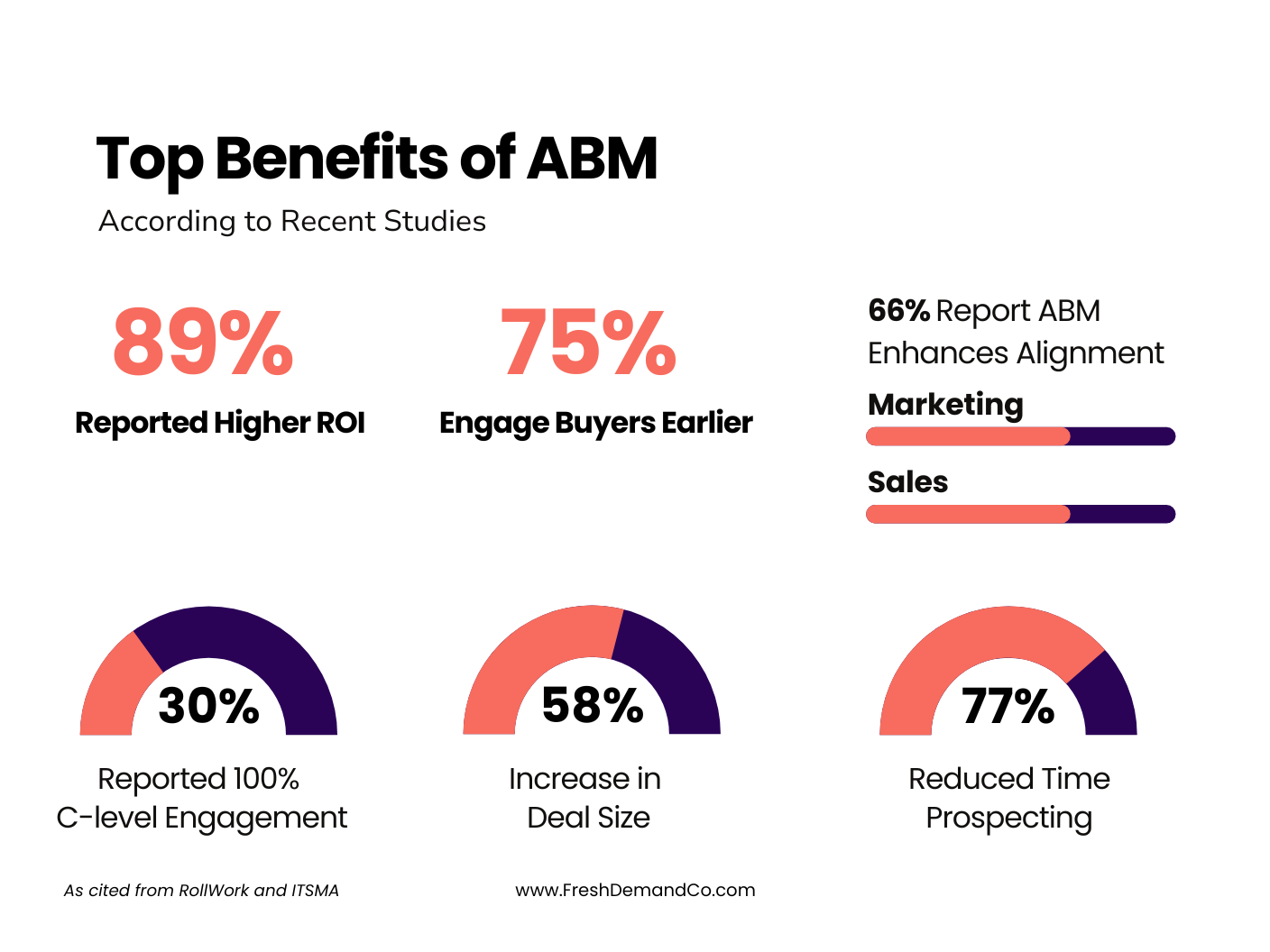
With ABM targeting only high-value potential accounts, marketing funds are allocated more efficiently, minimizing waste on ill-fitting prospects. A study by SiriusDecisions underscored this advantage, revealing that 89% of ABM users achieved a higher ROI than a control group. Notably, 30% of these organizations reported their ROI surpassing the baseline by at least 21%. Thus, account-based marketing elevates lifetime values and provides a more effective means of measuring results.
Enhanced Customer Relationships
Through personalized campaigns, potential clients are presented with content tailored to their unique needs and challenges, instilling a sense of appreciation and understanding. This strategy’s effectiveness is highlighted by a study that revealed that 75% of B2B marketers utilizing ABM could pinpoint and engage with the right buyers at earlier stages of their buying process.
Shorter Sales Cycles
ABM strategies prioritize direct interactions with key decision-makers, eliminating the need to traverse layers of organizational hierarchy. This straightforward approach’s potency is underscored by a SiriusDecisions finding: 30% of marketers employing an account-based approach reported a remarkable engagement increase of over 100% with their C-level targets.
Better Sales and Marketing Alignment
When sales and marketing teams work cohesively to target specific accounts through customized strategies, it cultivates collaboration and a synchronized approach. This synergized effort is reflected in data from Forrester and RollWorks, where 58% of B2B marketers noted an increase in deal sizes with ABM. Additionally, an ITSMA study revealed that 66% acknowledge ABM’s substantial role in enhancing marketing and sales alignment.
Improved Measurement and Analysis
Concentrating on a narrower set of accounts enables more accessible data collection, real-time performance assessment, and swift campaign adjustments. This data-driven approach through ABM allows sales teams to diminish by up to 50% the time traditionally expended on fruitless prospecting. Such past inefficiencies often resulted in sales overlooking approximately half of the leads generated by their marketing counterparts.
Below, we look closely at how account-based marketing (ABM) programs can help your business.

According to Alterra Group, 84% of B2B marketers utilizing account-based marketing said it significantly benefits retaining and expanding existing client relationships. As noted earlier, ABM considers the buyer’s journey and sales cycles in the strategy phase. Suppose you aim to have, upsell, or cross-sell critical accounts. In that case, you’ll want to start creating an account-based marketing strategy using CRM data and interviewing accounts and sales reps to understand the typical sales cycle and process. For example, suppose most new clients purchase a low-cost trial or a one-month subscription but fail to renew. In that case, you’ll want to focus on proving the value of your month-to-month subscription (a step up from the ad hoc purchase) before trying to convert clients to a more costly yearly subscription.
- Consider creating educational content tailored to high-value targets and demonstrating why the premium offering is worth it.
- Develop “How To” articles and demo videos explaining how buyers can do more with your premium offering while solving their pain points.
- Give influencers access to your premium offering and help them prove the business case to decision-makers during a limited-time free or low-cost trial.
Pro tip: Your strategy will be most effective if it considers the shared pain among buyer groups within your target accounts.
The Necessity of Personalization in the Digital Age
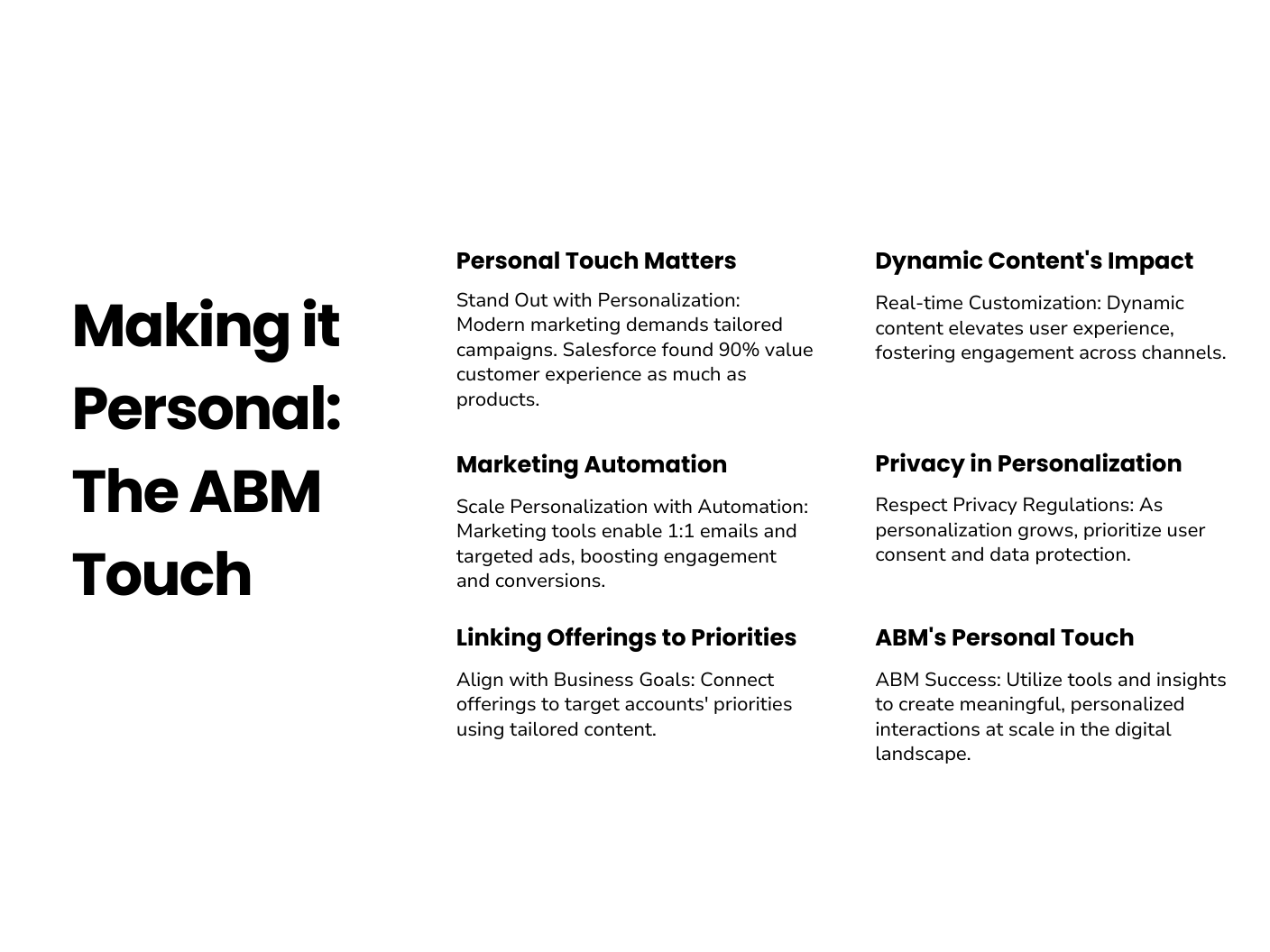
In today’s saturated digital landscape, personalized campaigns stand out distinctly against generic mass emails. With the information available, individuals and businesses are naturally drawn to content tailored to their needs and challenges. Reinforcing this notion, a Salesforce study disclosed that 73% of customers anticipate companies to comprehend their distinct requirements and expectations, and a staggering 90% believe that the experience a company offers holds as much weight as its products or services.
Leveraging Marketing Automation for Tailored Engagements
Modern marketing automation tools have bridged the gap between the need for personalization and the practical challenges of scale. These tools empower marketers to:
- Craft 1:1 or 1:few emails that feel tailor-made for the recipient, enhancing engagement and conversion rates.
- Deploy company-targeted advertisements that resonate with target accounts’ interests and needs.
Linking Unique Offerings to Key Accounts
By deeply understanding the business priorities of critical accounts, marketers can effectively:
- Connect offerings to company priorities using resource-based, mid-funnel content. This ensures the marketing message aligns seamlessly with the target account’s values.
- Develop niche content tailored to specific industries or verticals, such as banking or investment banks. This industry-focused content is further refined to address the unique personas within the buyer groups.
The Power of Dynamic Content
Dynamic content is a game-changer in ABM, allowing for real-time customization based on the viewer:
- Dynamic banner ads, email banners, and variable email tags in copy ensure that each interaction feels bespoke, even if it reaches thousands.
- This approach enables businesses to engage accounts more effectively across owned and paid channels, elevating the overall user experience.
Balancing Personalization with Privacy
With great power comes great responsibility. As personalization capabilities grow, businesses must remain vigilant about privacy regulations like the GDPR and CCPA. Ensuring that all personalization efforts respect user consent and data protection is non-negotiable.
The success of ABM hinges on its personal touch. By leveraging modern tools and strategic insights, businesses can create meaningful, personalized interactions at scale, ensuring they stand out in a crowded digital landscape.
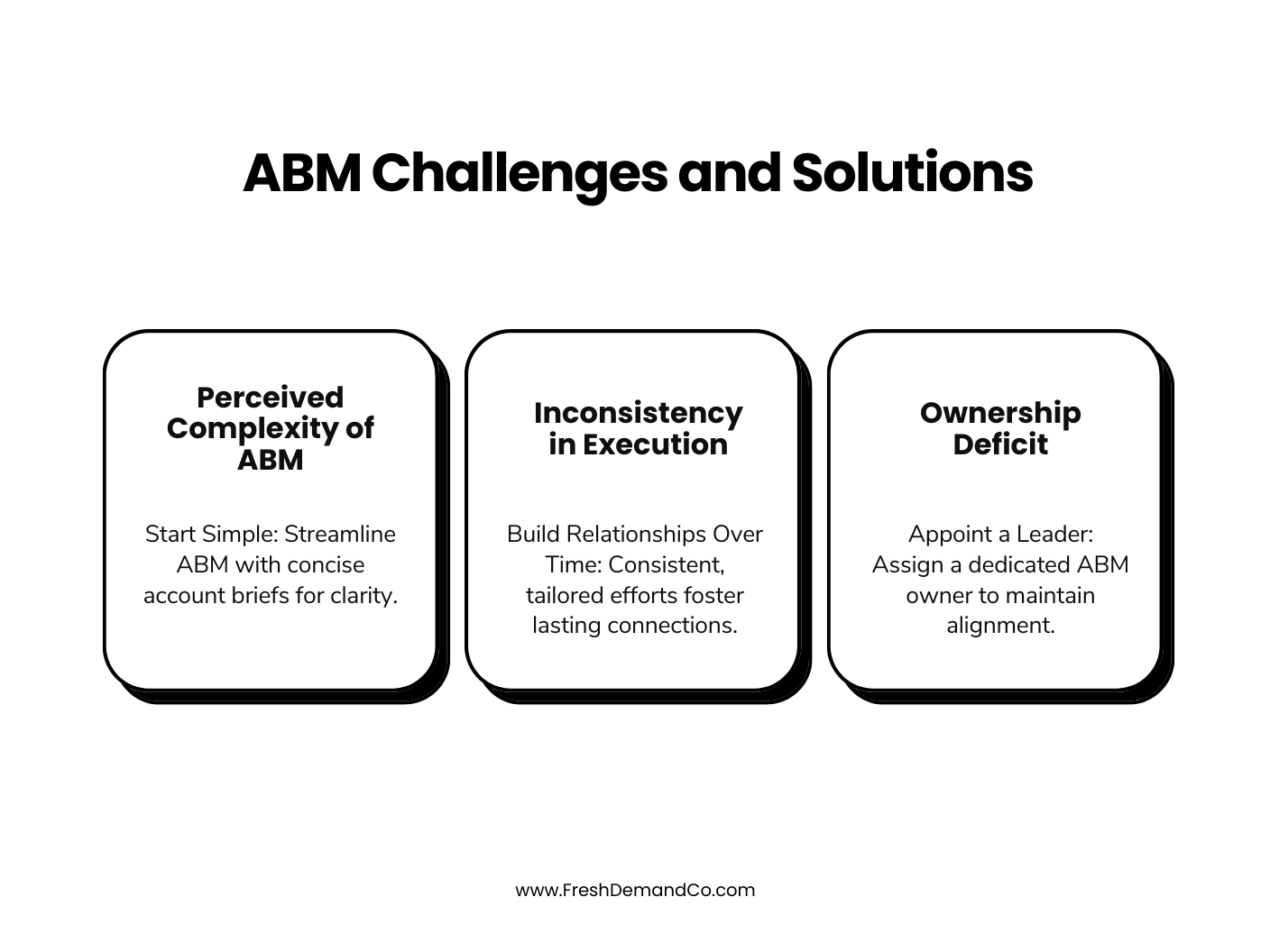
Account-based marketing (ABM) has proven its worth in B2B marketing, but as with any strategy, it comes with challenges. Recognizing and addressing these challenges head-on can be the difference between a successful ABM campaign and a missed opportunity.
Perceived Complexity of ABM
Challenge: For many B2B marketers, the intricacies of ABM can seem daunting. With the need for precise marketing and sales alignment, there’s a perception that ABM can go awry in multiple ways.
Solution: Contrary to the belief that ABM needs to be elaborate, sometimes the best approach is the simplest one. Begin with concise account briefs that encapsulate the strategy, objectives, challenges, and key players. Businesses can streamline their approach and avoid becoming overwhelmed by eliminating the perceived need for extensive, hundred-page account plans.
Inconsistency in Execution
Challenge: ABM’s effectiveness is tied closely to consistency. Without a sustained effort, the essence of relationship building – a core tenet of ABM – can be lost.
Solution: It’s essential to remember that ABM, like any relationship-building exercise, demands time and commitment. While there might not be an immediate “love at first sight” moment, consistent efforts will lead to lasting, meaningful business relationships. A sustained approach, characterized by regular touchpoints and tailored content, can cultivate these connections over time.
Ownership Deficit
Challenge: Without clear leadership or ownership, ABM strategies can become rudderless. A lack of direction and accountability can hinder the strategy’s effectiveness.
Solution: To successfully navigate the complexities of ABM, designate a dedicated owner or “pilot” for the strategy. This individual should be adept at liaising between various teams – from executives to sales, marketing, customer experience, operations, and support. Providing a face for the ABM program can offer clarity and direction and ensure that all internal teams remain aligned, fostering a feedback-rich environment.
While challenges in ABM are inevitable, understanding and proactively addressing them can pave the way for a successful ABM journey. By simplifying the approach, maintaining consistency, and ensuring clear ownership, B2B marketers can harness the full potential of ABM to build lasting and valuable business relationships.

Account-based marketing has evolved exponentially, not just in strategy but also in its technological underpinnings. Today, the seamless integration of advanced tools and platforms allows businesses to implement ABM strategies with precision and efficiency. Delving deeper, we see how these advancements are reshaping the landscape of B2B marketing.
Modern CRM Systems: The Backbone of ABM
- What They Offer: Customer Relationship Management (CRM) systems have transformed from databases to dynamic tools that provide holistic views of customer interactions across various channels.
- ABM Implication: With the aid of CRM, businesses can track and analyze the touchpoints of their target accounts, ensuring that messaging is consistent and relevant throughout the buyer’s journey. This constant interaction history facilitates more personalized and timely engagements.
AI-powered Analytics: The Brain Behind Decisions
- What They Offer: Artificial Intelligence (AI) has penetrated the realm of marketing analytics, offering insights that were once impossible to glean. AI tools provide granular data interpretations, from predictive analytics to natural language processing.
- ABM Implication: AI aids in segmenting target accounts based on their behavior, intent, and potential value. Predictive analytics can forecast an account’s likelihood to convert, allowing marketers to allocate resources more efficiently. Furthermore, by quickly analyzing vast amounts of data, AI helps in real-time decision-making optimizing campaigns on the fly.
Sophisticated Digital Targeting: Precision in Action
- What They Offer: Beyond traditional advertising channels, digital targeting tools allow businesses to serve content and ads tailored to their target accounts across various online platforms.
- ABM Implication: Businesses can now create hyper-personalized content and ads for individual accounts or segments instead of a one-size-fits-all approach. This granular level of targeting ensures that the content resonates, leading to higher engagement and conversion rates.
Integration: The Key to a Unified Strategy
While each of these tools offers significant advantages, the real magic happens when they are integrated. A unified platform that combines CRM data, AI-driven insights, and digital targeting capabilities can streamline the ABM process, making it more data-driven and efficient.
The future of ABM is not just about the strategy; it’s also about harnessing the power of technology. Embracing the right mix of tools can amplify the effectiveness of ABM campaigns, allowing businesses to engage their target accounts in more meaningful and impactful ways. As technology continues to evolve, so will the opportunities for businesses to refine and perfect their ABM strategies.
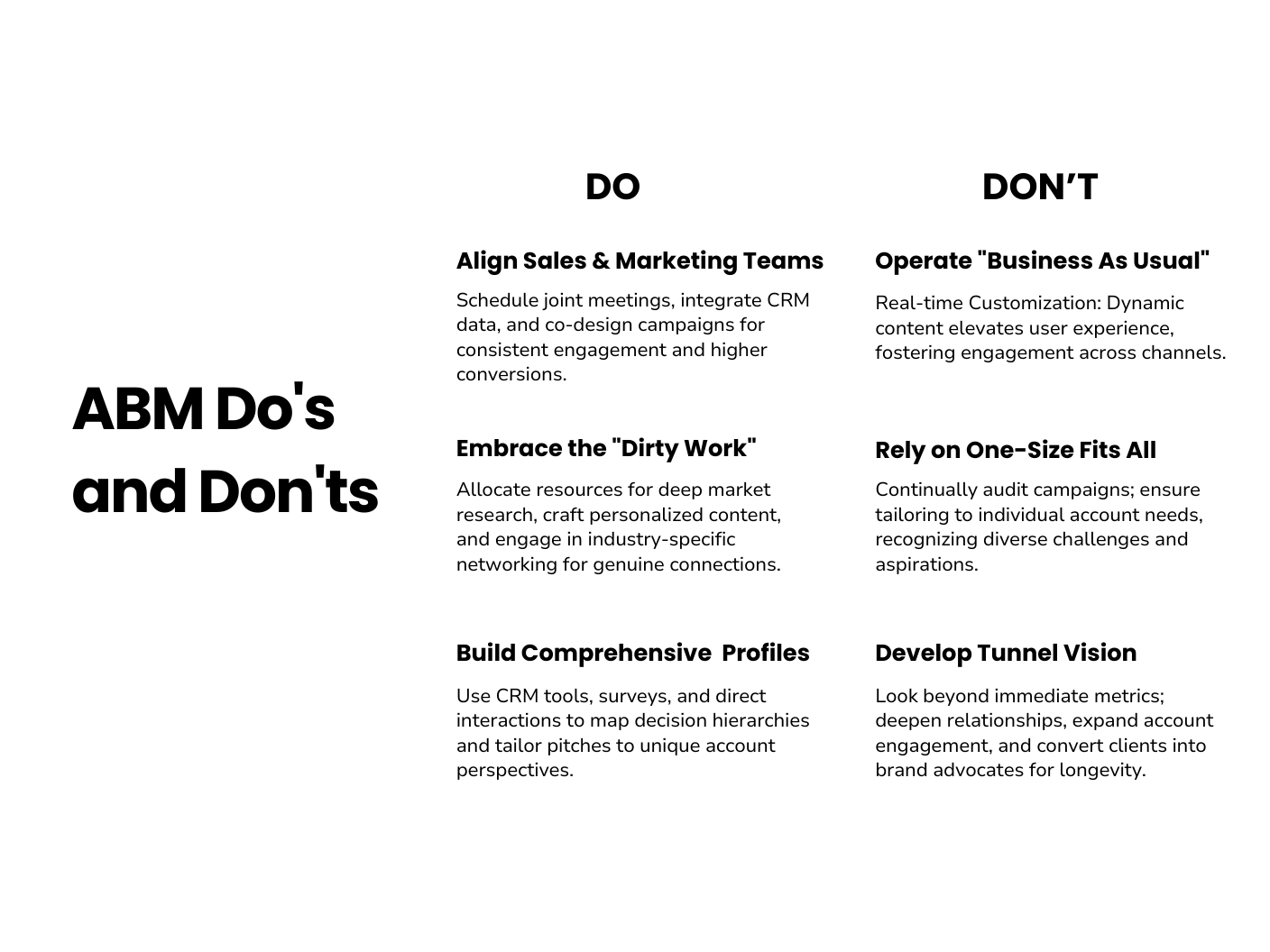
The intricate dynamics of Account-Based Marketing (ABM) mean that subtle differences in approach can be the pivot between success and failure. Below, we dive deeper into crucial ABM practices, using actionable examples to underline each approach’s potential outcomes and ramifications.
DO
Align Sales and Marketing Teams
In the realm of ABM, merging the strategies and objectives of sales and marketing teams is imperative. Historically, the siloed efforts of these departments often meant inconsistent messaging and engagement with potential leads. With ABM, the focus shifts to a united front aimed at acquiring and nurturing key accounts. To make this alignment effective, businesses should schedule regular cross-departmental meetings, utilize shared platforms, and design joint campaigns.
Embrace the “Dirty Work”
ABM isn’t a surface-level endeavor. It demands the willingness to deep-dive, from comprehensive market research to crafting personalized content and engaging in purposeful networking. While mass campaigns can touch a broad audience, the essence of ABM lies in its specificity and personal touch. Businesses should allocate ample time and resources to understand each target account’s unique needs and challenges.
Build Comprehensive Customer Profiles
At the heart of ABM is a profound understanding of target accounts. This entails mapping the decision-making hierarchies, understanding pain points, and identifying all key players and stakeholders. Tools like CRM platforms, surveys, and direct interactions can aid businesses in continually enriching these profiles.
DO NOT
Operate in “Business As Usual” Mode
Transitioning to ABM isn’t merely adding another strategy to the marketing mix—it represents a paradigm shift in B2B marketing. This shift requires a fundamental change in approach, culture, and mindset. Organizations must train their teams, prioritize inter-departmental collaboration, and regularly review their strategies.
Rely on a One-Size-Fits-All Strategy
ABM emphasizes personalization, and in the B2B landscape, this isn’t just a nice-to-have—it’s a necessity. Campaigns must be tailored to cater to each target account’s specific needs, challenges, and aspirations. Businesses should continually audit their campaigns to identify room for improvement.
Develop Tunnel Vision
While immediate metrics like conversions and click-through rates are vital, ABM’s true power lies in nurturing long-term relationships. Focus on deepening relationships, expanding account footprints, and turning clients into advocates. For example, introduce regular check-ins, offer training sessions, and proactively seek feedback, which leads to upsells and long-term contract renewals.
In the ever-evolving realm of B2B marketing, strategies must adapt and innovate to stay ahead. ABM, though transformative, adjusts with technological shifts. Let’s explore how AI and machine learning integration might reshape the landscape of ABM in the coming years.
AI and Machine Learning: The New Powerhouses
Incorporating AI and machine learning in the marketing sector isn’t just a futuristic concept—it’s the present reality. But what’s truly exciting is their potential to revolutionize ABM.
Enhanced Account Selection
- Potential: Machine learning models can analyze vast amounts of data to identify high-value accounts, even those that might traditionally be overlooked.
- Future Outlook: As data volumes expand and algorithms advance in sophistication, anticipate a landscape where businesses can identify high-value accounts with unparalleled precision.
Hyper-Precise Targeting
- Potential: AI can process behavioral patterns, online engagements, and purchase histories, enabling marketers to predict future actions and preferences.
- Future Outlook: We might soon see a scenario where marketing messages are not just tailored for companies but dynamically adapted for individuals within those companies, adjusting in real-time based on online behaviors.
Streamlined Content Creation
- Potential: Automated content generation, guided by AI, can create personalized content for specific accounts, roles, or individuals, ensuring relevance and resonance.
- Future Outlook: The boundary between automated and human-generated content may blur, with AI producing indistinguishable content from what a human marketer might create.
The Imperative of Adaptability
B2B companies at the forefront of ABM evolution recognize the significance of staying adaptable. As AI advances, businesses must adapt and set new benchmarks.
Despite its numerous advantages, ABM requires meticulous planning, dedicated investment, and unwavering commitment. And while the journey may be intensive, the rewards—deepened client relationships, enhanced ROI, and a competitive edge—are undeniable.
With AI and machine learning advancements, future-focused ABM strategies await. Adaptable mindsets using the latest tools will lead to B2B marketing evolution.
Conclusion
ABM’s transformative journey through the annals of B2B marketing reveals a landscape forever changed by its influence. As we approach an AI-driven future, the significance of personalized ABM engagement will only grow. But the true power of ABM doesn’t lie solely in advanced tools or refined strategies. It’s in the understanding that every business and decision-maker has a unique story. And to truly resonate, our marketing approaches must acknowledge these stories and become an integral part of them. In B2B marketing’s dynamic landscape, those embracing ABM will redefine success benchmarks.