
Lead Generation Strategies for Targeted Engagement and Conversion
One of the biggest mistakes we’ve seen B2B companies make is in their B2B leader generation strategy. Often, the focus is on the quantity when it should be on the quality. With so many ways to drive leads, the real test for marketers is to find the mix of channels and strategies to attract and convert buyers. And there is no “one size fits all” strategy. This article delves into how marketing and sales teams can refine B2B lead generation strategies to ensure their efforts resonate with well-defined targeted personas and relevant messaging that attracts, nurtures, and converts.
How Well Do You Know Your Lead Targets?
As a marketing professional, you have more options to generate leads than ever before. From search engine optimization (SEO), pay-per-click (PPC), sponsored ads, email marketing, and paid social media marketing to omnichannel advertising and third-party content syndication, you can get creative, piquing the interest of your target audience across multiple touchpoints.
But the key to driving quality leads from your demand generation program starts with clearly defined marketing strategies. Here’s how to begin that process.
Develop Relevant Messaging
When developing a new B2B lead generation strategy, start by gaining a deeper understanding of the needs of your target leads, ideally by crucial persona. Doing so allows you to tailor communications and materials to capture and convert quality leads. Tailoring your messaging and positioning to buyers’ unique needs improves conversion rates, customer retention, and revenue growth.
One way to do this is to field a discovery survey to your existing and prospective customers. This will be used to inform your content marketing strategies. When coupled with sales interviews, you’ll gain key insights, such as your ideal buyer’s major pain points, budget priorities, and where they go for information. This survey can also inform your demand generation strategy for the critical channels of your key accounts.
A sound B2B lead generation strategy includes a persona-based message map and content marketing plan. Your efforts should include creating content and aligning messaging and product positioning to your high-level business story and strategy. If you’re launching a new product, work with your product marketing team to gather and access valuable information from their detailed market assessment and segmentation process.
Create Quality Content to Engage and Nurture Leads
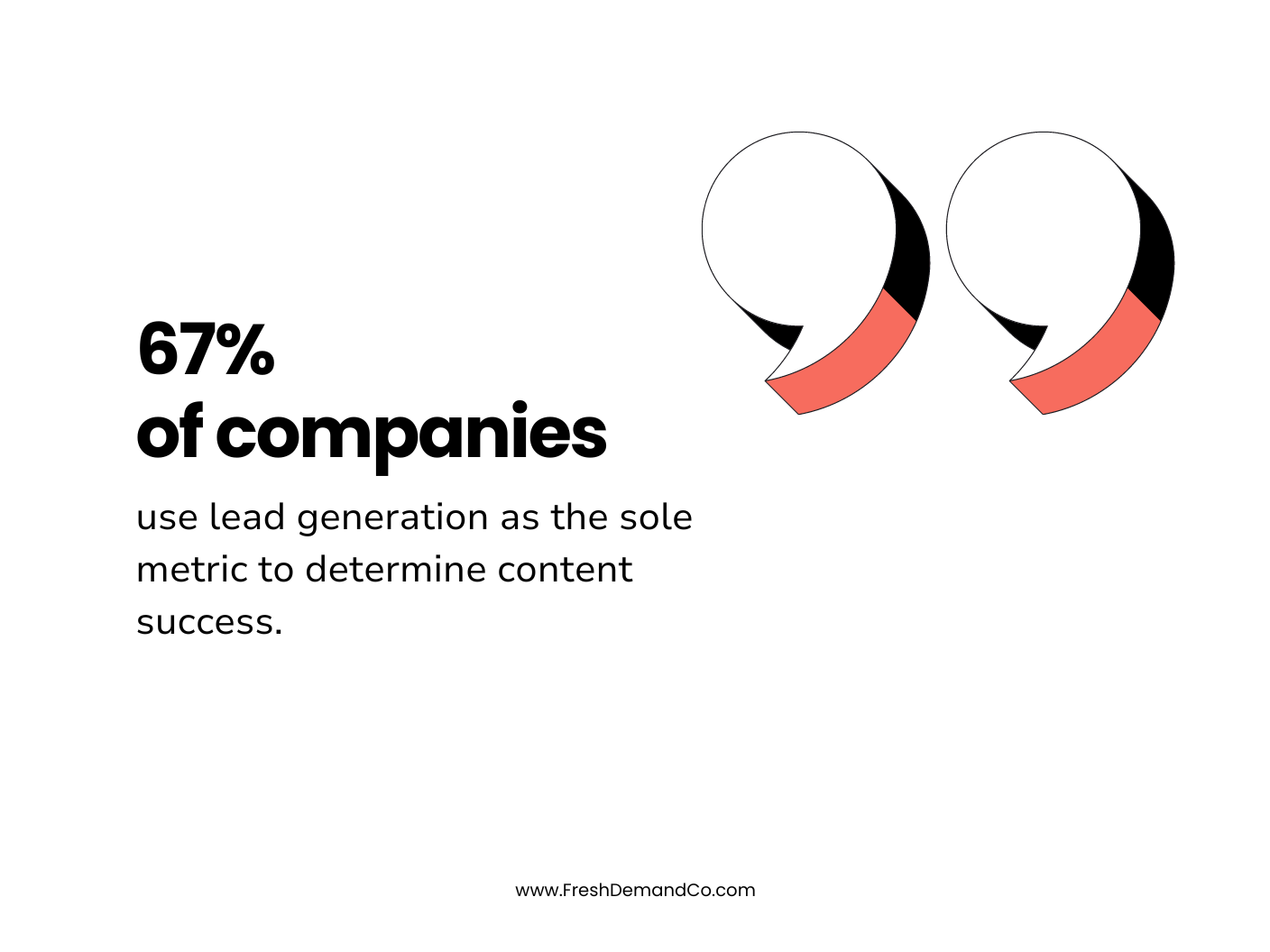
Once buyers’ needs are documented, experienced demand generation and growth marketers develop persona-based content to engage quality leads. 67% of companies use B2B lead generation as the sole metric to determine content success. Successful marketing teams leverage survey and sales data during the internal discovery phase to ensure ad copy, landing pages, marketing emails, and sales engagement materials are relevant—even down to the specific phrases leads use when communicating their needs or searching for solutions. Doing so will build credibility and trust for your business.
Once leads are captured, it is essential to nurture them by delivering content based on their key questions, challenges, and opportunities as they move from the awareness and interest to consideration phases. The biggest mistake many marketers make is not nurturing leads beyond initial acquisition or passing them to sales too soon. Nurturing leads will improve conversion rates and warm them to a sales-ready state.
As you nurture leads through the buyer’s journey, align your strategy with sales. Once leads demonstrate signs of being close to the consideration phase based on their engagement with consideration-phase content, you’ll want to pass them to sales, or all your efforts could be lost. Also, consider creating a complementary nurture path to help support the sales process. This could include well-timed marketing outreach designed to work in harmony with sales. Examples include vertical-specific client case studies, ROI calculators, or analyst benchmark reports.
Whatever you do, align your marketing efforts with sales so you don’t trip over one another. When acquiring customers, it’s essential to demonstrate a cohesive and consistent message and product focus. This shows your company truly understands them and that you’re uniquely positioned to fulfill the promises you made throughout the buyer’s journey.
 Consider Account-Based Lead Generation
High-performing demand generation and growth marketing teams enable seamless experiences across external and internal-owned channels for targeted, high-value accounts. They create account-based marketing (ABM) programs to hone their demand generation programs.
Many companies have too many goals related to their lead generation strategy, which negatively impacts their ABM strategy. Consider honing in on one of your team’s top three goals if that sounds familiar. Your strategy and tactical approach will vary based on whether or not your goal is landing or expanding accounts.
If you’re launching a new product or have a limited marketing budget, consider focusing your lead gen efforts on your highest-value net new accounts. Your account-based content, messaging, and positioning strategy will vary depending on your goals. It should always be targeted and relevant to drive lower cost per lead and higher conversion rates for sales.
Combining account-based marketing with a persona-based approach will allow you to tailor your content and messages to your specific audience segments, accounts, and needs throughout the sales cycle. One area that is often a pitfall for marketers is the completeness of their data. That brings us to our next point.
Is Your Lead Data Accurate and Complete?
It sounds simple enough, but a constant issue in B2B lead generation is separating qualified leads from unqualified ones. With so many opportunities for interaction, how can you be sure a click or engagement with your content truly signifies interest? All too often, sales spend time chasing leads without intending to convert. Other times, sales never pass or follow up on qualified leads. This impacts the trust and credibility between sales and marketing.
While it won’t solve every pain point, data quality has to remain a top focus.
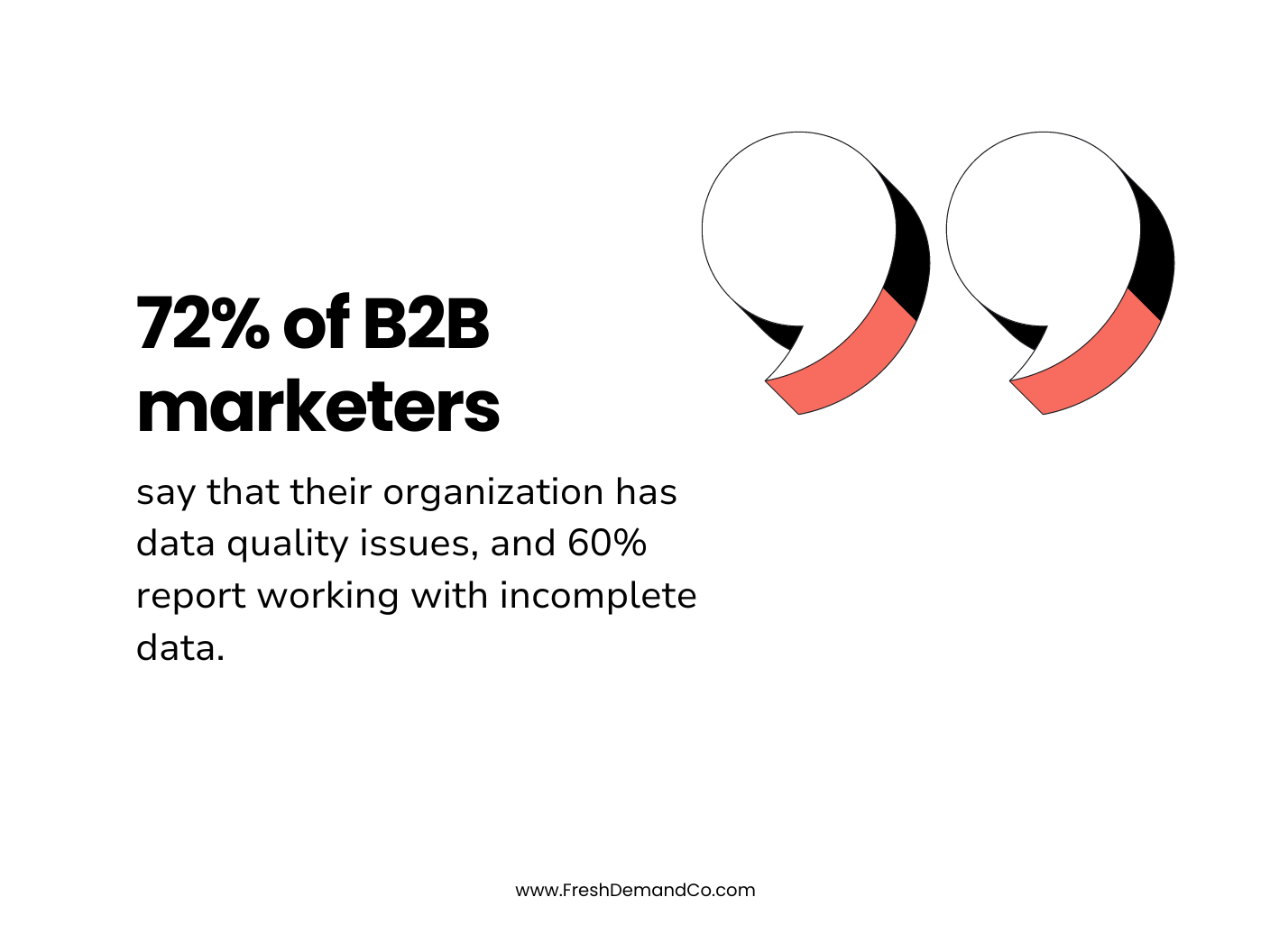
According to one study, 72% of B2B marketers say that their organization has data quality issues, while 60% report working with incomplete data. As such, it is no surprise that 36% report that their biggest challenge with B2B lead generation is finding qualified leads that convert.
When it comes to this process, lousy input and output go hand-in-hand.
When you gather information about any lead, the information must be clean, accurate, and complete. Consider using third-party data to append customer relationship management records (email, title, and phone number) to your database. Then, use progressive profiling or chatbots to verify and collect additional data points (job title, industry or vertical, job function, key pain points, existing technology) about leads as they engage with your content during the nurturing process. The goal is to help sales assess the viability and readiness of leads.
 Are You Influencing Decision-Makers and Buying Teams?
Another challenge of B2B lead generation is connecting with key decision-makers and buying teams. Buying teams typically comprise 11–20 stakeholders who will influence buying decisions.
It takes one set of skills to drive leads at a tradeshow or engage with target prospects on LinkedIn. On the other hand, generating leads, articulating value, and building credibility with the economic stakeholders is entirely different, given each stakeholder’s requirements and perspectives.
Unfortunately, getting a mindshare with potential buyers and influencers is fraught with roadblocks.
To cut through the noise, you’ll need to correctly identify the typical buying committee and the critical messages they care about at each stage in the sales lifecycle. One way to do this is to identify the typical titles, pain points, desired outcomes, and value propositions as they relate to each of the following:
- Gatekeepers
- Influencers
- Recommenders
- Decision-makers
Once you have this, you can leverage an intelligence platform such as 6Sense to validate and reach leads and contacts. All the work done early on to personalized messages will go further once you have an added focus on the buying committee.
 The Benefits of B2B Lead Generation
While it isn’t always smooth sailing, B2B companies who invest in more strategic lead generation activities have a leg up on their competition.
B2B lead generation is typically tied to your customer acquisition process and is focused on filling your sales funnel. Without a dedicated strategy, you’ll be throwing the veritable spaghetti at any wall you can find and hoping it sticks.
While you might get a few qualified leads this way, think about how much time and money you’re wasting by having a haphazard approach to driving revenue for your business.
Without lead generation, reaching your sales targets in a meaningful and relevant way can be nearly impossible. A few of the main benefits of establishing such a plan include:
- Setting the stage for building long-term client relationships and trust
- Meeting modern B2B buyers where they’re at
- Boosting the return on your marketing investment
- Improving your win rates
- Shortening your sales cycle
- Scaling or refocusing your customer acquisition strategy as required
Improve ROI on Lead Generation
Any time your business invests in a marketing initiative, you should clearly understand the anticipated ROI.
When measuring the ROI of your lead generation strategy, remember that it isn’t the number of total leads that’s most important. Instead, you’re looking at the number of leads that ultimately turned into sales.
To crank up that percentage, consider:
- Optimizing your lead database
- Aligning your sales and marketing teams
- Maximizing your digital marketing footprint
- Investing in marketing and sales automation and account-based marketing
- Keeping track of data analytics and using a business intelligence tool
Be sure to evaluate the ROI of your efforts by channel. According to research, the top B2B lead generation tactics that delivered the highest ROI include:
- Email: Cited by 50% of marketers as most effective
- SEO optimization and marketing: 43%
- Content marketing: 34%
- Live events: 32%
- Social media: 23%
Lead generation is complex and requires strategy and ongoing tactical execution, working with sales and customer success teams. When done with purpose and intent, the additional planning and focus will net higher value leads and performance in the long run.
As you develop successful strategies based on buyer personas and create targeted messaging and positioning, you’ll have the precision and relevance that leads have come to expect from today’s B2B companies.